Projects / Case study
Palatine Bridge Erosion Protection
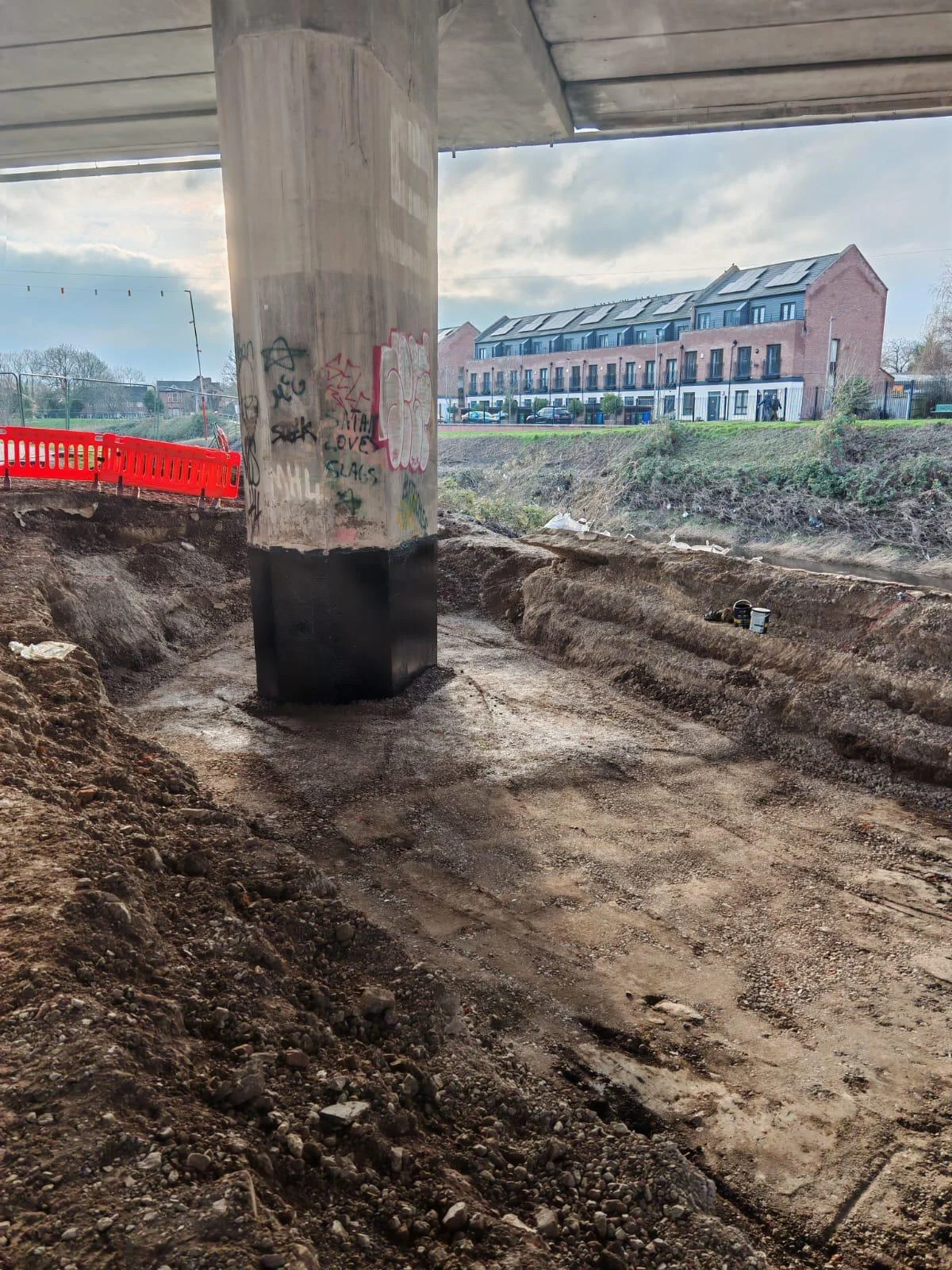
The M60 crosses the River Mersey at Palatine Road — one of the busiest motorway corridors around Manchester. A United Utilities flood defence had failed upstream, sending a surge down the river. The bridge piers had been subject to jacking and bearing replacement works by another contractor some time before, and the reinstatement around the piers had been loosely backfilled rather than properly compacted. When the floodwater came through, it scoured around the piers and washed the revetment away, leaving the foundations exposed going into winter.
The M60 crosses the River Mersey at Palatine Road — one of the busiest motorway corridors around Manchester. A United Utilities flood defence had failed upstream, sending a surge down the river. The bridge piers had been subject to jacking and bearing replacement works by another contractor some time before, and the reinstatement around the piers had been loosely backfilled rather than properly compacted. When the floodwater came through, it scoured around the piers and washed the revetment away, leaving the foundations exposed going into winter.
National Highways had a problem. Another flood event with the foundations in that state could have forced a closure of the M60. The project went live under emergency works and Civcon were brought in.
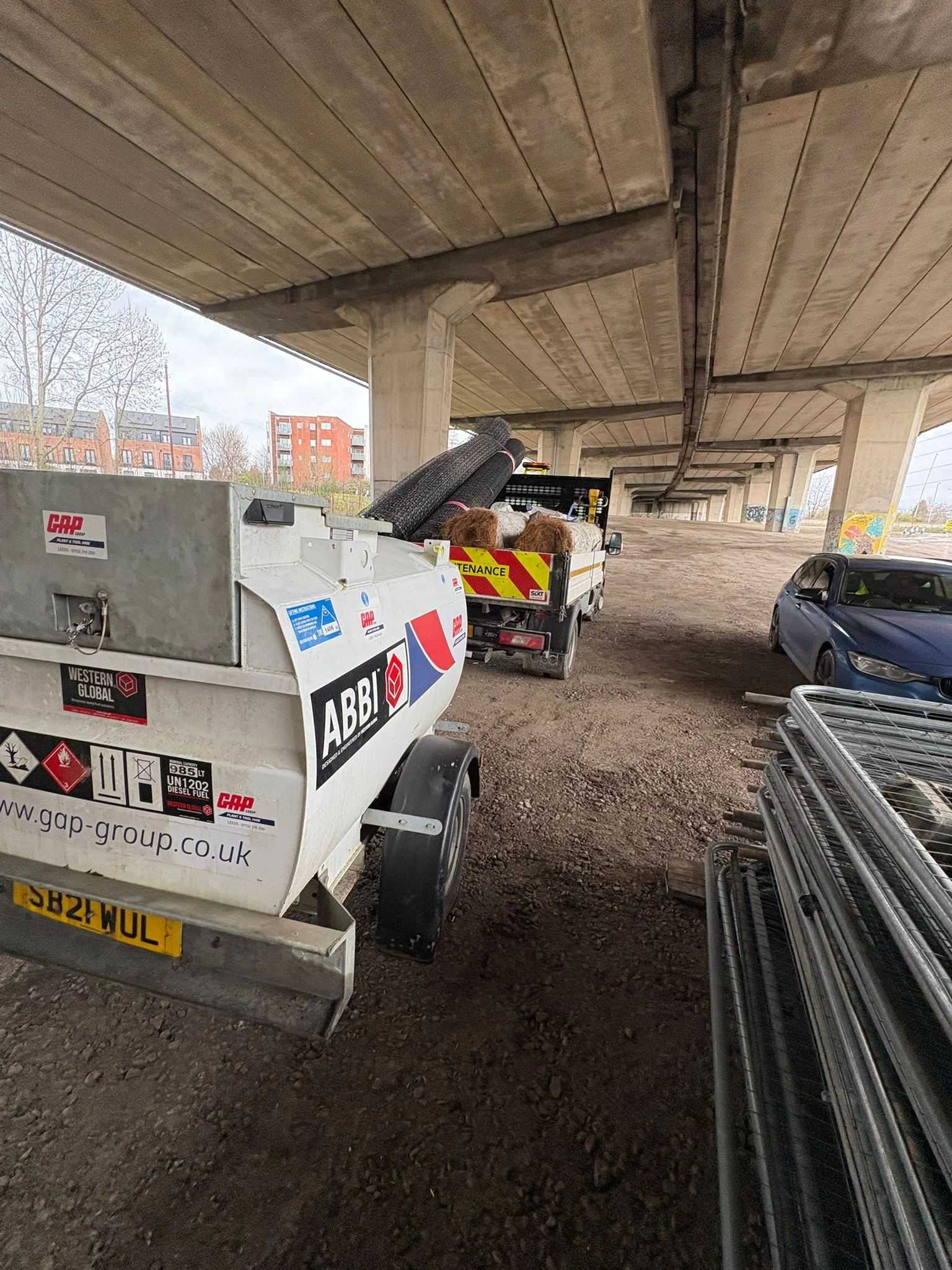
The initial site meeting established what needed to happen and in what order. The first instruction was enabling works: bagged gravel protection around the exposed piers, Harris fencing, and window sampling to understand the ground conditions. Those results would trigger the design. Octavius oversaw the scheme as principal contractor with CIVCON acting as subcontractor and delivering the physical works.
The window samples were taken by a nominated contractor who then didn't carry out the testing. A specialist had to be brought in to do it. Until those results were back the design couldn't progress, which compressed everything that followed.
Once the design was issued, materials had to be procured and on site before the Christmas shutdown. National Highways made clear the work wasn't stopping over the holiday period — the risk of further flooding was too immediate. 1,500 tonnes of Type 1, membrane and fill for the coffer dams, geogrid, gabion baskets — everything had to land before the Friday before Christmas. It did. The team worked to Christmas Eve, had Christmas Day and Boxing Day off, and were back on site through New Year continuously into January.
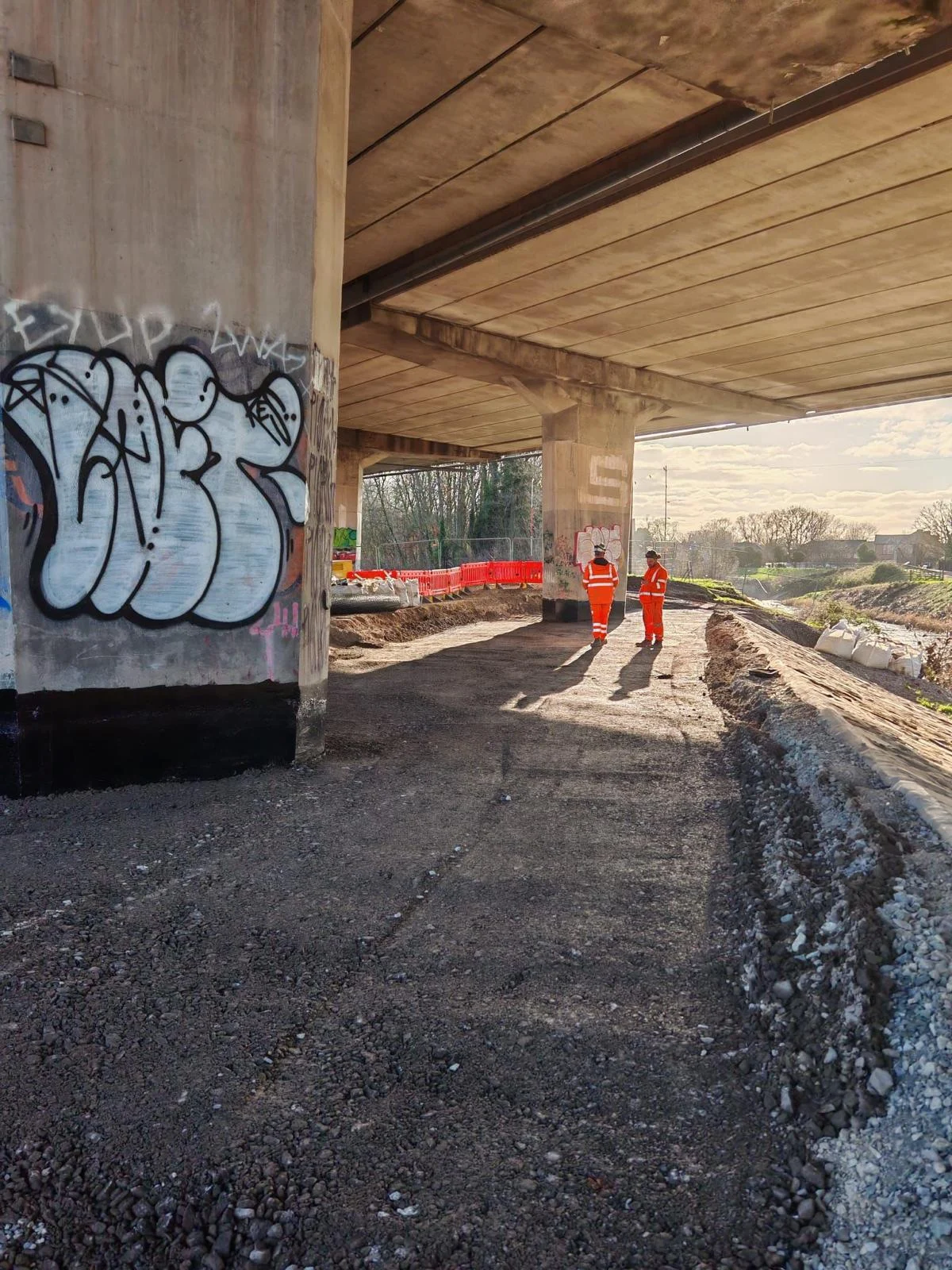
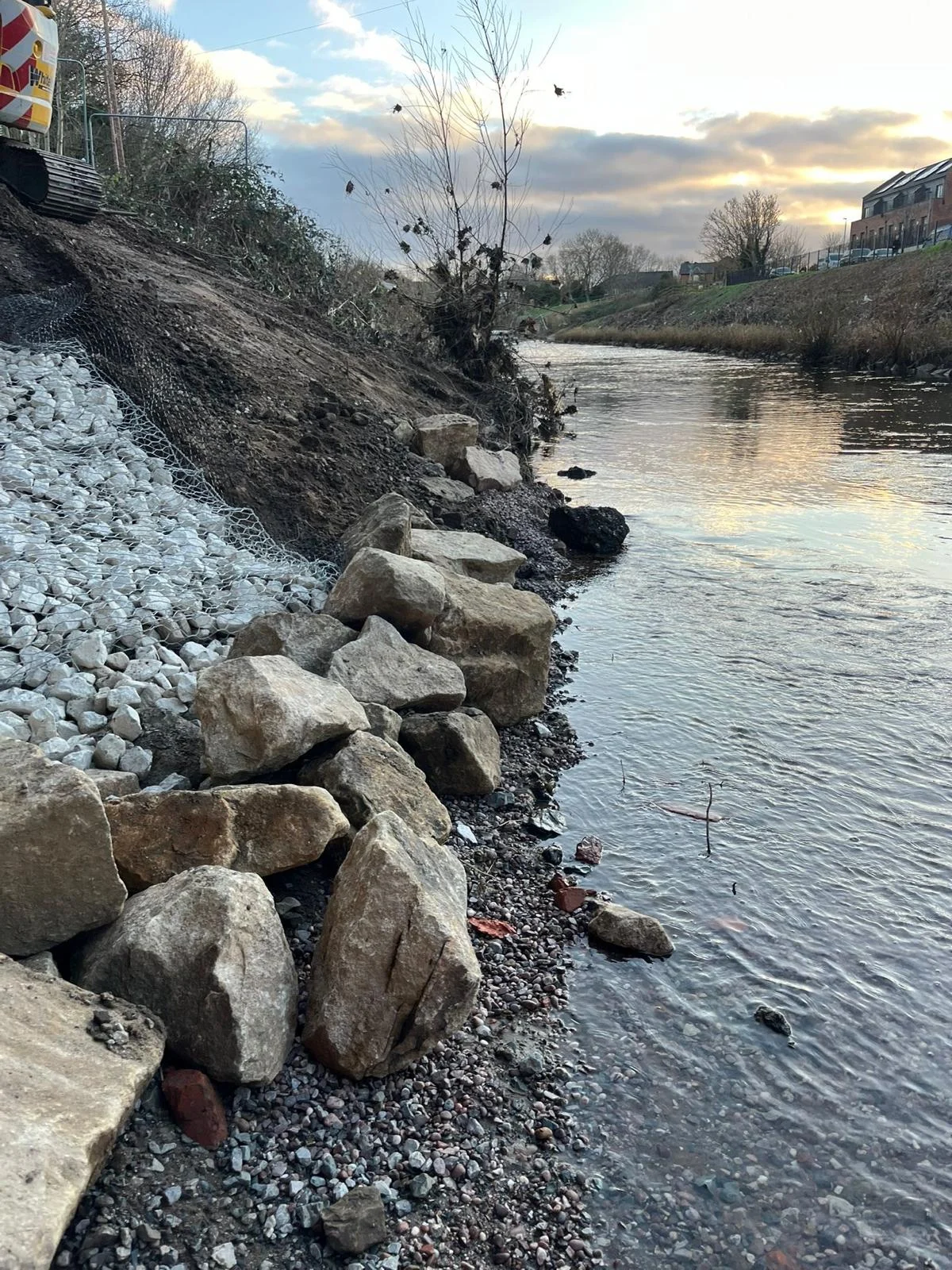
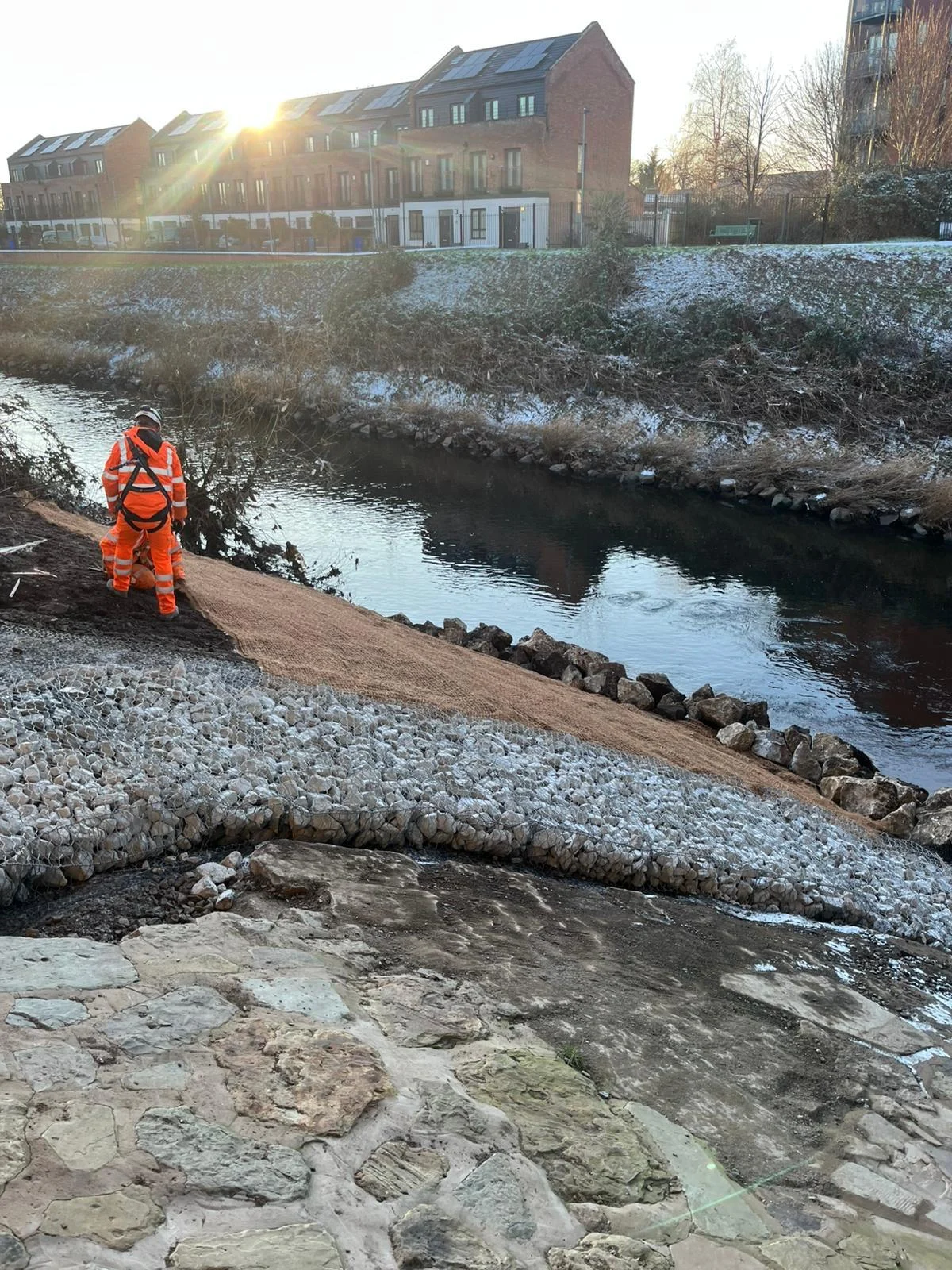
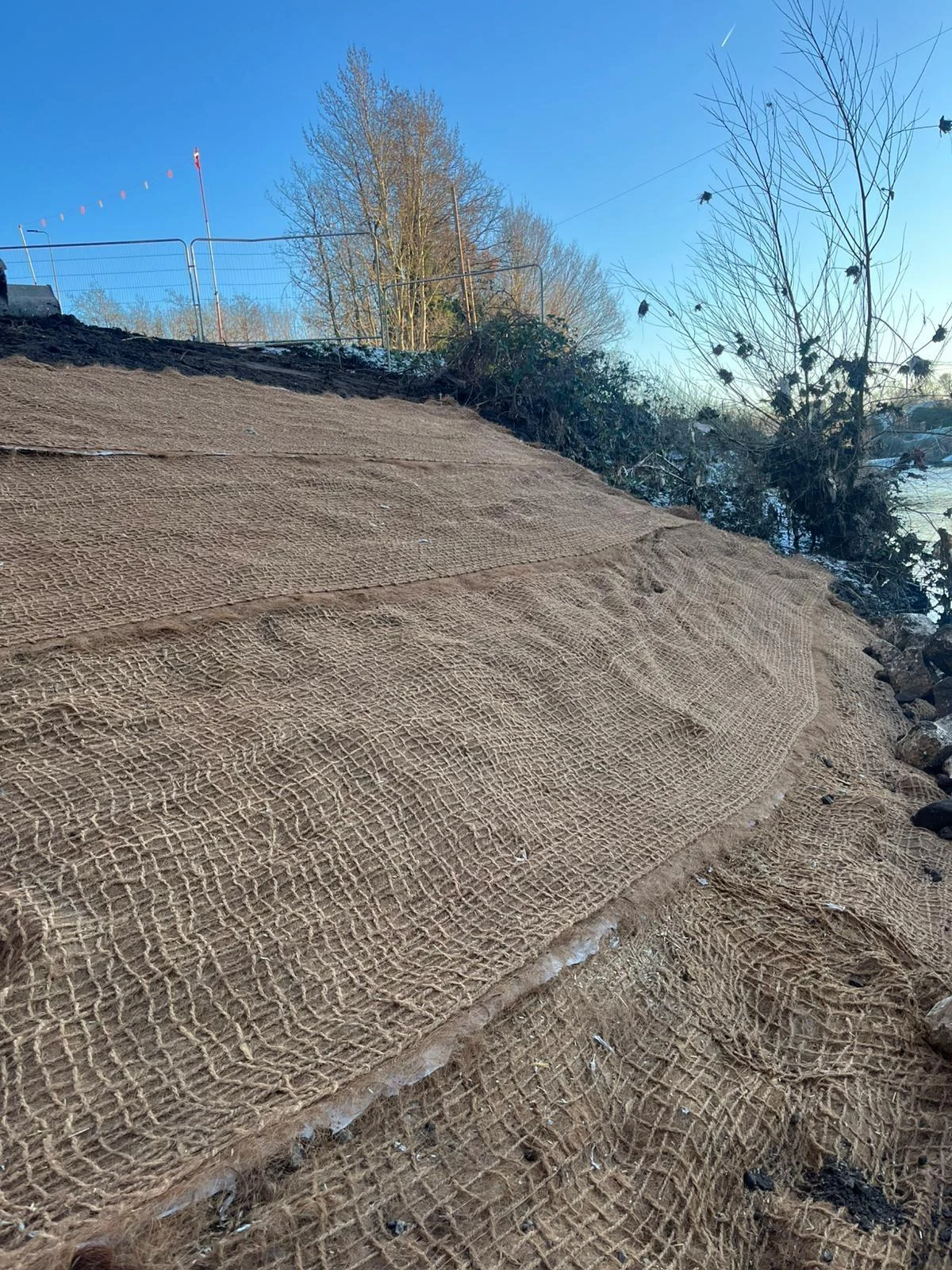
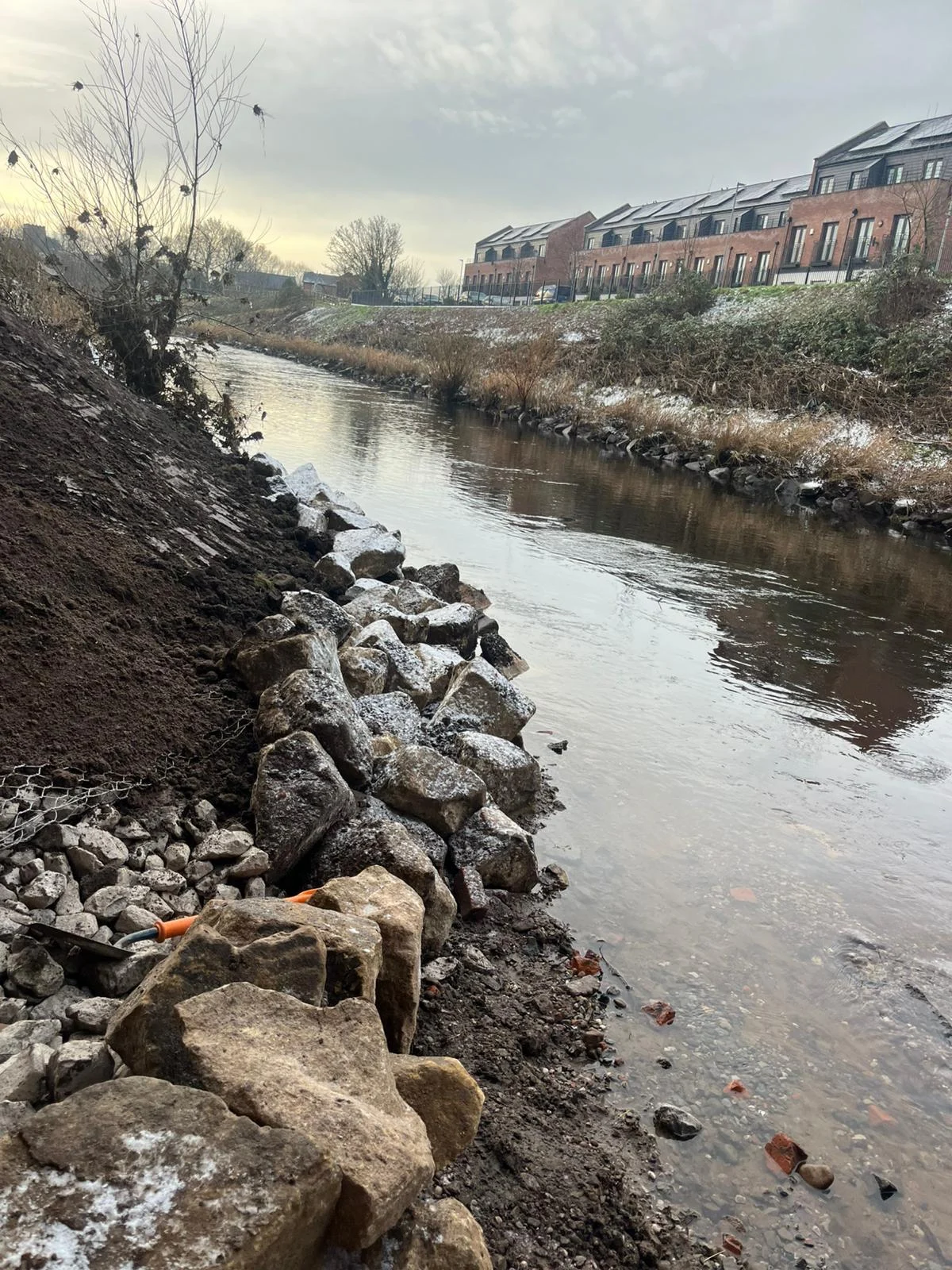
The construction sequence started at the river bed and worked upward. A coffer dam was formed using dumpy bags of gravel wrapped in membrane to isolate the working area, with a 6-inch pump over-pumping it dry. Rip rap — large boulders — went in at the base to provide weight and scour resistance. Type 1 fill was then compacted back up the slope in 100mm layers with geogrid incorporated at every 500mm. Gabion baskets were cut in along the edges. Pre-seeded erosion protection matting was laid on the banking — it allows growth both above and below the surface, binding the bank face as it establishes.
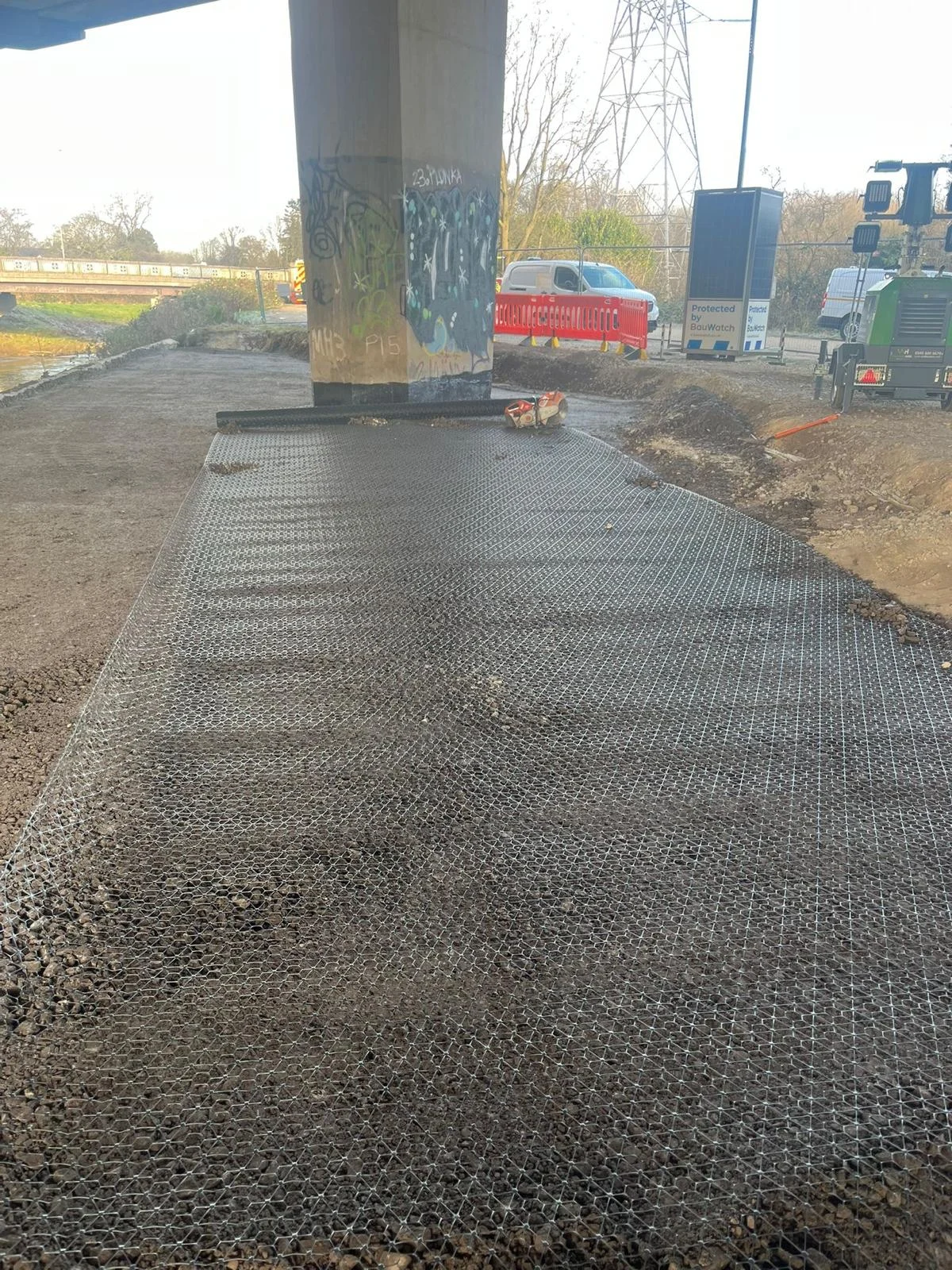
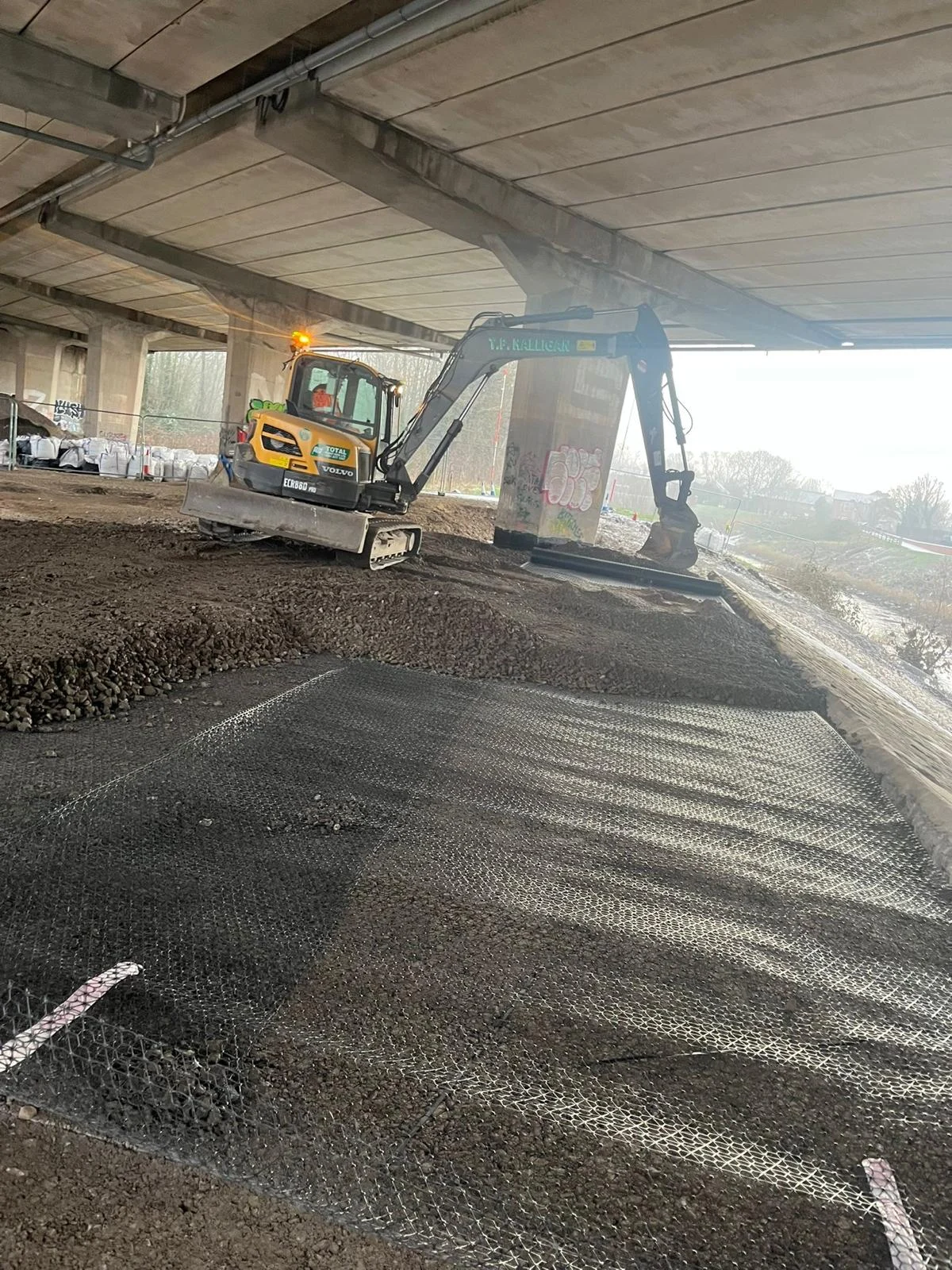
Where loose fill had been left around the piers, all of it was excavated out. Steps were cut into the sides of the excavation to create a proper key, and Type 1 was compacted back in 100mm layers with geogrid throughout. The same approach was carried out on both sides of the structure. Sheet piling encountered during the works was cut down as part of the scope.
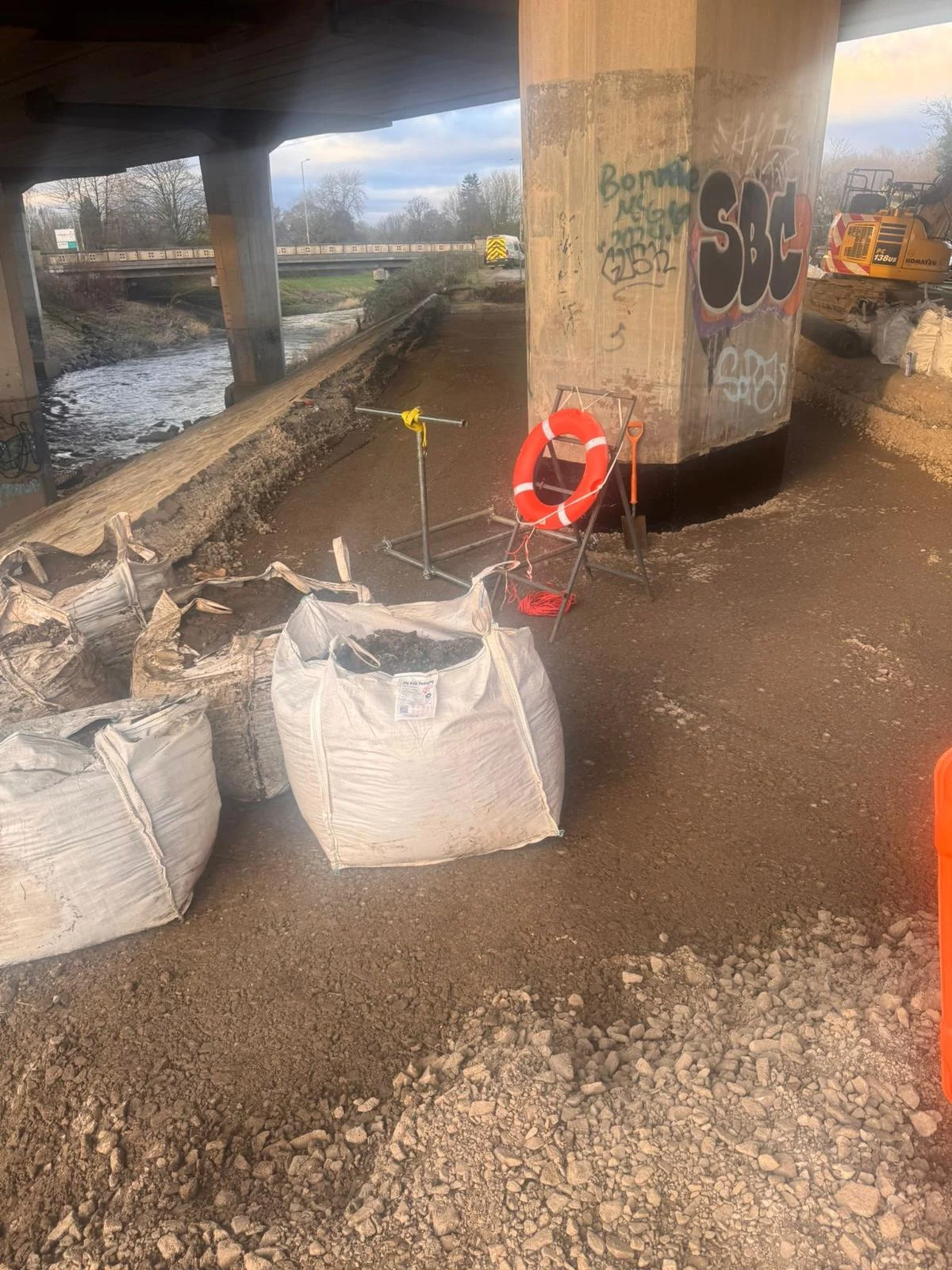
Working at the river edge with public access through the site throughout required a set of controls that don't apply on a standard highway scheme — lifelines, banksmen with walkie-talkies, emergency procedures for water entry, continuous management of the public through the work area.
The scheme is due for completion on 20 January. The commitment to work through the Christmas period was made and kept. Materials arrived on time, people were on site, and the programme held.
Site gallery
Related work
Other drainage schemes we've delivered.
Start here
Have a scheme that needs delivering?
Tell us about the site. We'll come back with a straight answer on programme, method and price.