Section 50 licences for street works: what to confirm
A practical guide to Section 50 street works licences for apparatus in the highway, including applications, coordination, reinstatement and close-out.
At a glance
| Permission or route | What it covers | Decision-maker | Key point |
|---|---|---|---|
| Section 50 licence | Apparatus placed, retained or maintained by a non-undertaker in a street | Relevant street authority | Applicant status and licence conditions matter |
| Permit or notice | Coordination of street works where the scheme applies | Street authority | Requirements depend on the street and local scheme |
| Section 278 agreement | Works to an existing highway | Highway authority | Separate from an apparatus licence |
A Section 50 licence lets a person who is not an authorised street works undertaker place, keep or maintain apparatus in a street. The street authority issues it under the New Roads and Street Works Act 1991. It is not open permission to dig at any time. The applicant must meet the authority’s conditions and coordinate the work before excavation.
This is different from a Section 278 agreement. Section 278 concerns works to an existing highway carried out under an agreement with the highway authority. Section 50 concerns apparatus in the street by a person who is not otherwise entitled to carry out those street works. Where the apparatus installation forms part of a wider highway or development package, confirm whether a licence, agreement, permit, or more than one approval applies.
Who needs to consider a licence
A developer, landowner or contractor may encounter Section 50 when arranging a new service connection or private apparatus in the public highway. The exact route depends on who owns the apparatus, the nature of the work and the applicant’s statutory status. Do not assume a utility company’s process covers privately owned apparatus or that a contractor can rely on the client’s authority without formal arrangements.
The first step is to identify the street authority and the legal applicant. Ask the authority what information it requires, who must hold the licence, what fees and conditions apply, and whether other permissions are needed. Requirements vary by authority, street and scope. A licence is not a substitute for planning permission, land rights, utility approvals, traffic management acceptance or any other applicable consent.
The statutory basis is Section 50 of the New Roads and Street Works Act 1991. Read the Act alongside the current street authority guidance and licence conditions. In particular, check which party is responsible for the apparatus over its life and how the authority expects inspections, reinstatement and records to be managed.
Prepare an application that can be assessed
Before applying, first define the apparatus, its purpose, route and limits. Drawings should show the proposed alignment in relation to the highway, property boundary and other known services. The authority may request technical details, method information, traffic management proposals, evidence of insurance or other supporting material. Follow its current checklist rather than relying on a previous application from a different council.
Coordinate the proposed route with existing utilities and the design team. A route that looks clear on a concept plan may conflict with buried services, highway structures, drainage or future works. Use the appropriate utility information and surveys, and raise unresolved conflicts before the application is treated as complete. An incomplete or inconsistent submission can trigger requests for clarification and affect the programme.
Clarify the reinstatement standard and responsibility for defects. Street works affect a public asset, so the licensee should understand the obligations set out in the licence and applicable legislation. Record what the authority requires for reinstatement, inspection, testing and completion evidence. Do not infer a defect period or technical requirement from another authority’s terms.
Plan the work and traffic management
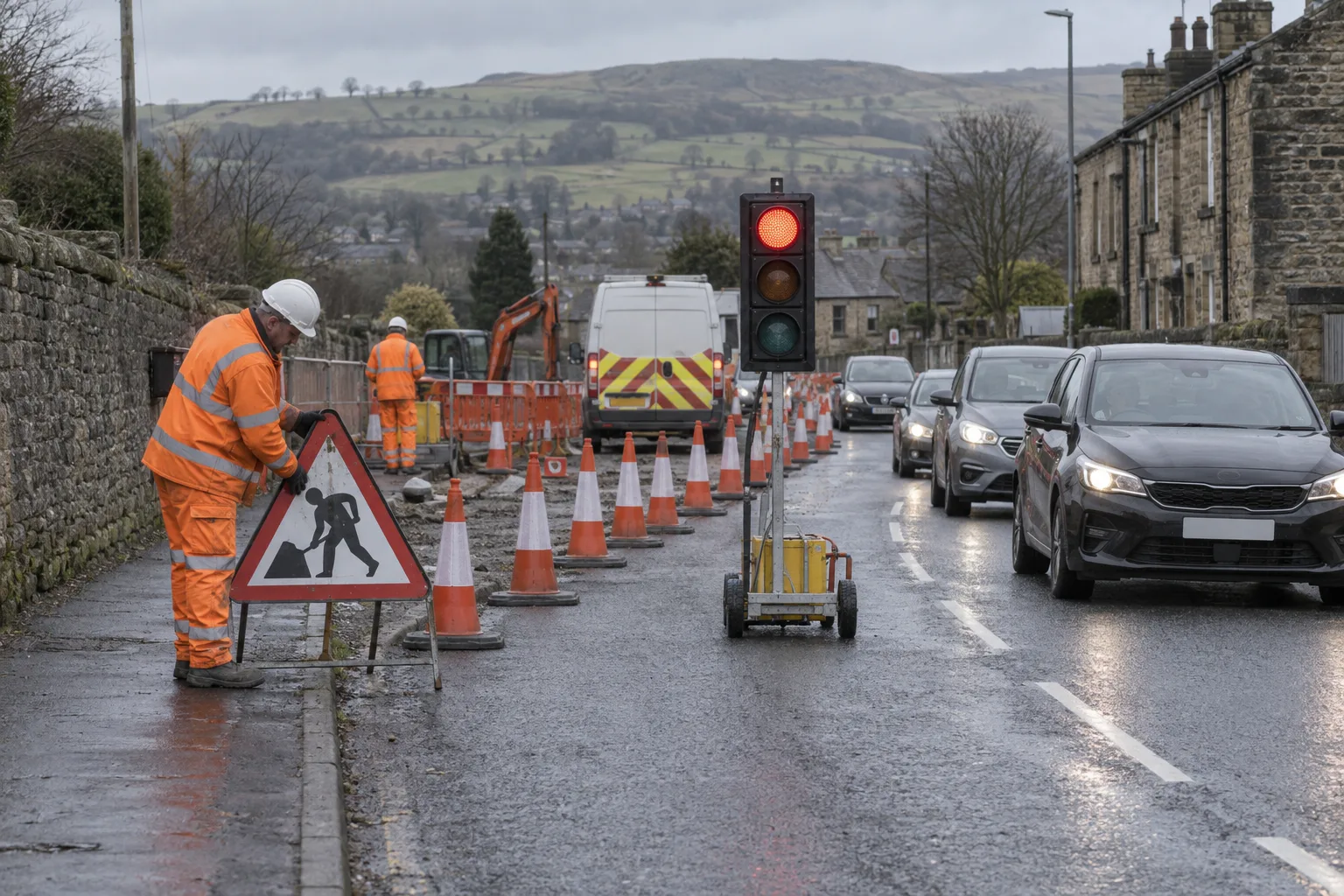
Do not set a start date until the necessary licence and related permissions are in place. The street may operate under a permit scheme or other coordination process. Ask the authority how to book the works, what notice or permit is required, and whether restrictions apply to the road, dates, working hours or traffic arrangement.
A traffic management plan should match the actual site and proposed method. It needs to show how road users, pedestrians and the workforce will be protected, how access will be maintained where required, and what happens as the work progresses. The correct arrangement depends on road layout, traffic conditions, duration, excavation location and local requirements. Use a competent traffic management designer where the scope calls for it.
The Department for Transport’s Safety at Street Works and Road Works code of practice gives national guidance for signing, lighting and guarding works. It does not replace the authority’s licence conditions, permit requirements or site-specific risk assessment. The work plan should use the current code and any relevant authority requirements.
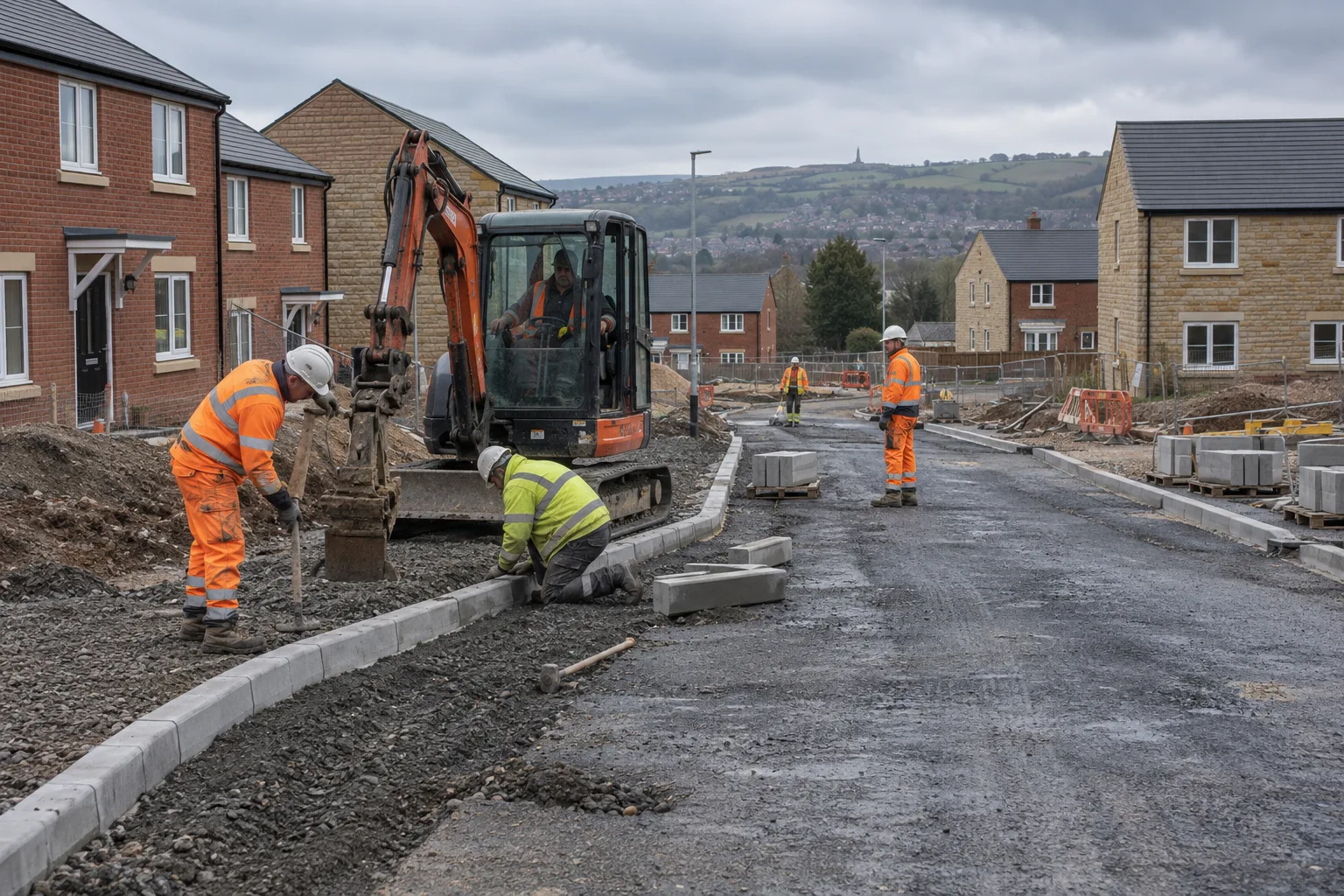
Check whether a planned excavation interacts with a development’s Section 278 works or estate road construction under Section 38. The statutory routes remain distinct, but the site programme, highway boundary, traffic management and reinstatement need coordination. Civcon’s Section 278 guide explains the agreement for works to an existing highway, while the Section 38 guide covers new roads intended for adoption.
Delivering the works safely and correctly
Brief the site team on the licence conditions, accepted drawings, traffic management arrangement and inspection requirements. Make the approved information available on site and record any change that could affect the apparatus route, excavation or reinstatement. If site conditions require a change, contact the authority and establish whether approval is required before proceeding.
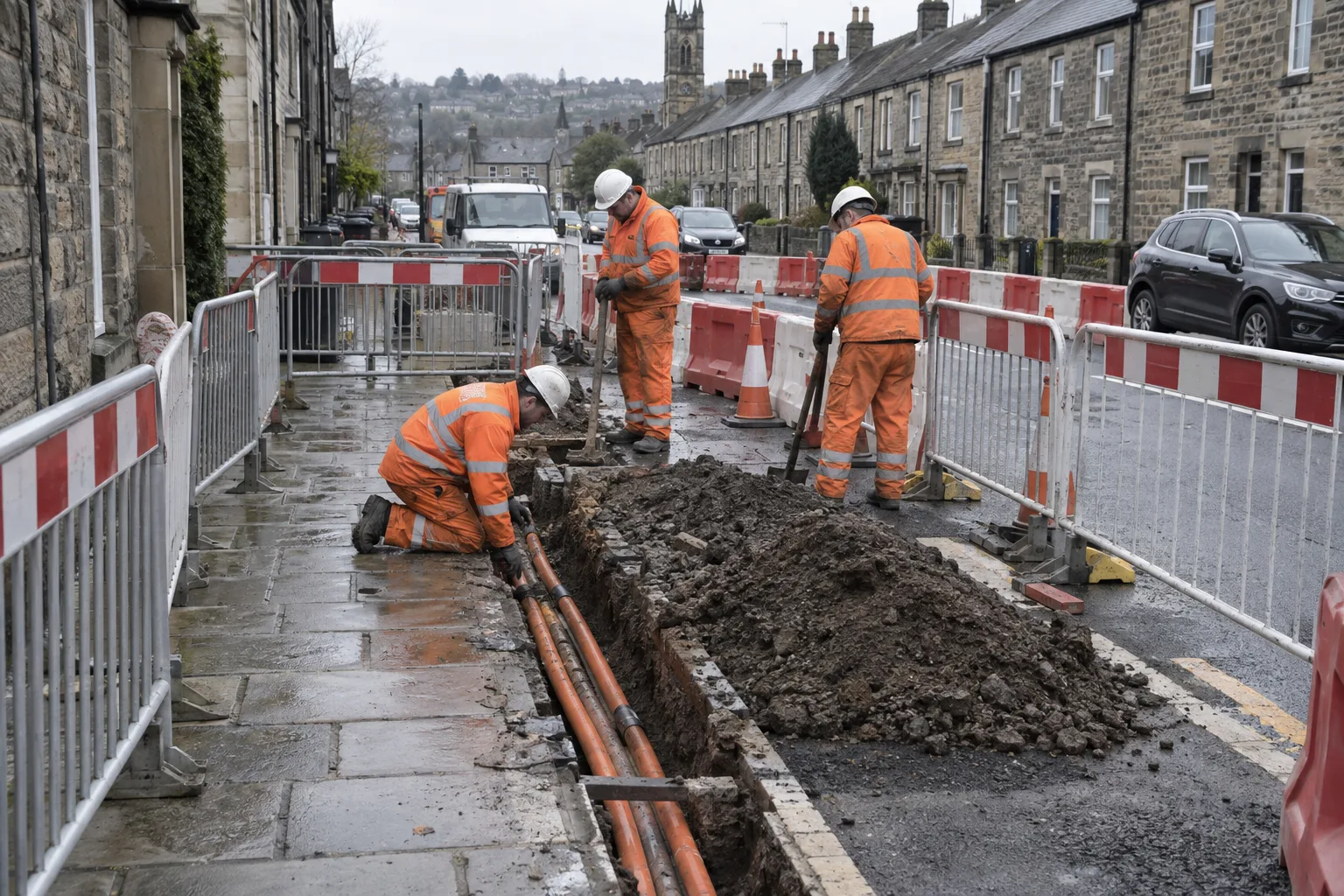
Locate services using the appropriate plans, detection and safe-digging method. Plans are a planning aid, not proof that the ground is clear. Coordinate with apparatus owners where required and follow the relevant safe working practices. The licence does not reduce the contractor’s duty to plan and execute the excavation safely.
Keep the excavation, temporary traffic management and reinstatement under active supervision. Arrange inspections at the stages required by the authority and avoid covering work that must be inspected. Maintain records of materials and tests required by the licence or specification. At completion, provide the authority with the evidence it requests and retain an accurate record of the apparatus installed.
Close-out and continuing responsibility
The obligations do not necessarily end when the crew leaves site. The licensee may retain responsibility for the apparatus and for obligations defined by the licence and legislation. Confirm who will maintain it, how future access will be arranged and how ownership changes will be handled. Keep the licence, approved plans, as-built information and inspection records with the asset documentation.
Close-out should reconcile the installed work with the accepted plan. Document any approved departures, reinstatement records and outstanding actions. Confirm acceptance or completion with the street authority using its stated process. Do not equate physical completion with formal close-out unless the authority’s requirements have been satisfied.
Mistakes that create avoidable friction
Applying before ownership and applicant status are clear can send the request down the wrong route. Establish who owns the apparatus and who must hold the licence first.
Treating a licence as the only permission can leave the team without a permit, traffic management acceptance or land rights needed to proceed. Map each approval and its decision-maker.
Using a generic traffic management drawing can fail to reflect the actual street constraints. Prepare a site-specific proposal and confirm local restrictions.
Changing the route in the field without recording the change can leave the as-built record unreliable. Escalate deviations through the authority’s process and update the final records.
Finally, leaving reinstatement and maintenance responsibility until the end can create disagreement after the work is buried. Agree standards, inspection points and the responsible party before construction.
Choosing a street works contractor
For a highway apparatus package, ask the contractor how it will coordinate with the street authority, manage the licence conditions, book any required permits, protect buried services, arrange inspections and evidence reinstatement. Confirm whether the contractor is preparing an application or executing under a licence held by the client; do not leave that responsibility implicit.
Civcon delivers highways infrastructure works and utilities packages. Share the authority’s licence requirements, route drawings, known service information and proposed work dates when discussing a scheme. Civcon can then understand the interfaces and scope without assuming that a particular authority will accept a standard approach.
How we approach it
First, identify who owns the apparatus and who must hold the licence. Next, contact the street authority for its current application checklist, fees, conditions and coordination route. Prepare a route plan, service information, work method and reinstatement approach. Confirm whether a permit, traffic management acceptance, land right or other consent is also needed. Before mobilisation, brief the team on the licence, accepted drawings and inspection points. After the work, reconcile the installed route with the approved plan and submit the records the authority requests.
The table distinguishes permissions that may apply together. It is not a checklist for every authority or street.
Sources and next step
Primary legislation: New Roads and Street Works Act 1991, Section 50. National safety guidance: Safety at Street Works and Road Works code of practice. Confirm current requirements directly with the relevant street authority.
Before excavation, verify the correct applicant and licence route, accepted apparatus plans, any permit or traffic management requirements, inspection arrangements and reinstatement obligations. Keep those requirements with the site pack and the final asset record.
Further primary reference: New Roads and Street Works Act 1991, Section 65, covering safety measures for street works. Apply the current law and authority conditions to the site.