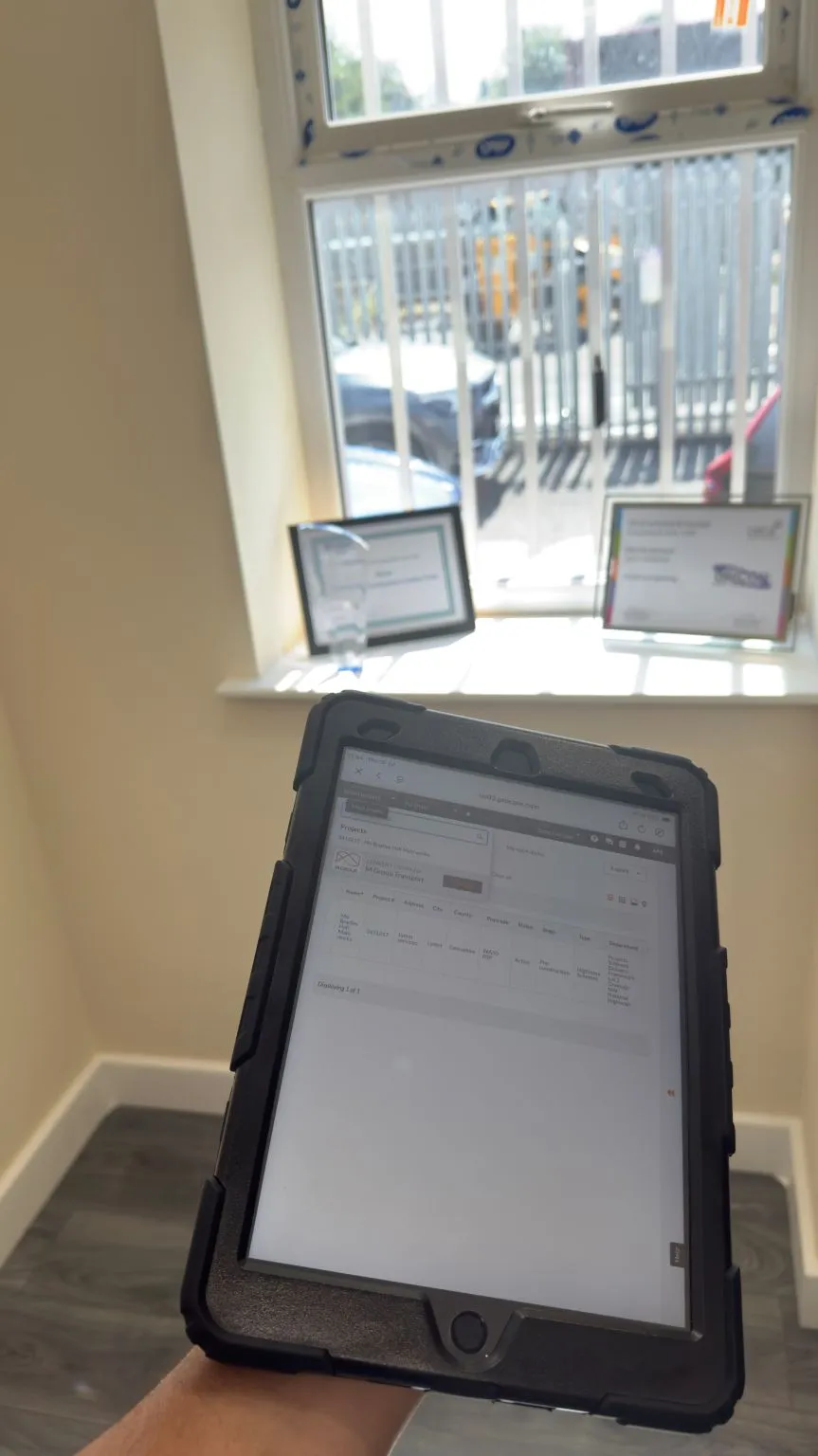
Civcon has issued tablets to all of its site agents. Drawings, RAMS, inspection and test plans, inspection records and daily progress are now captured live on site, on the current revision, and shared straight through to the office and the client.
It sounds like a small change. It isn't.
What RAMS and ITPs actually do
A RAMS document, short for Risk Assessment and Method Statement, sets out the hazards on a task, such as a traffic management plan for highway works, and exactly how the work will be carried out safely. An ITP, an inspection and test plan, lists the checks a piece of work has to pass and the hold points where someone has to sign off before the next stage starts. Both only work if the person on site is looking at the current version. An out of date RAMS or a missed hold point is how mistakes get built into the ground.
The site file used to live in the cab of a van. Paper gets left behind, gets soaked, goes home in a pocket, or turns out to have been superseded two weeks earlier. Every time that happens there is a hole in the record, and holes in the record cost time and money, usually at the worst possible moment.
Working from one live source changes that. Everyone is on the current revision. Records are captured as the work happens rather than written up later from memory. Clients see accurate information without waiting for the end of the week. Nothing falls into the gap between site and office.
This sits alongside Civcon's ISO 9001 accreditation, which requires defined processes for how work is planned, checked and recorded. Live digital records give that system something to run on, rather than a paper trail assembled after the fact.
Clients trust Civcon to give them a straight answer on where a job stands. This makes sure that answer is always backed by a proper trail.