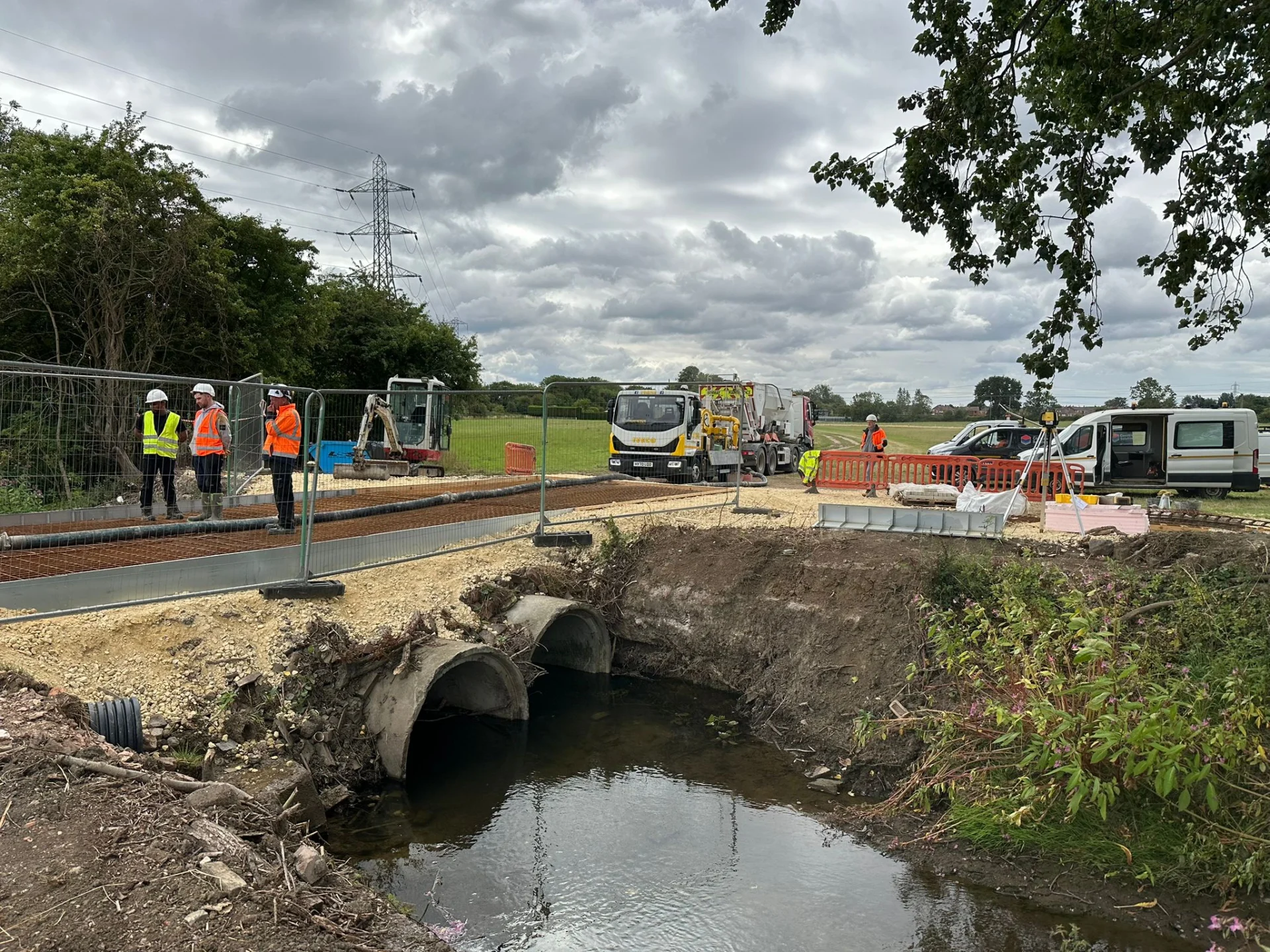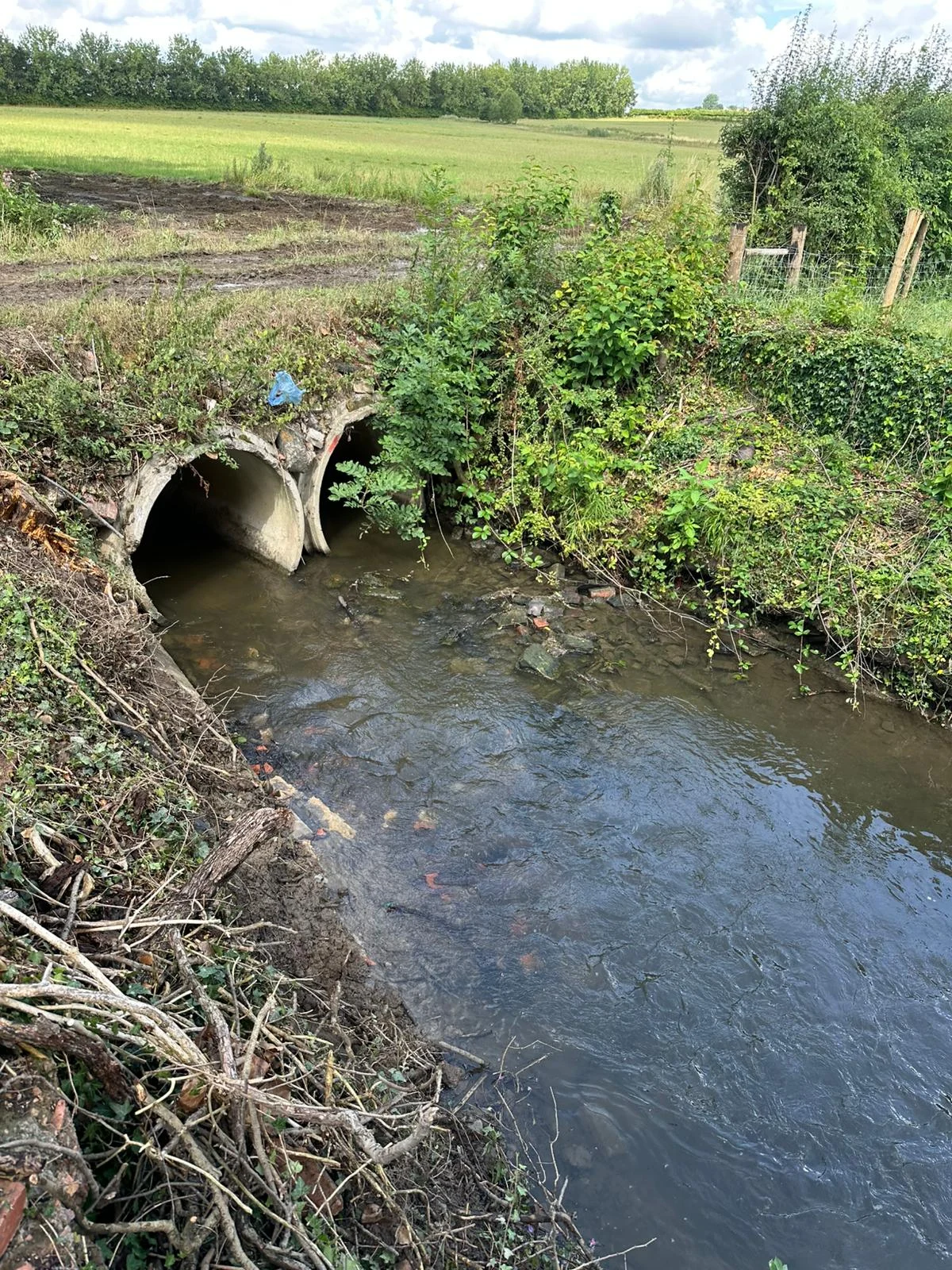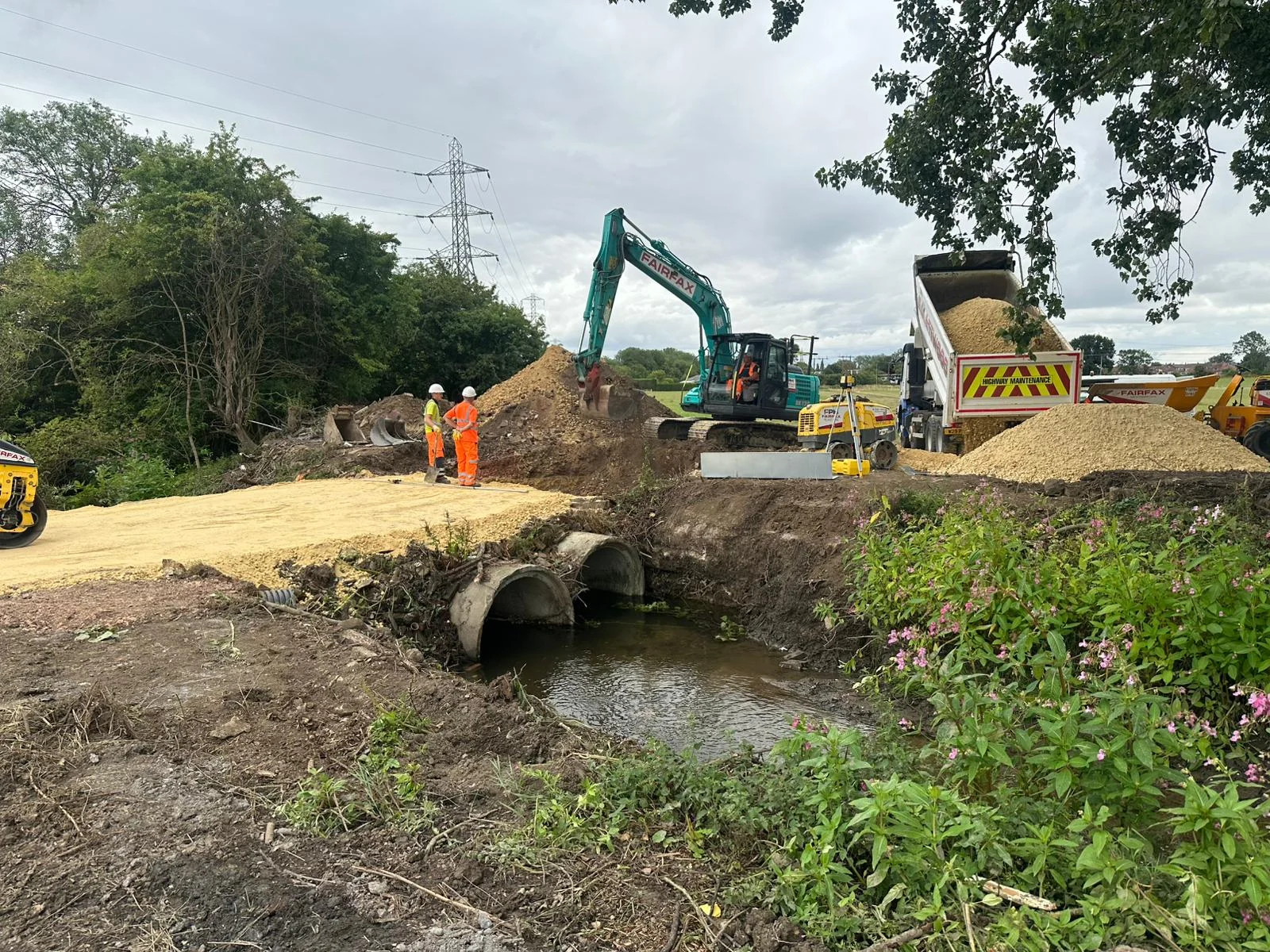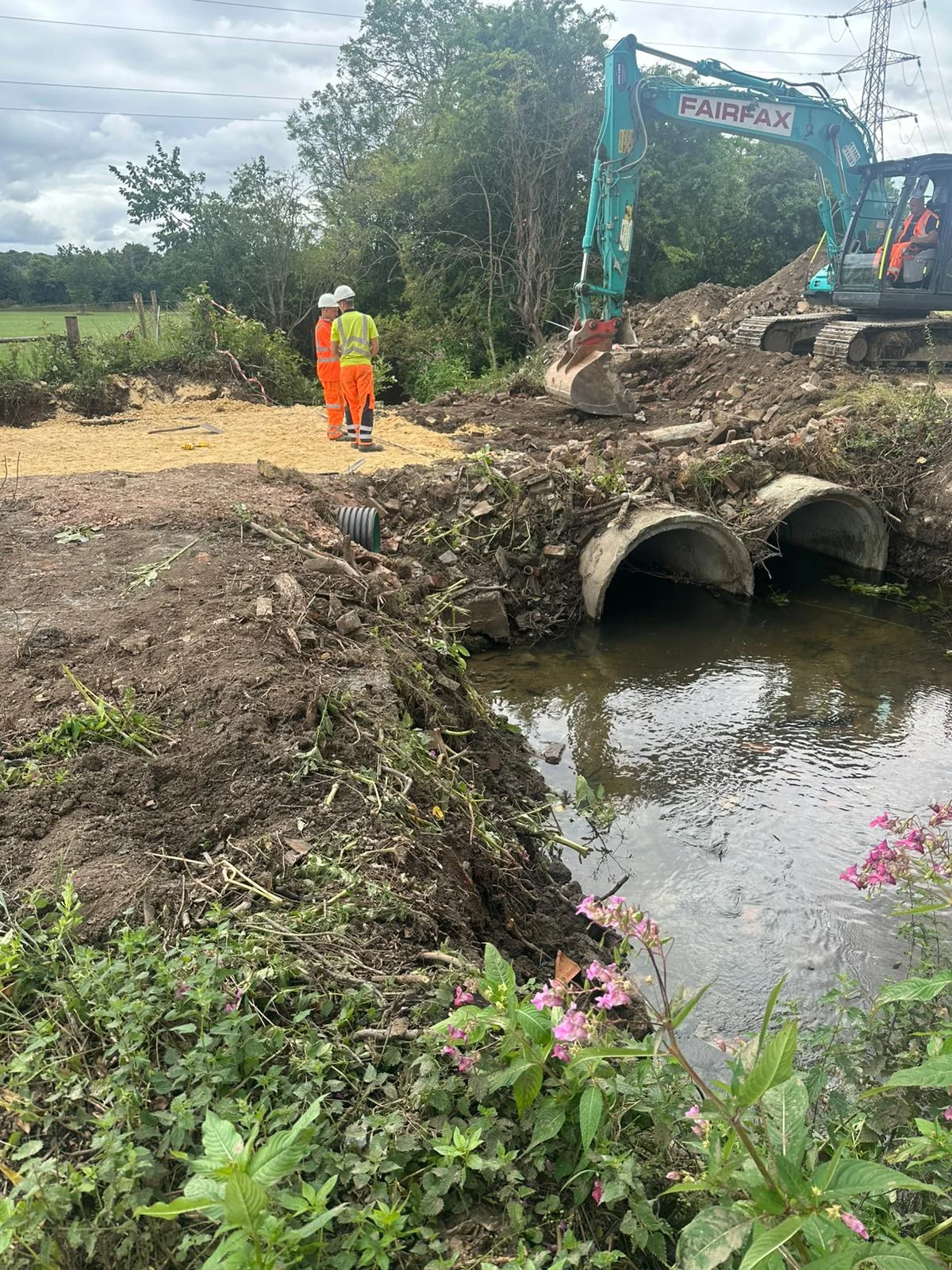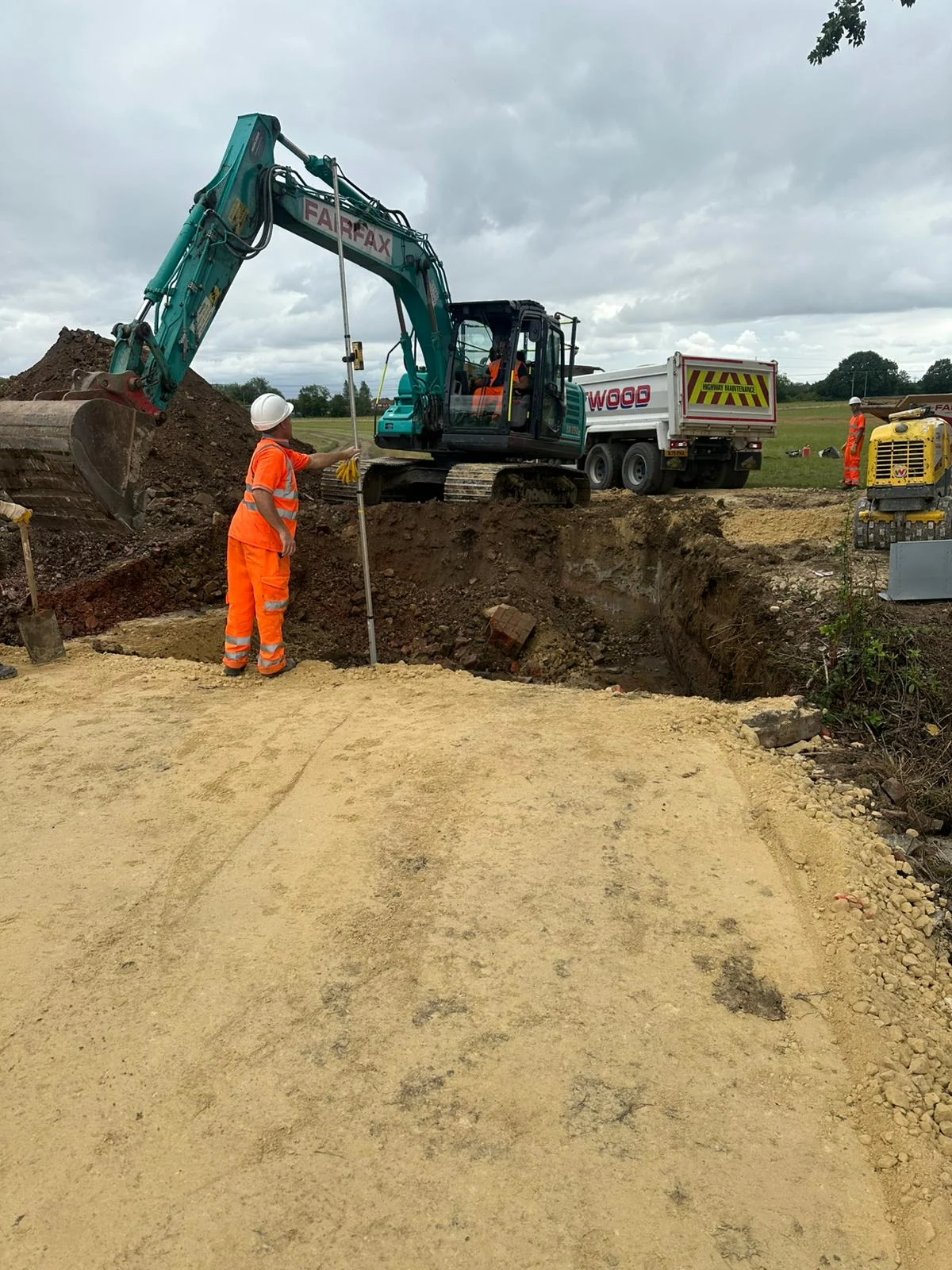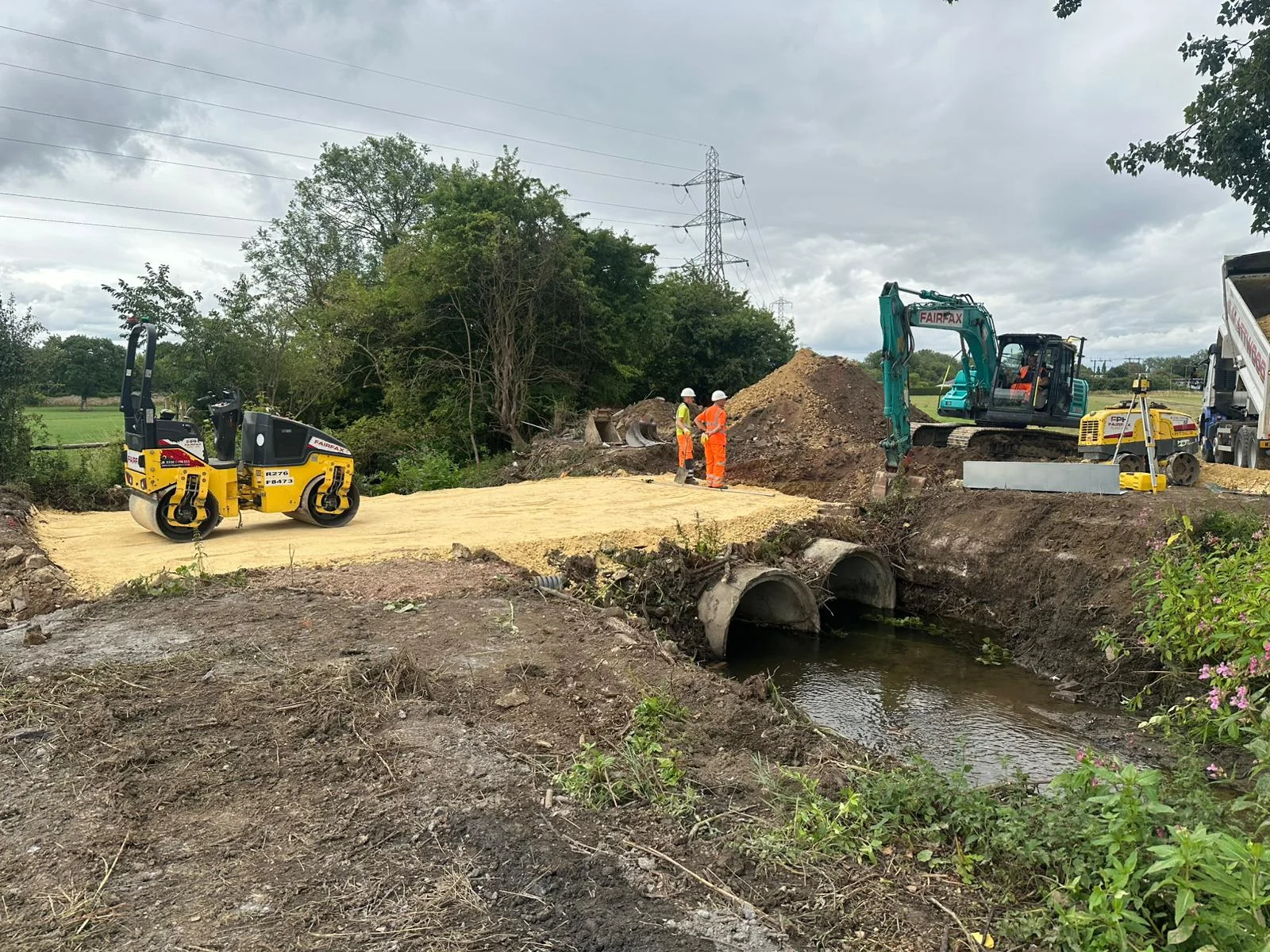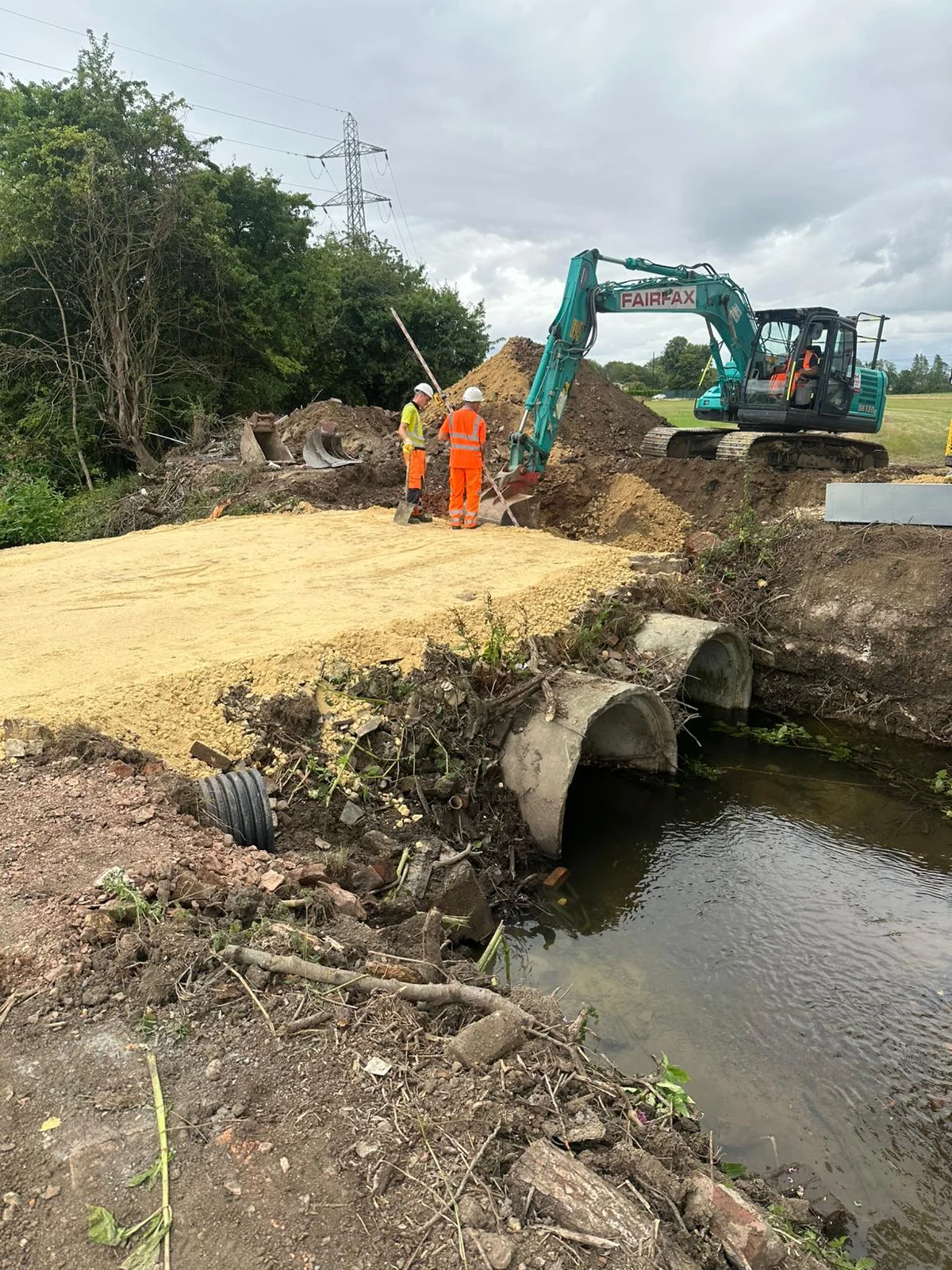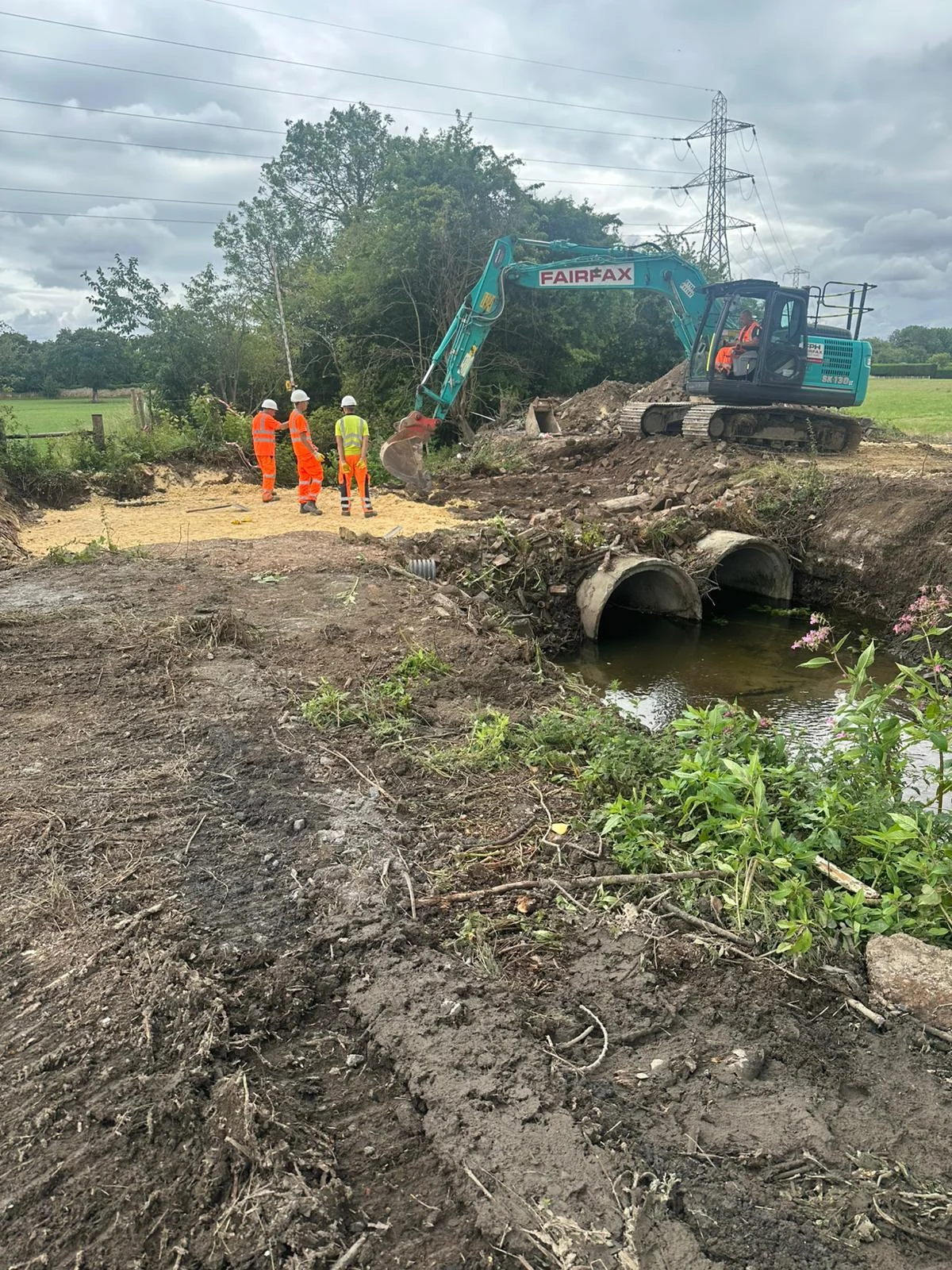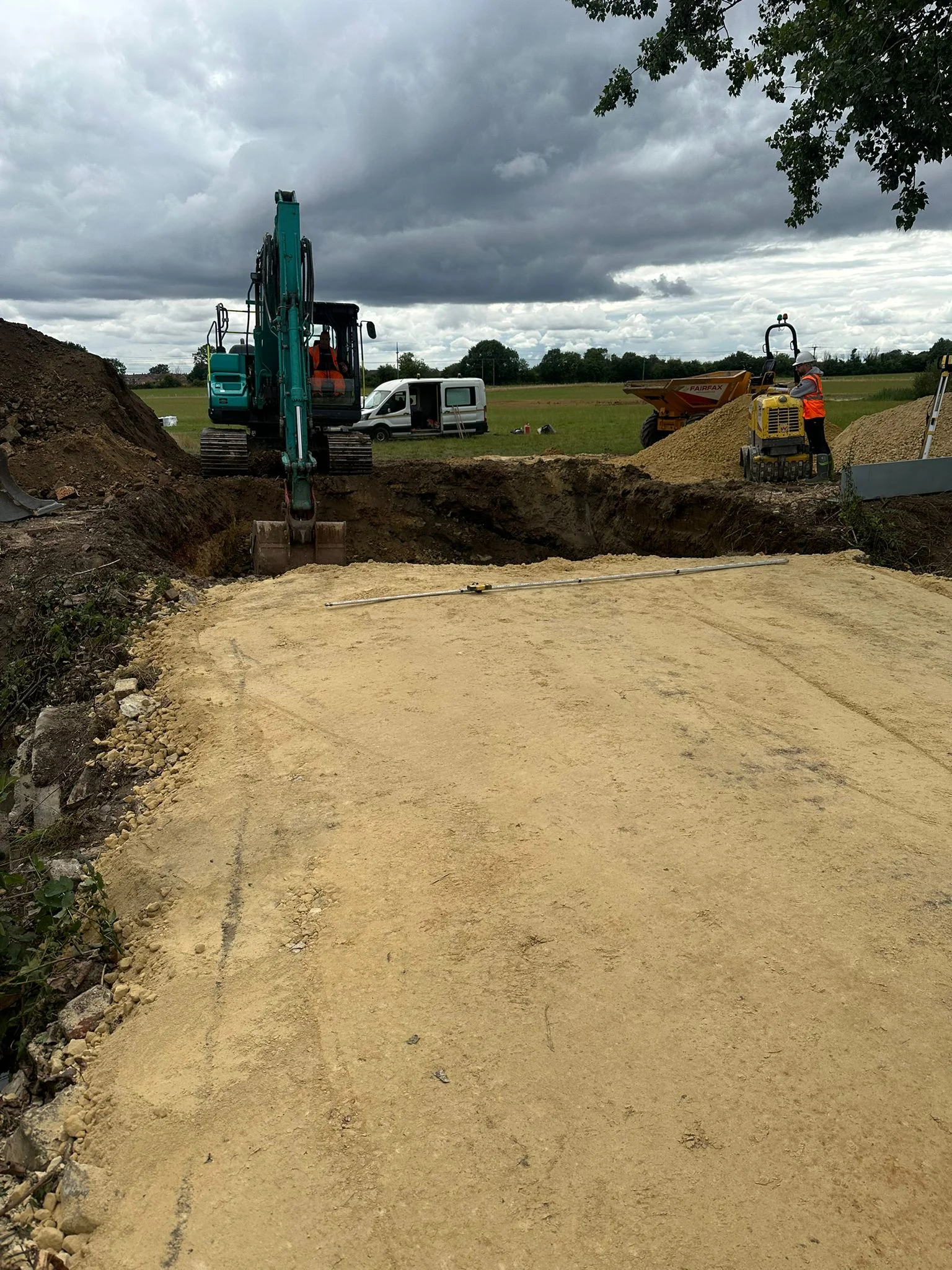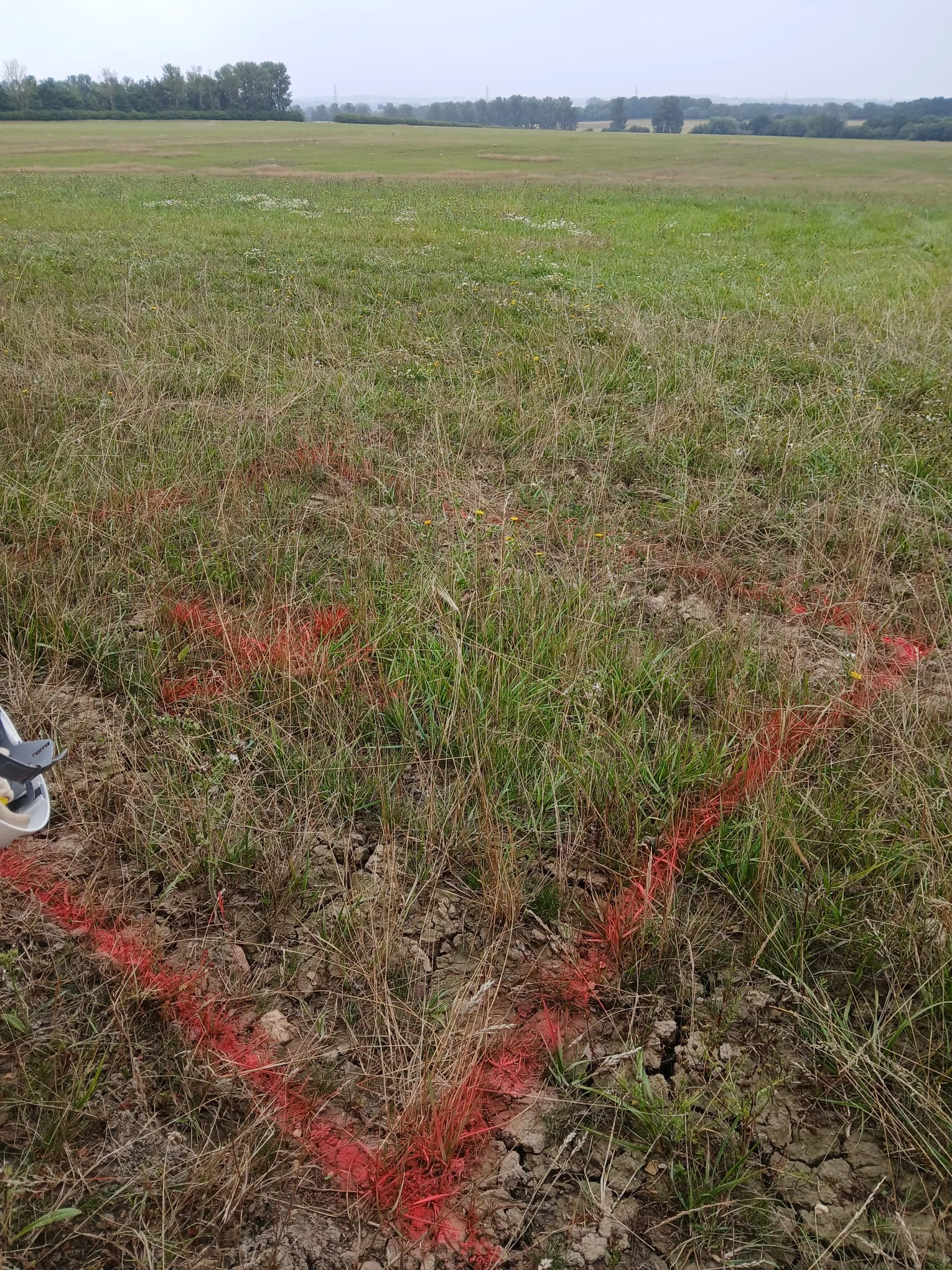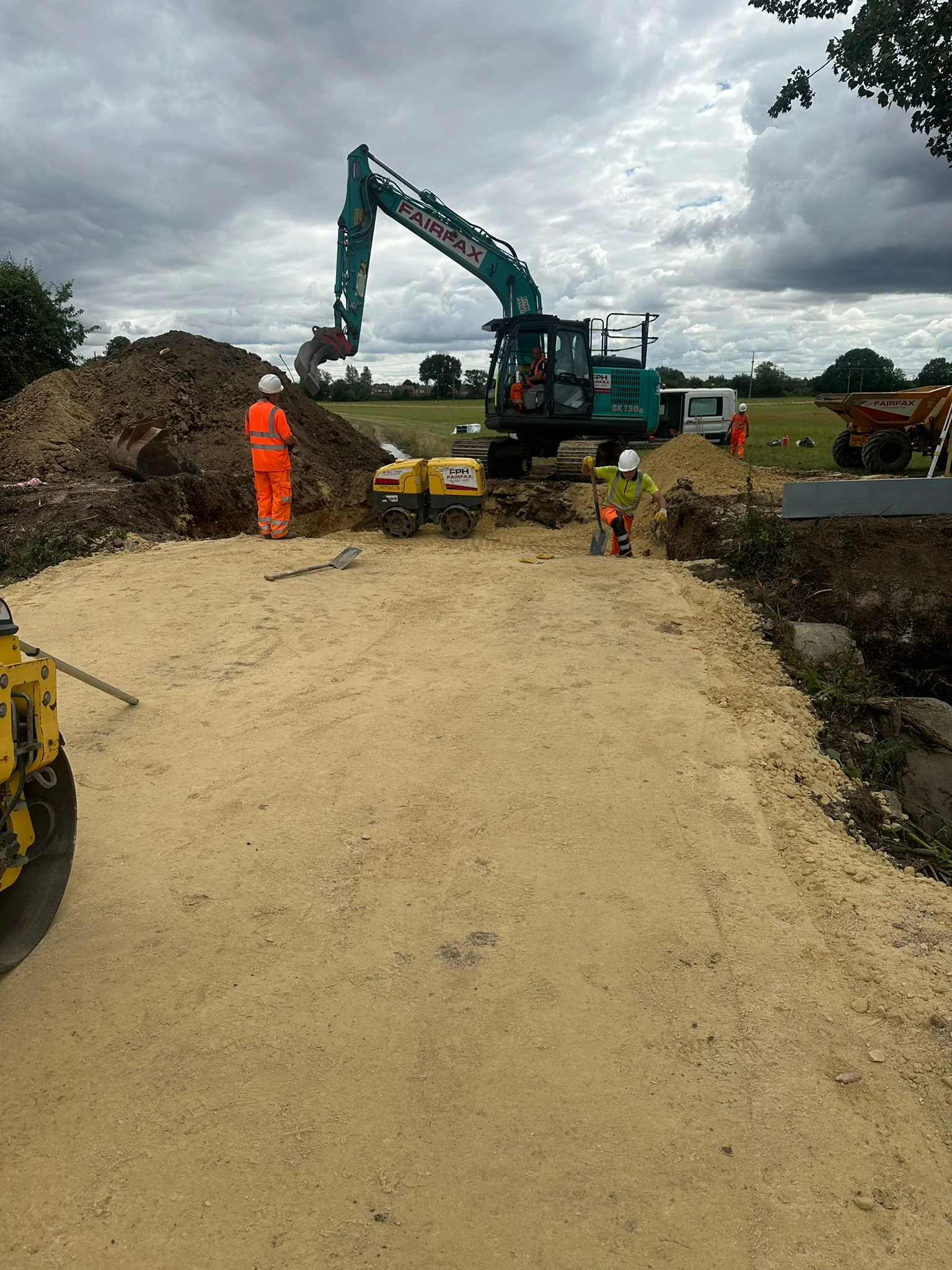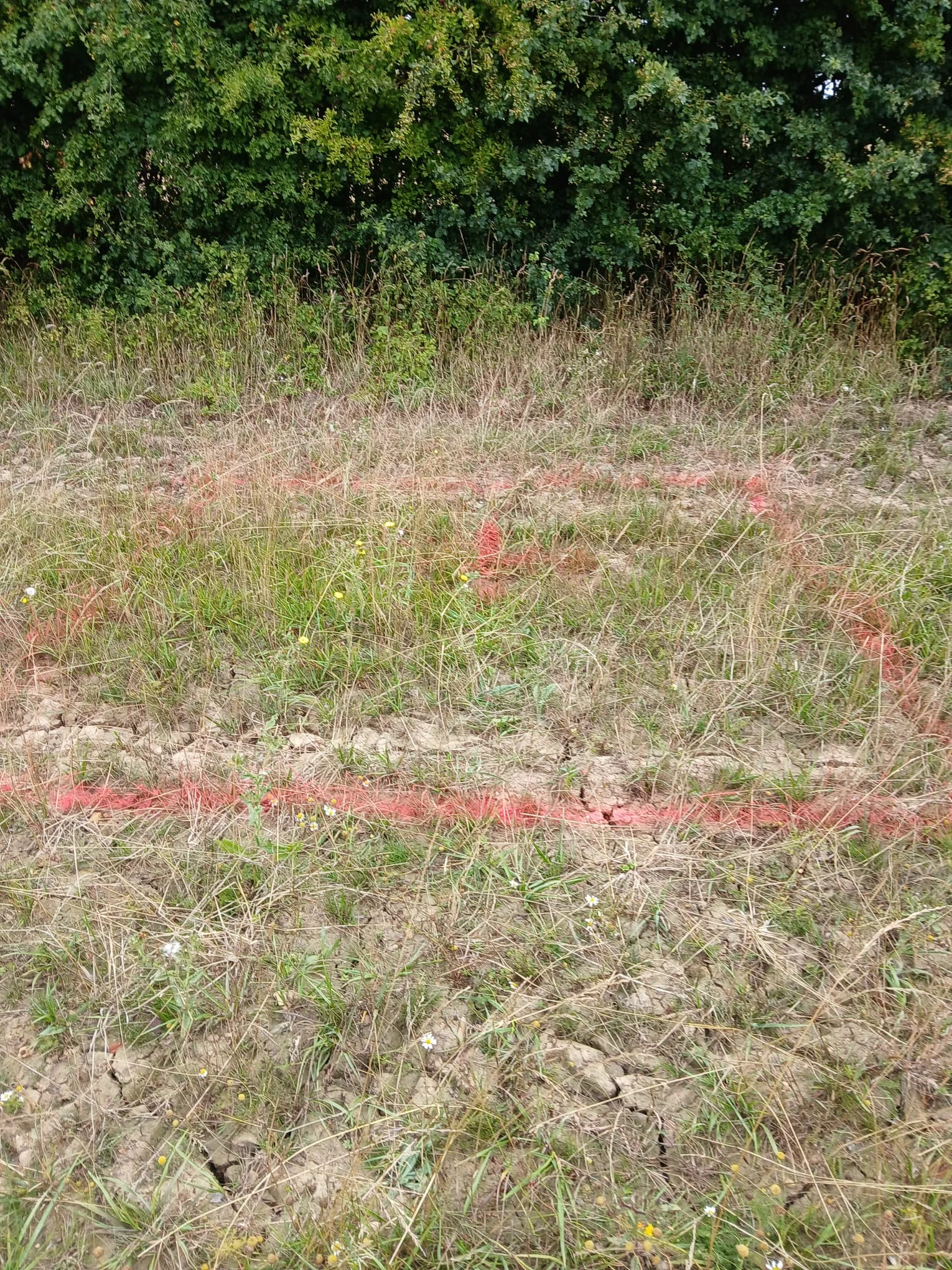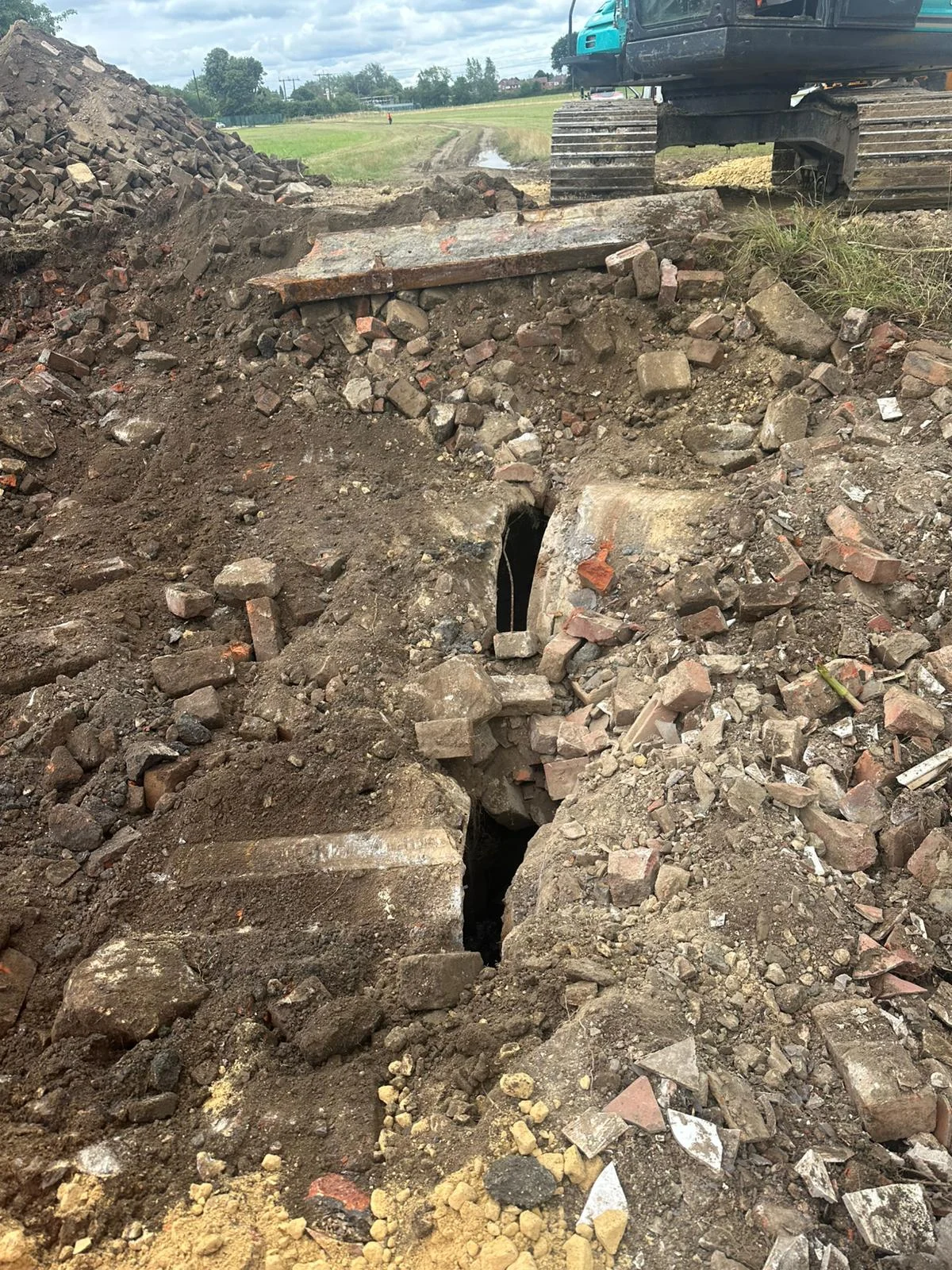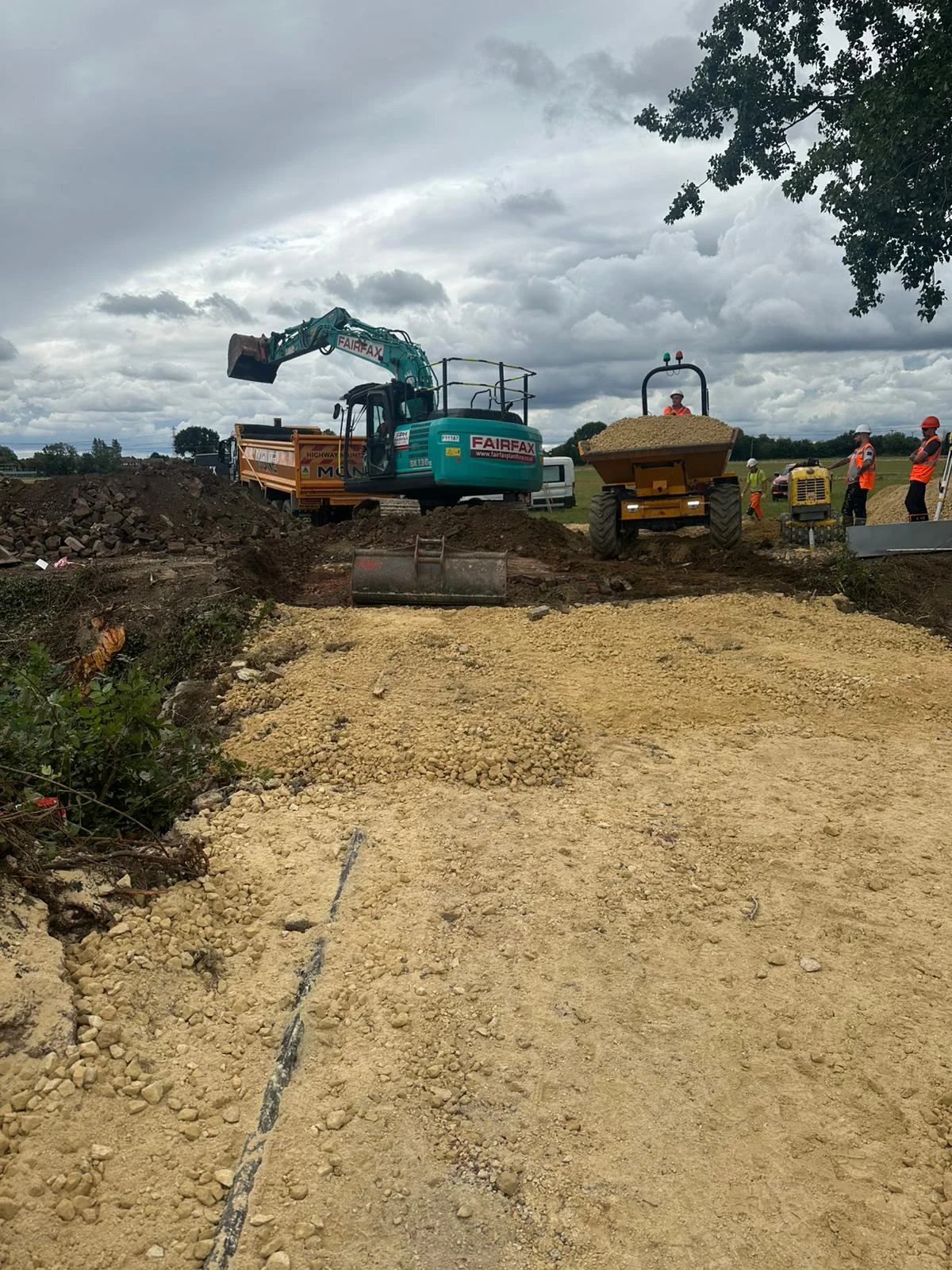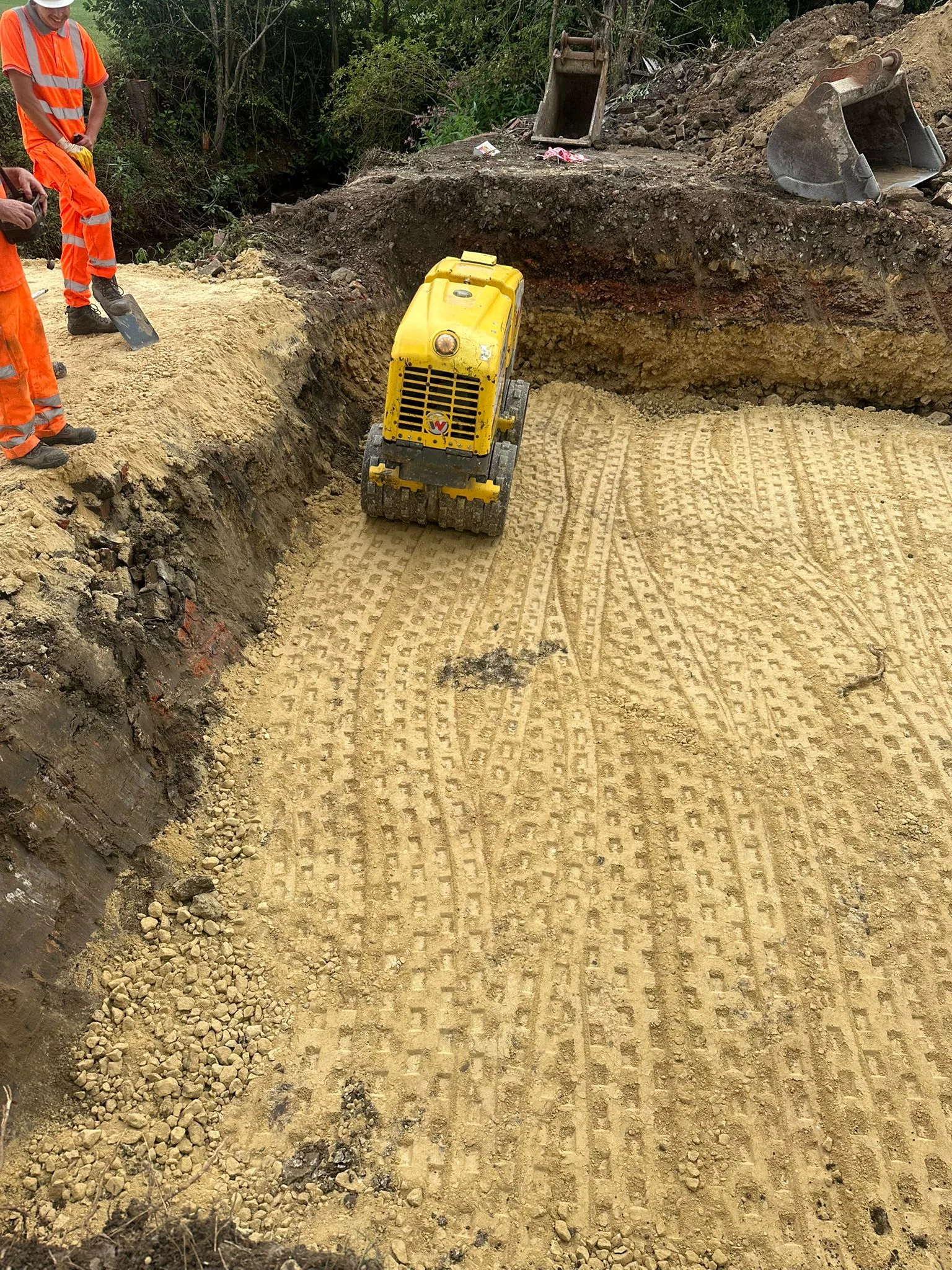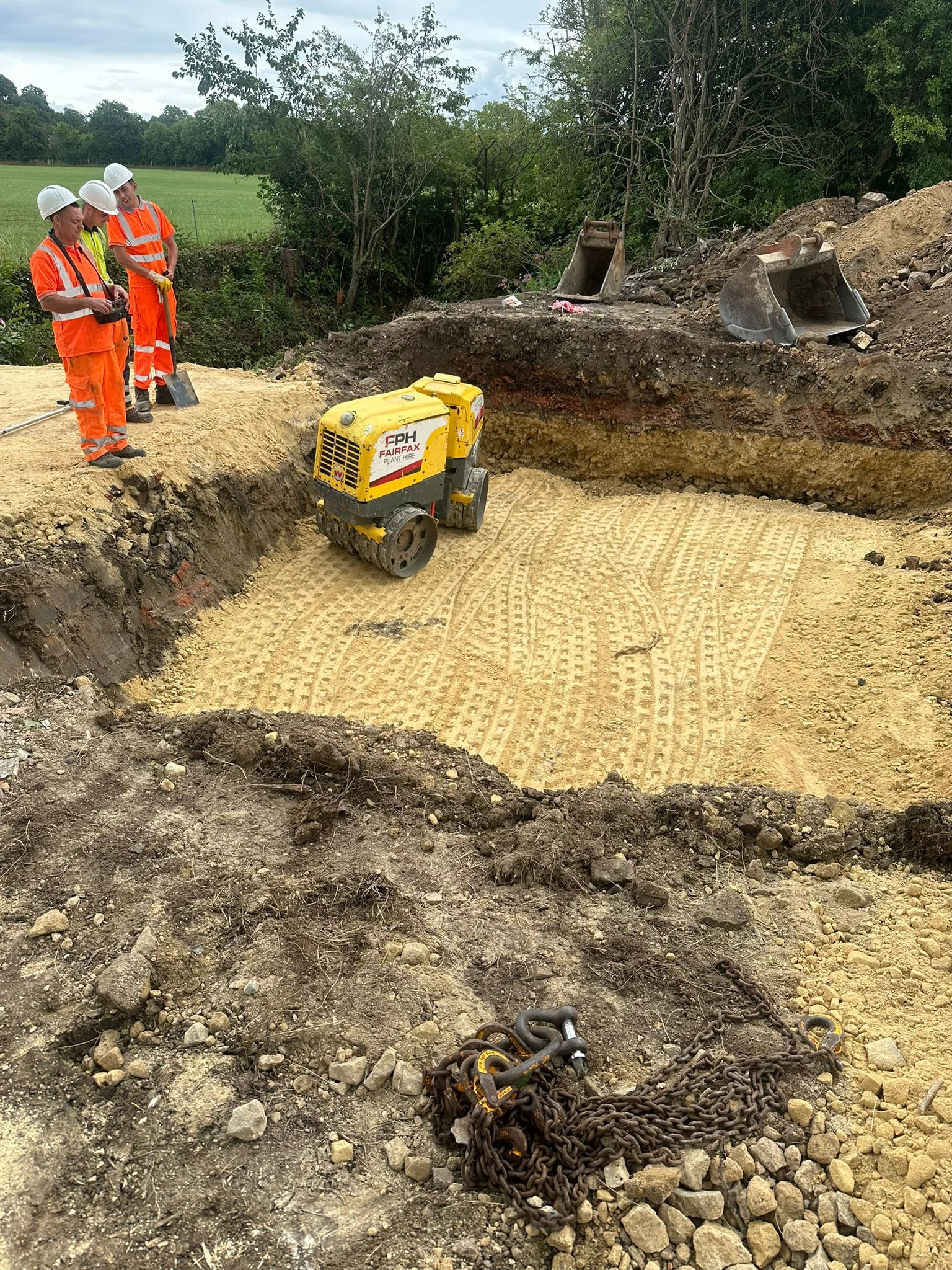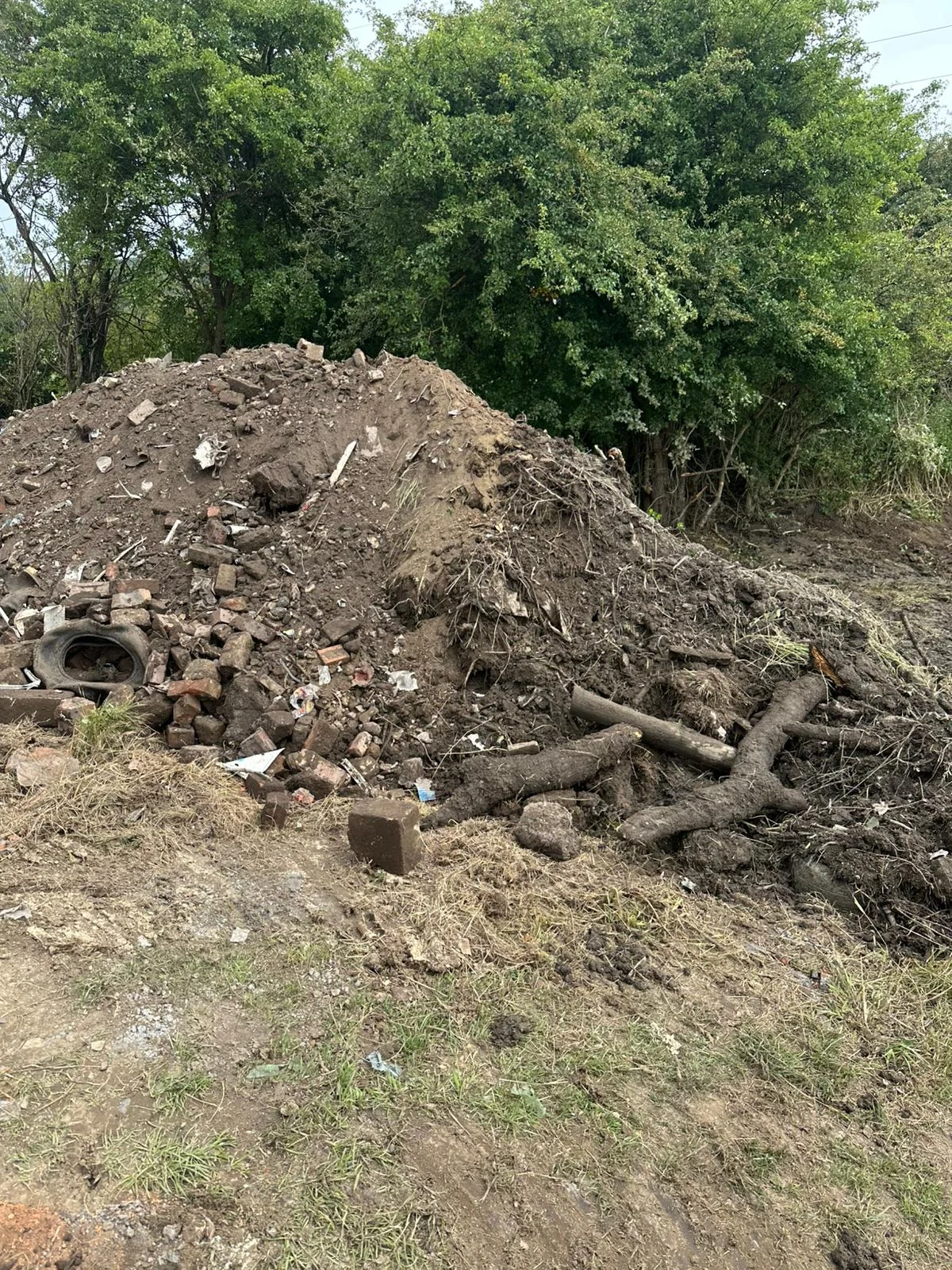
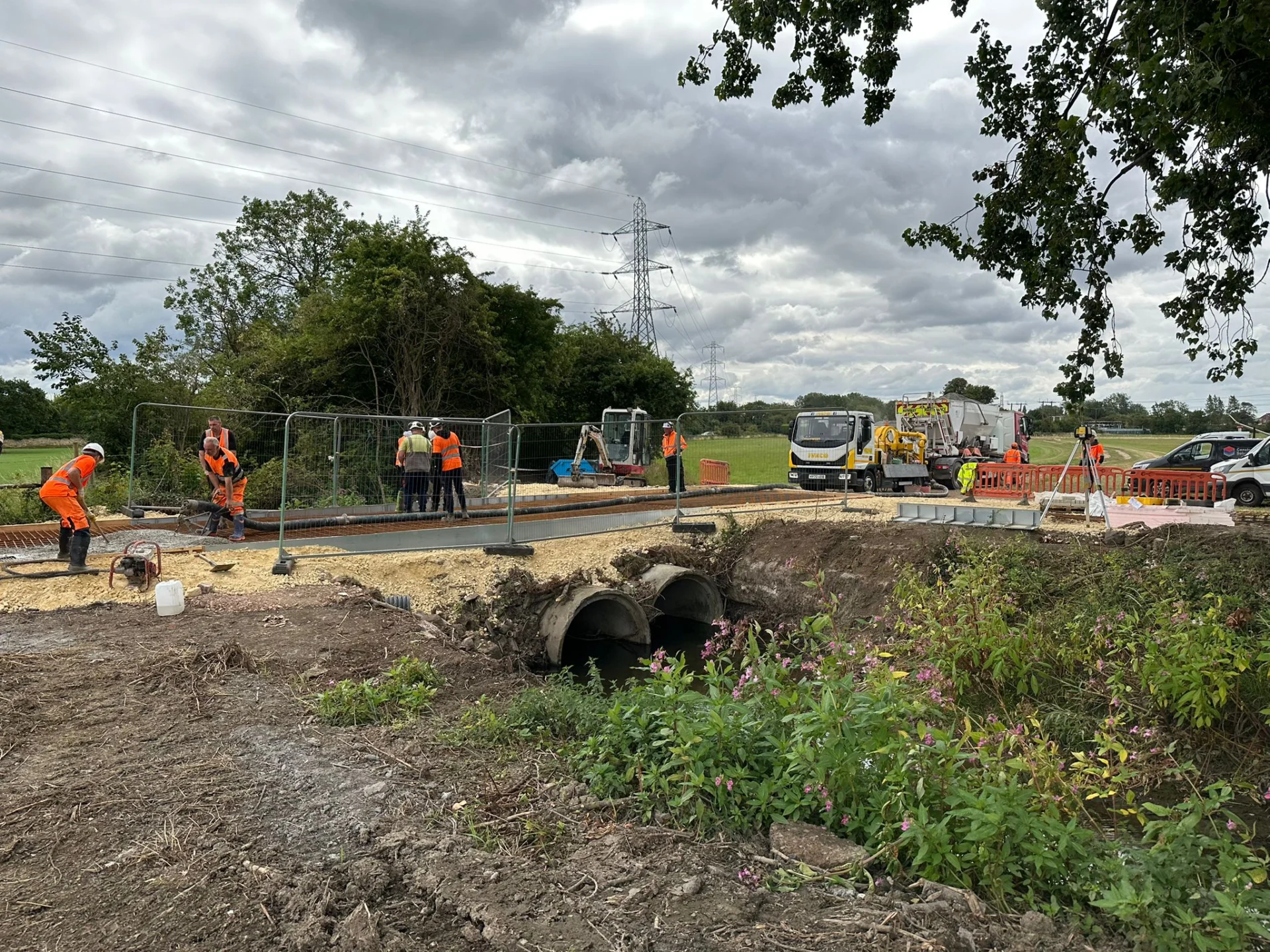
Goldbeck Solar needed a 100-tonne crane to reach an upper field on a solar farm site at Allerton Bywater. Between the lower and upper field was an existing culvert with a farm track over it — neither was built for that kind of load. Civcon were brought in on a design and build basis to find a solution.
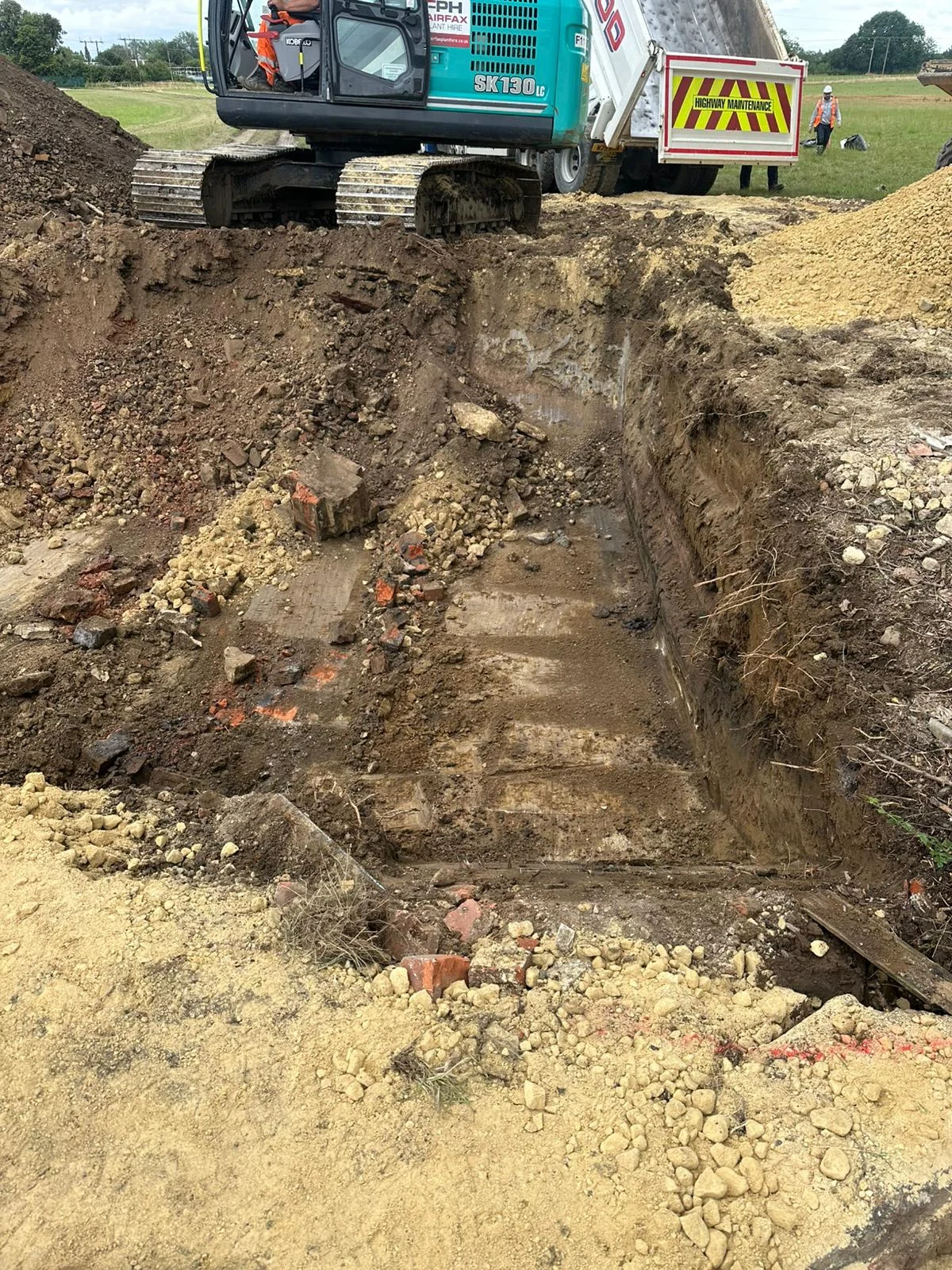
The first route explored was lining the existing culvert. A culvert specialist was engaged, a patch liner option was developed, and the work progressed through detailed design, environmental permits, and flood alleviation approvals. It was buildable, but by the time the costs were fully worked out it had become disproportionately expensive. The team went back to the start and looked for something simpler.
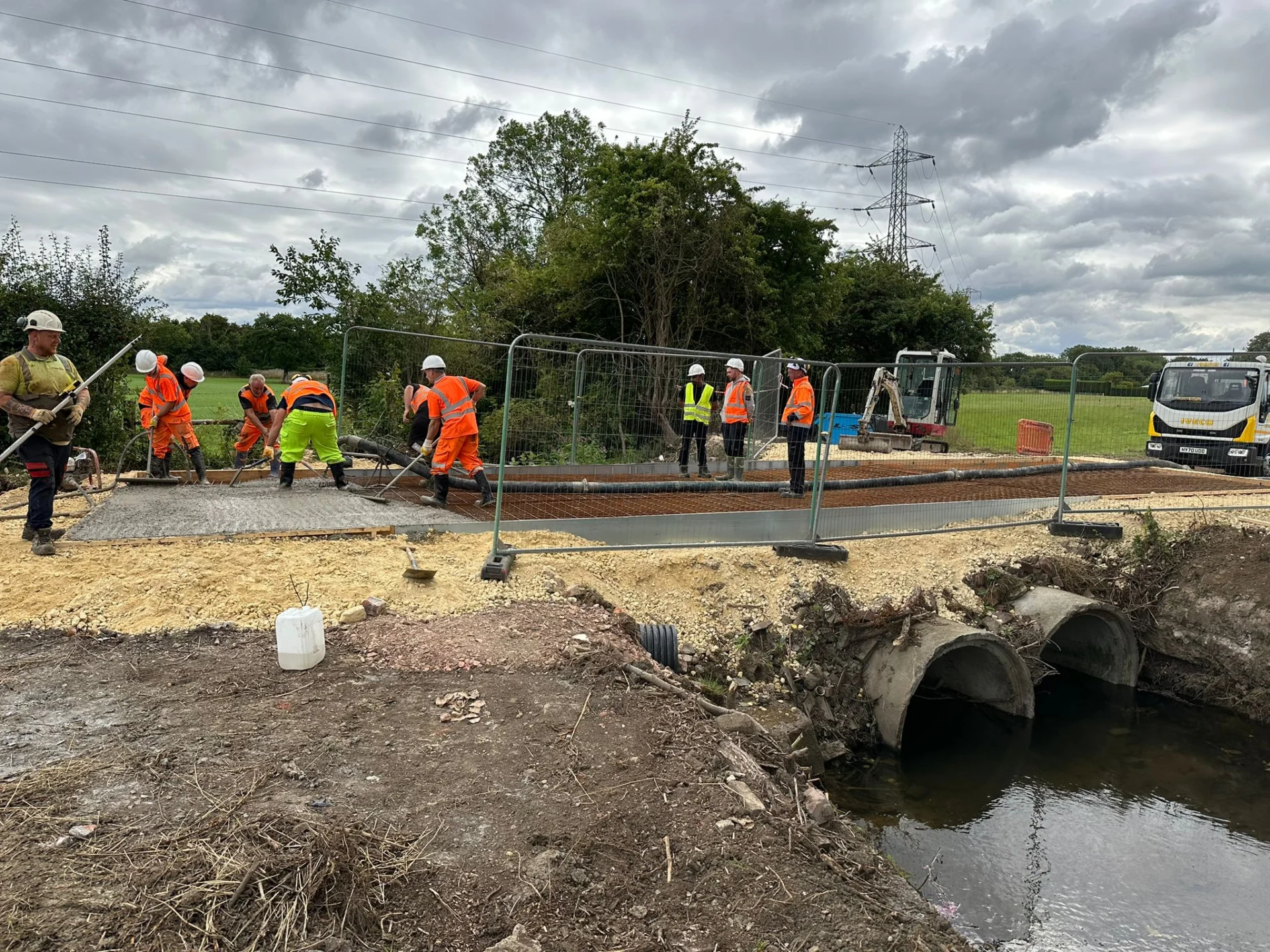
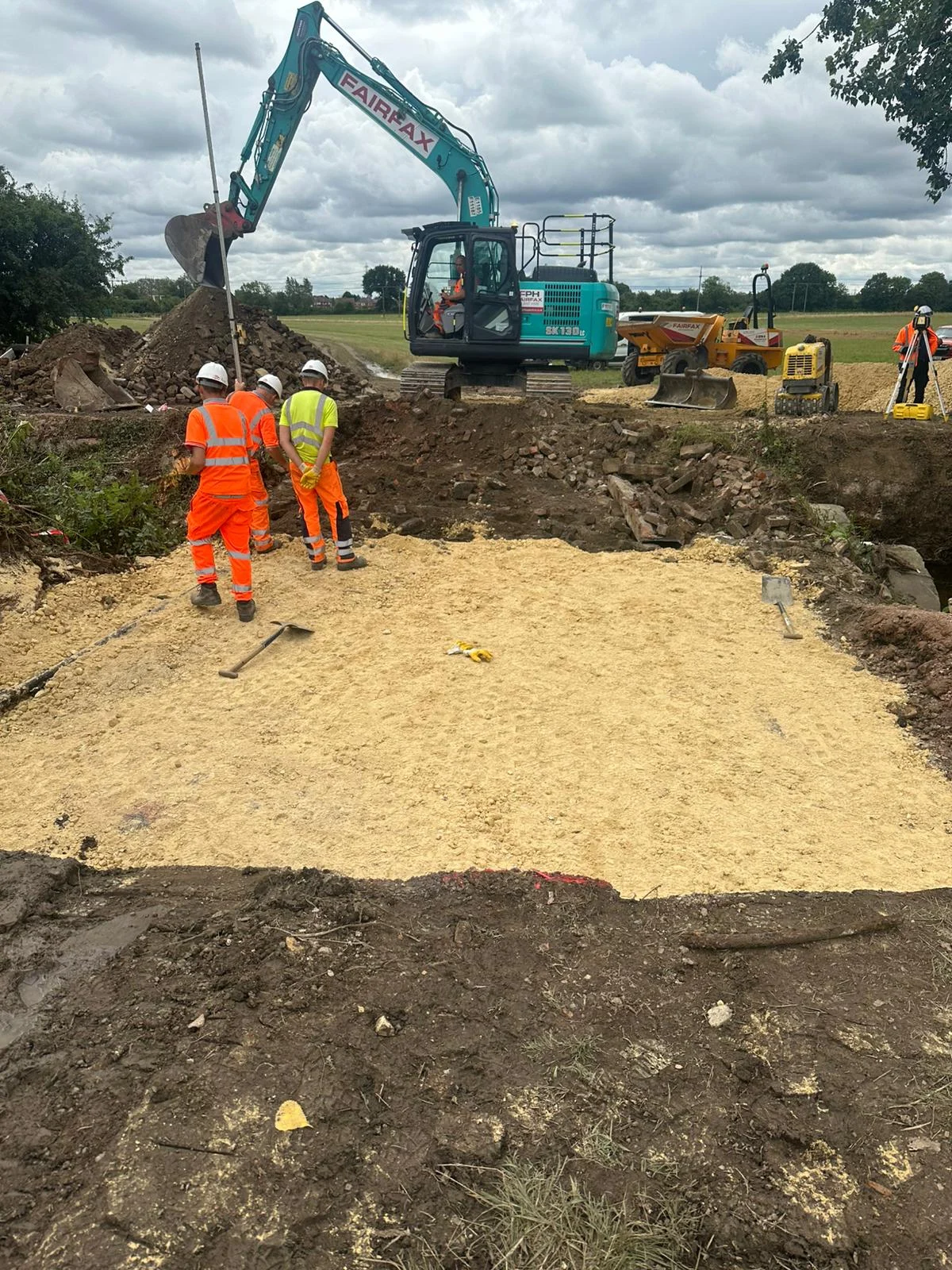
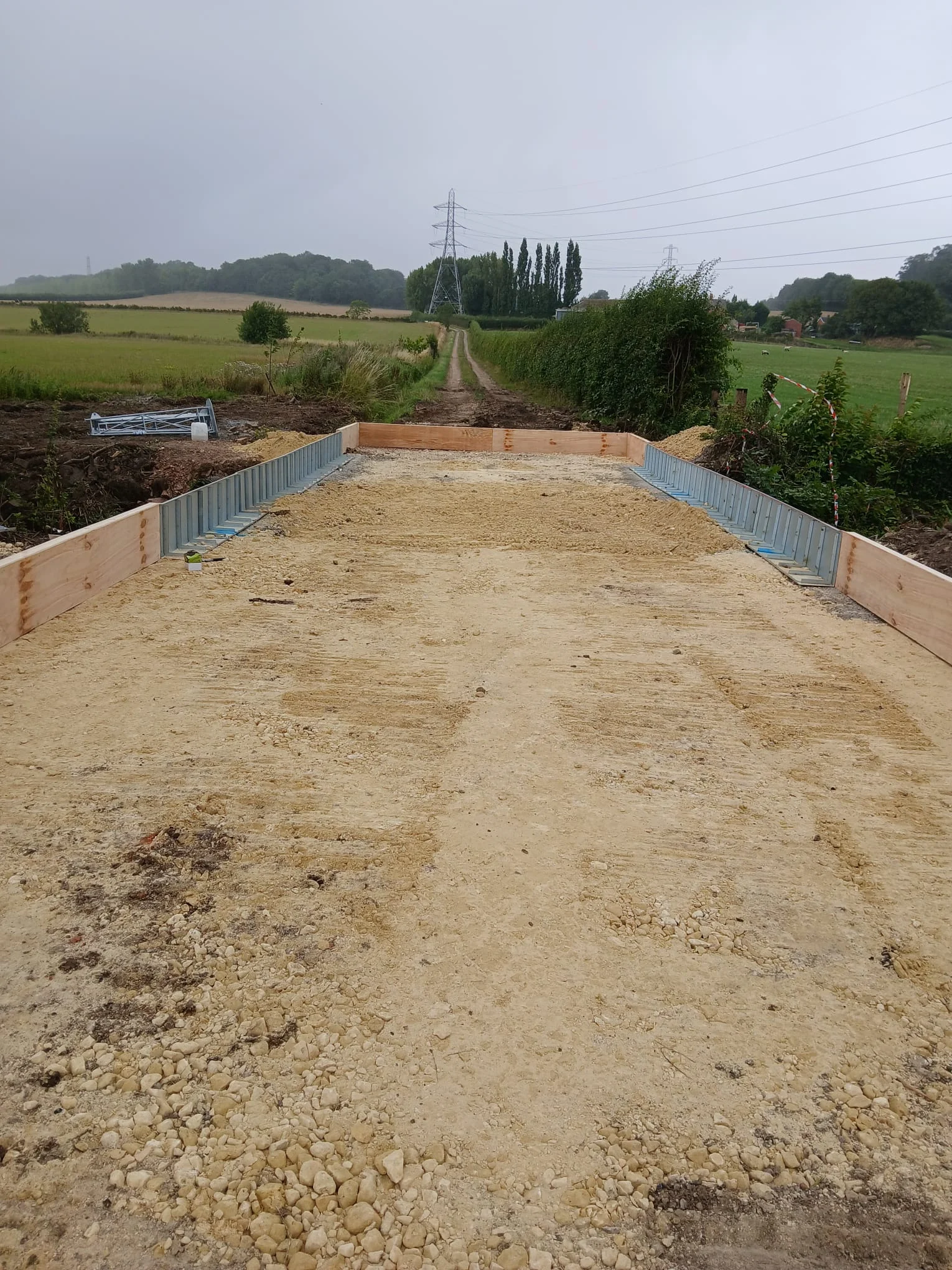
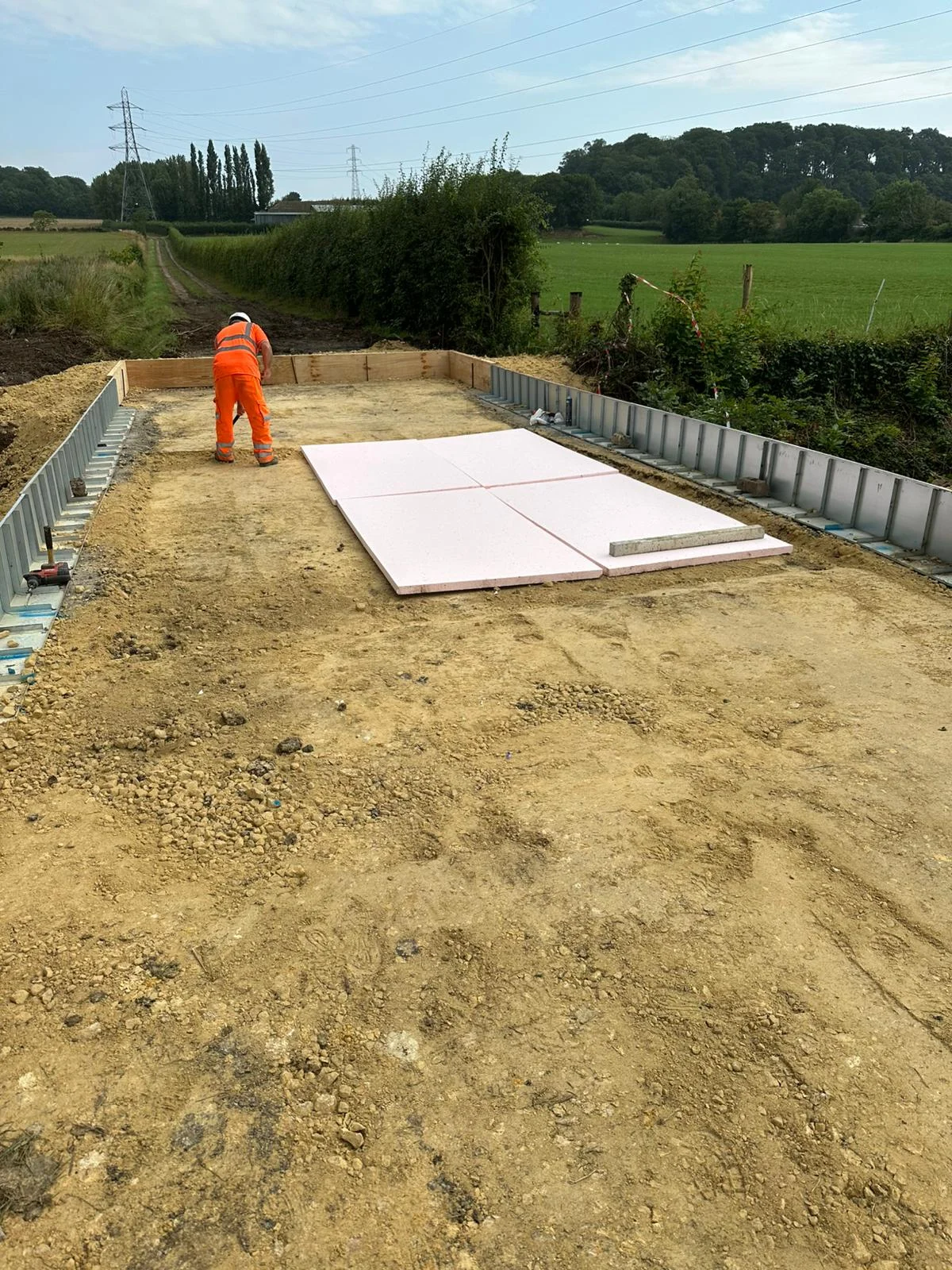
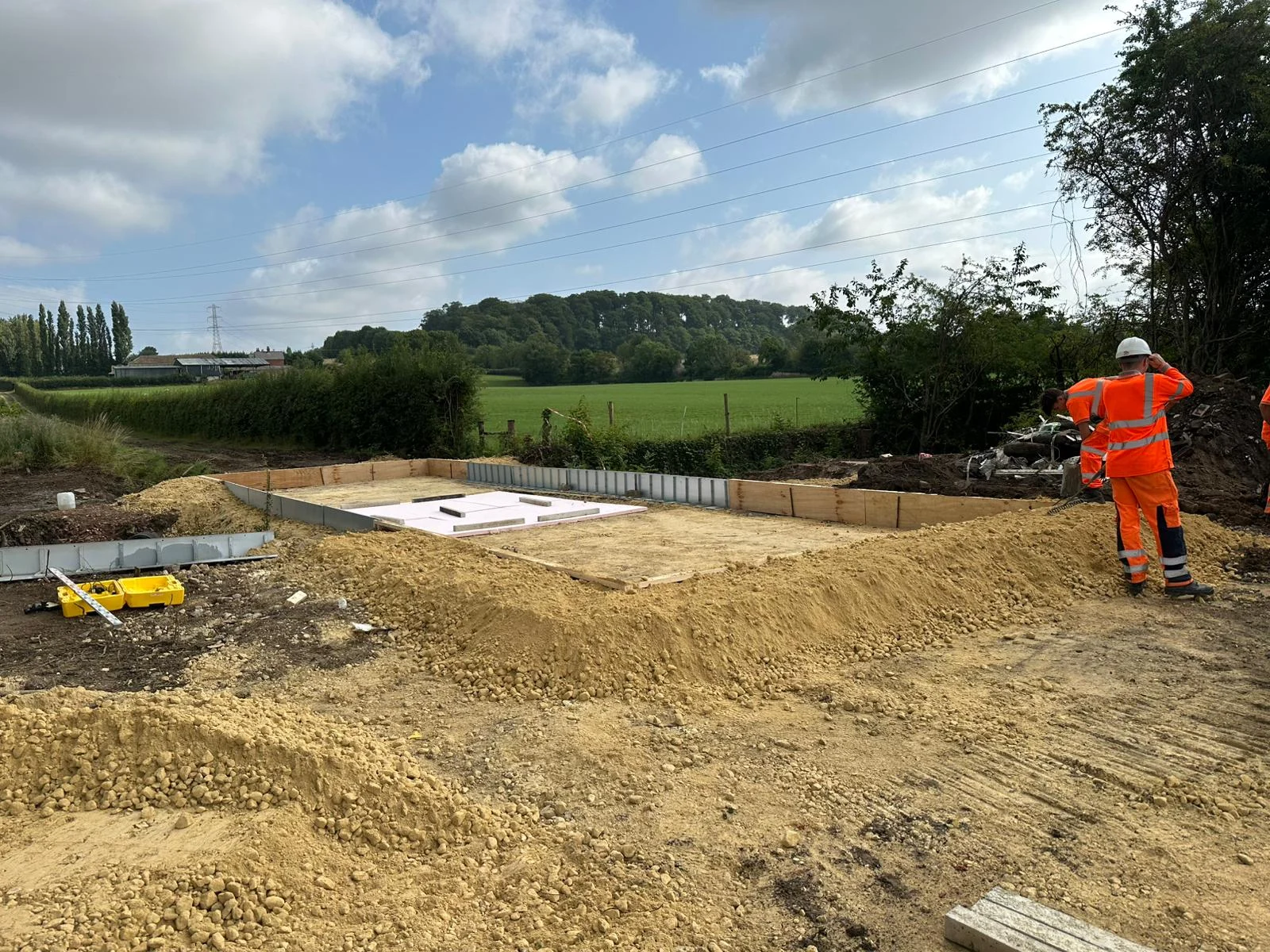
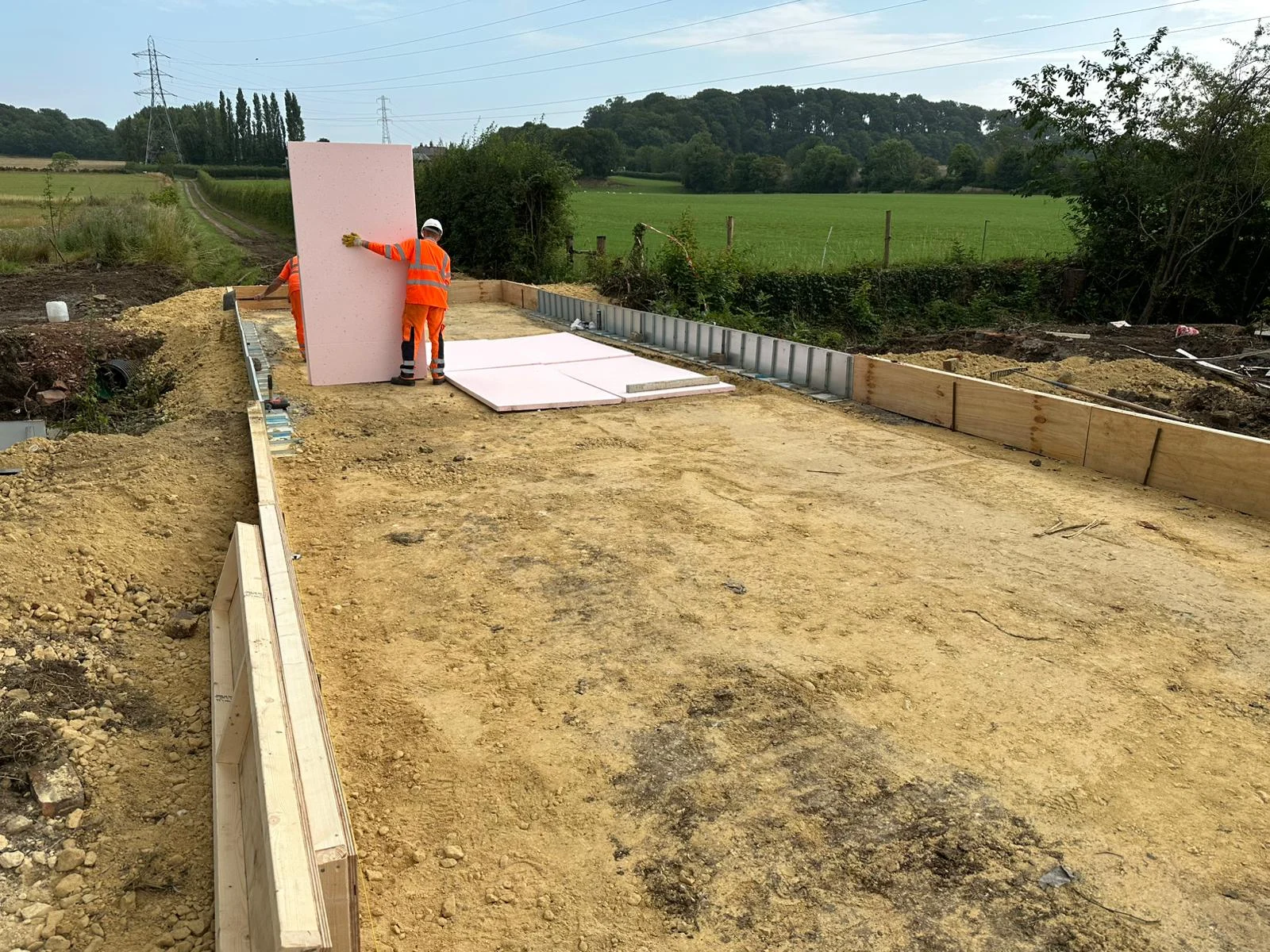
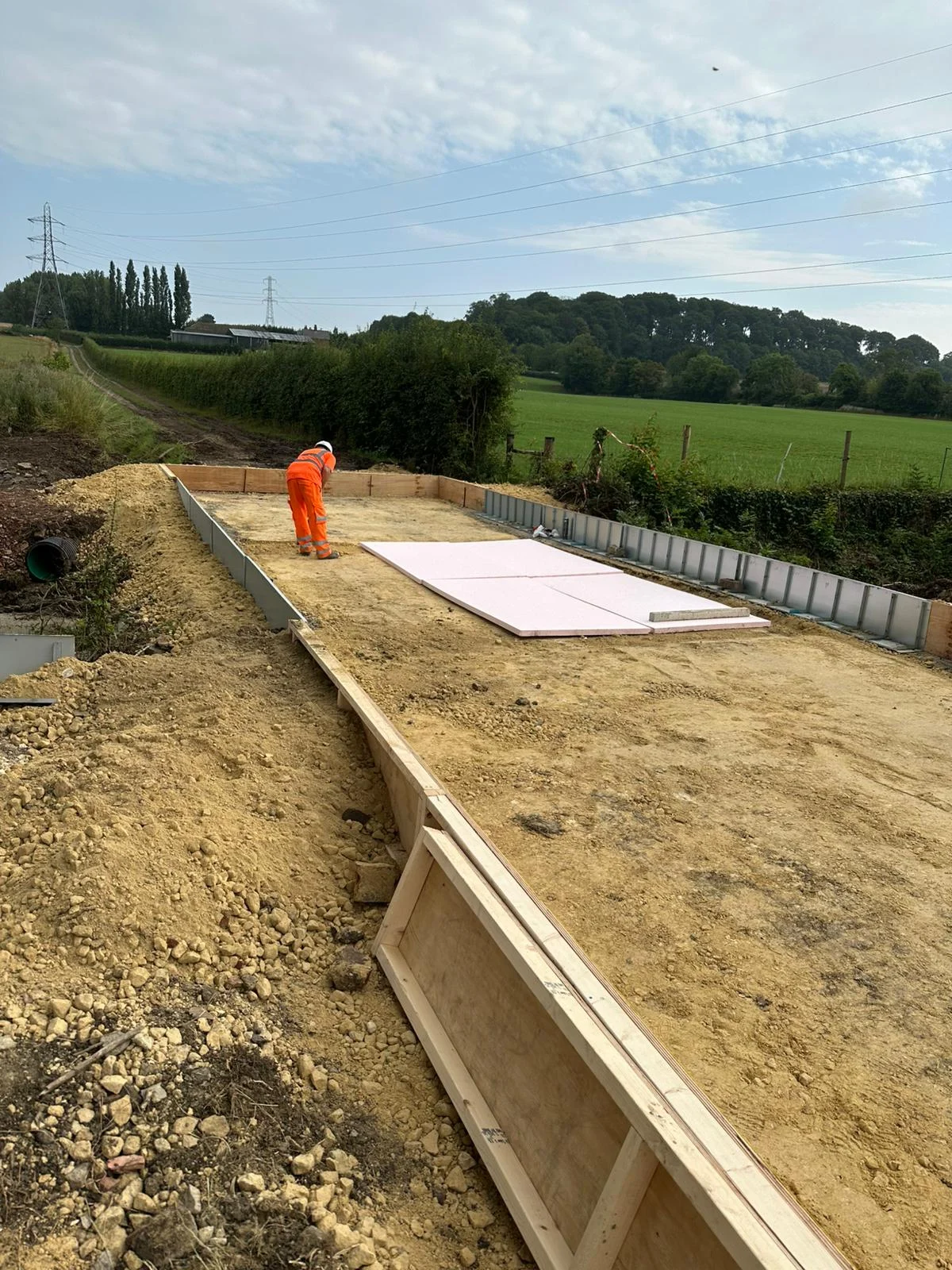
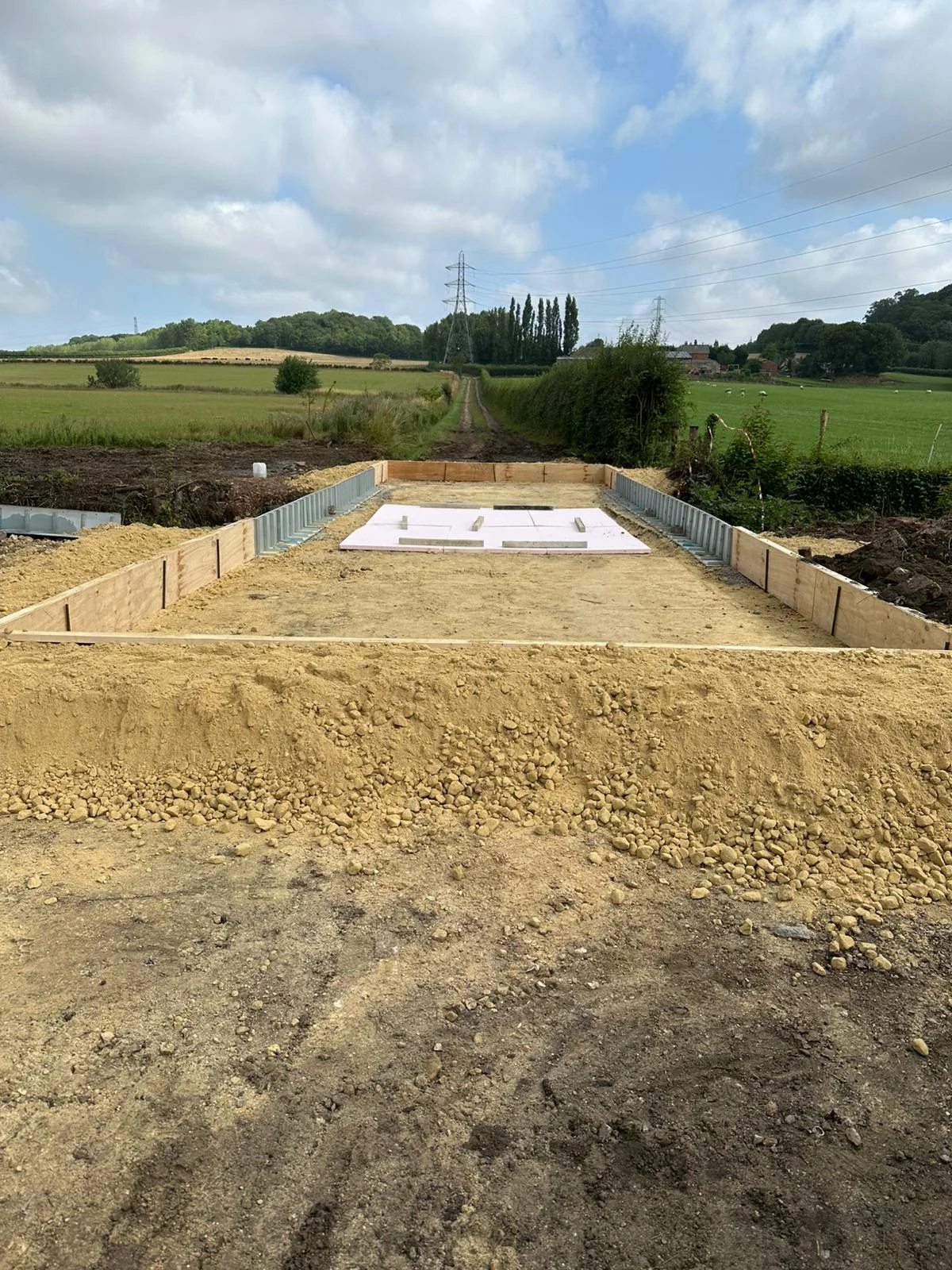
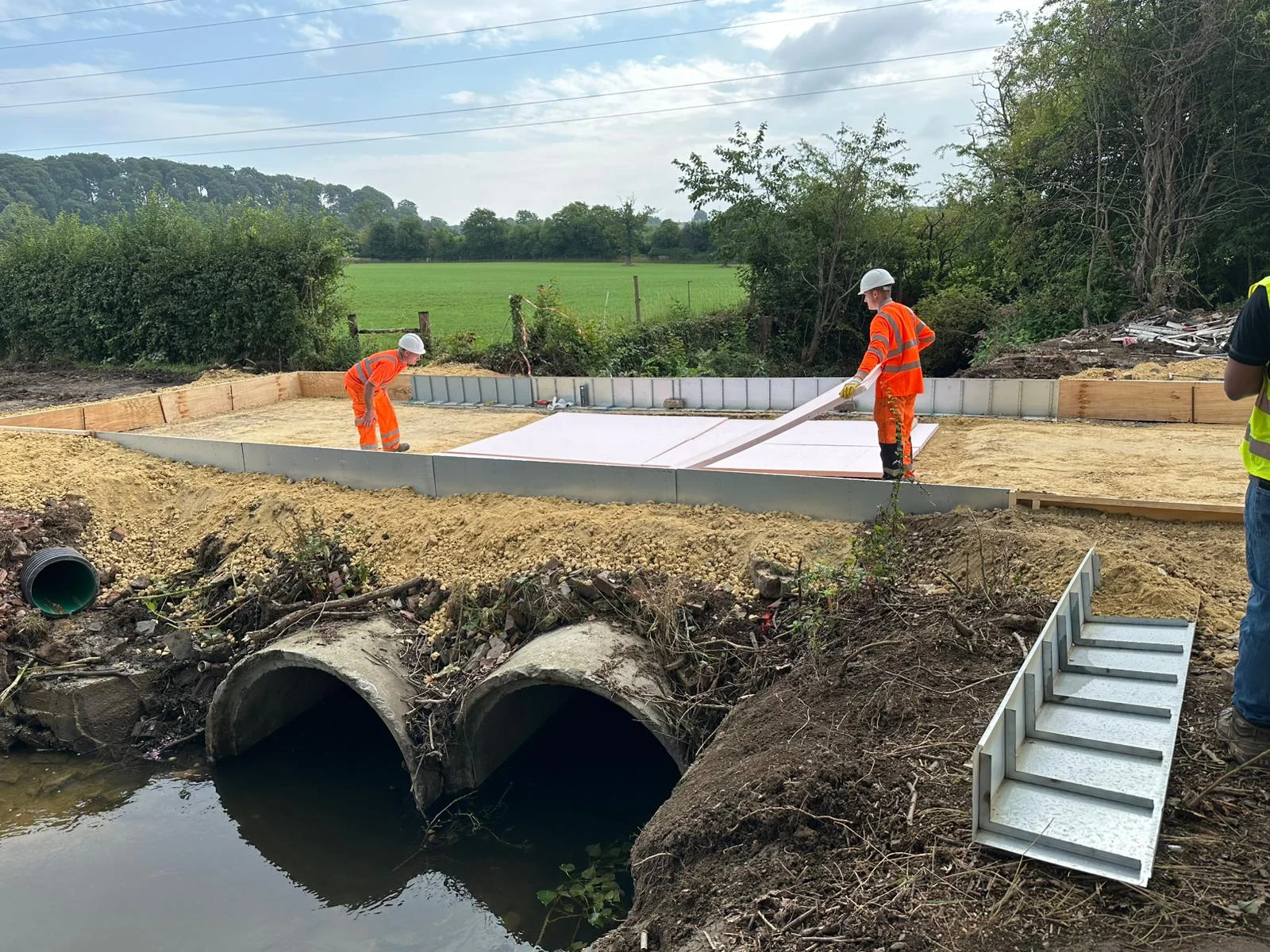
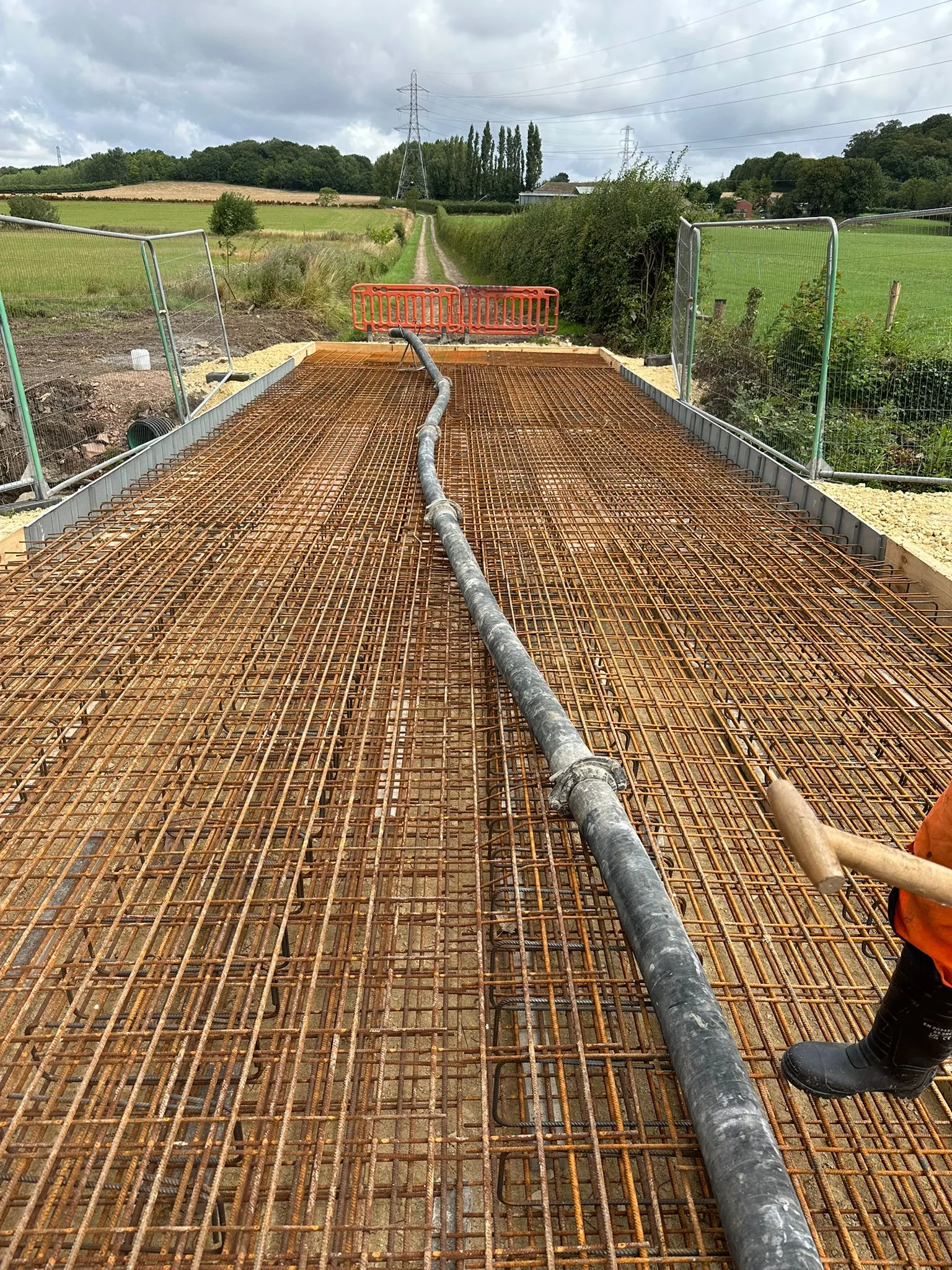
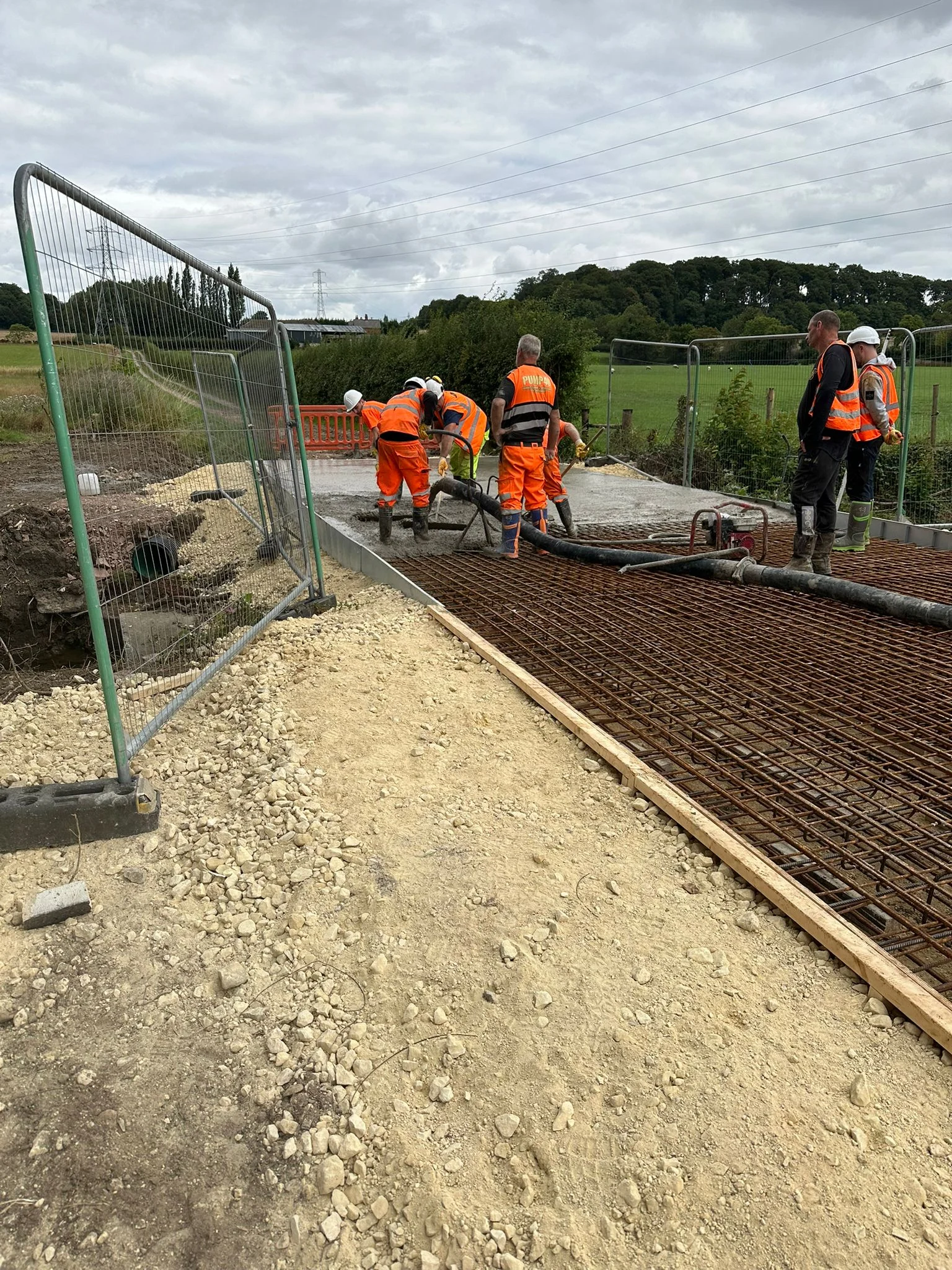
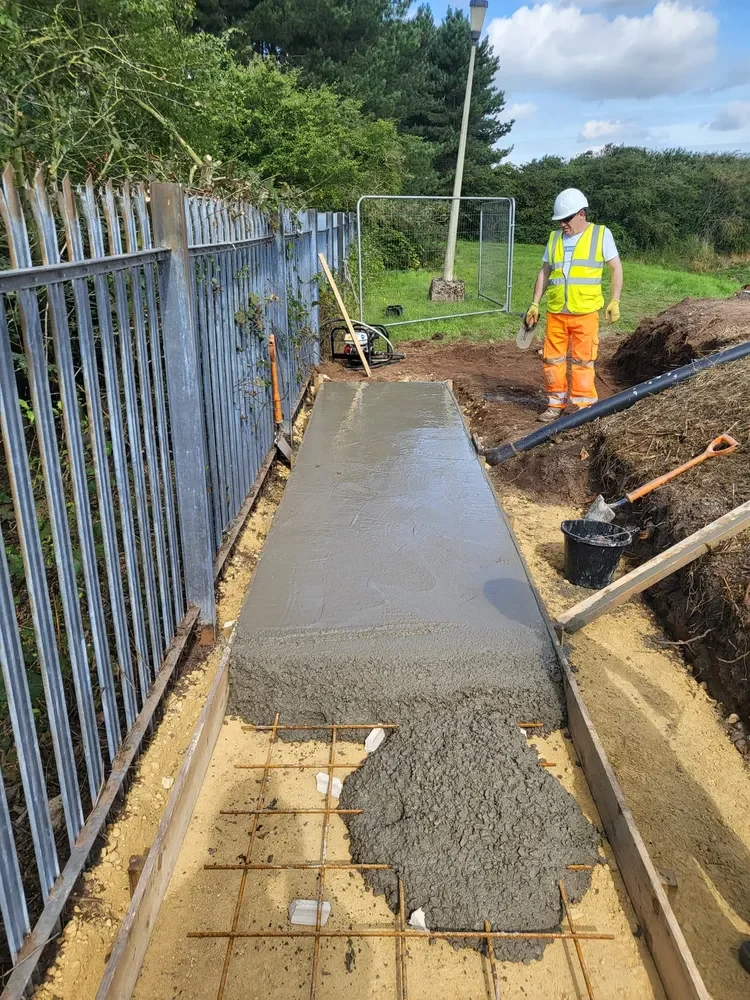
The solution was a reinforced concrete slab bridge spanning directly over the existing culvert. Three design constraints fixed the parameters: the slab had to be wide enough for the crane, no load could transfer onto the culvert below, and the finished level couldn’t sit more than 100mm above existing ground — any higher and it would have been a flood risk on the Sheffield Beck running alongside. Those three things together defined what the structure had to be.
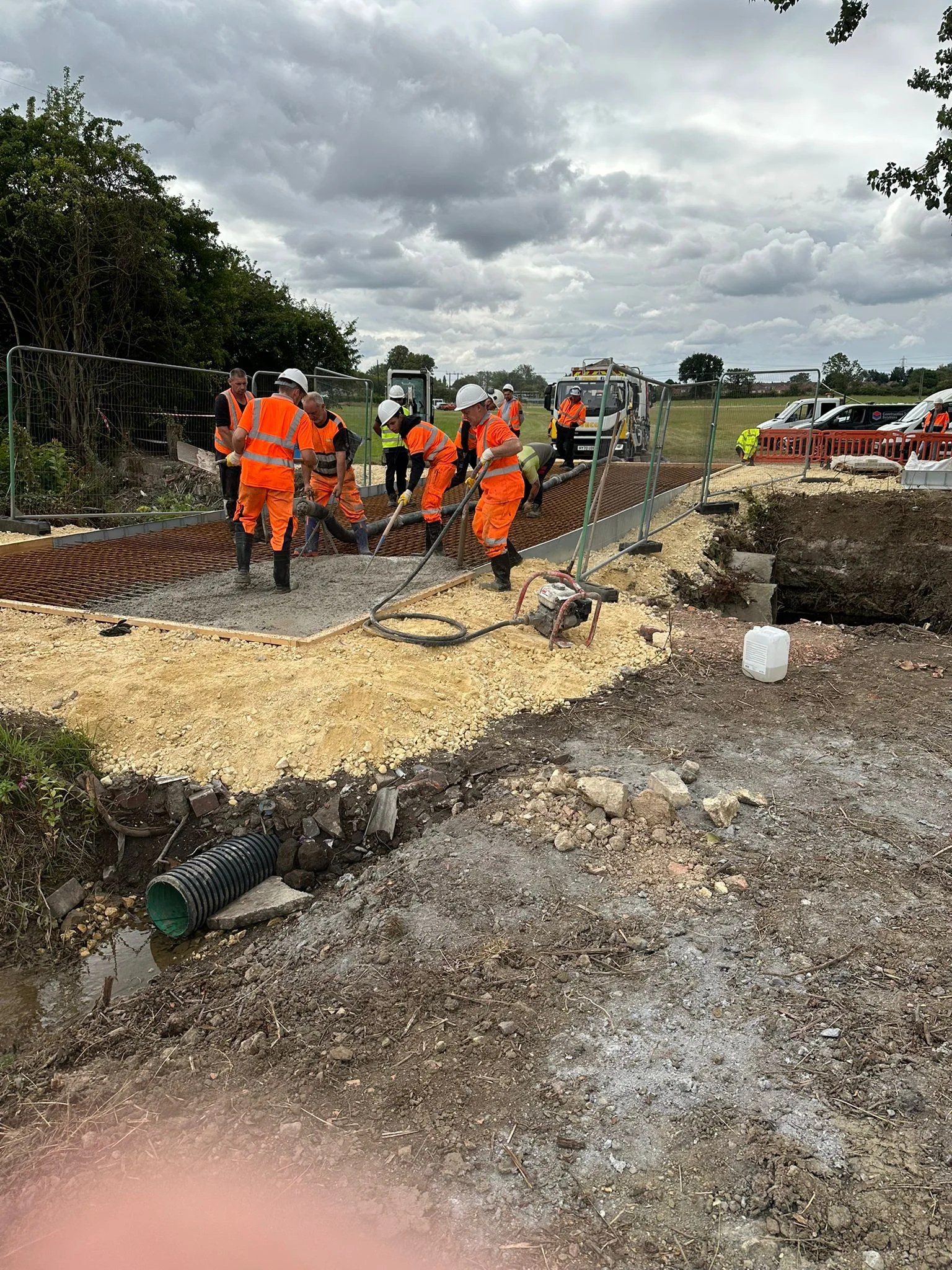
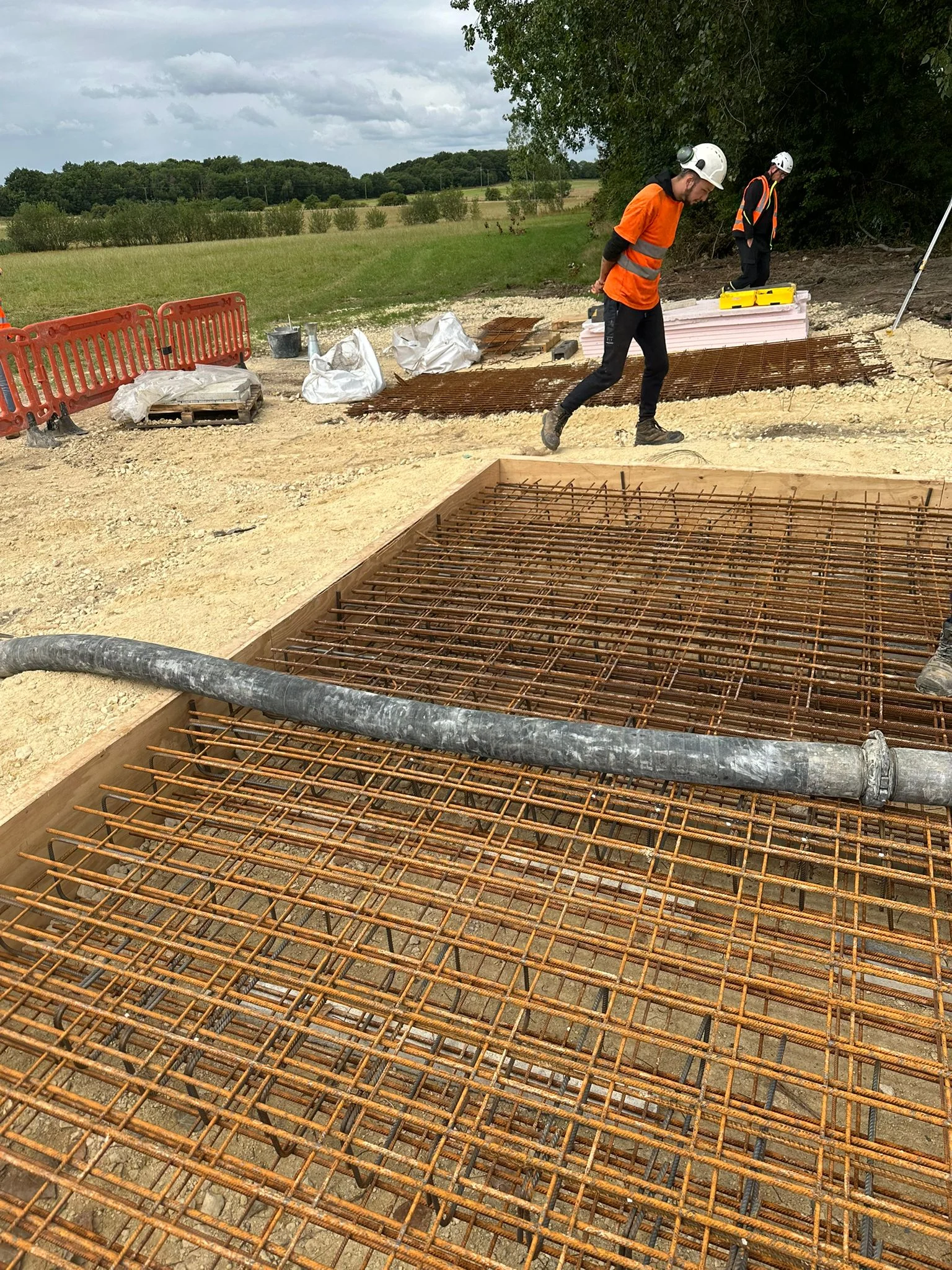
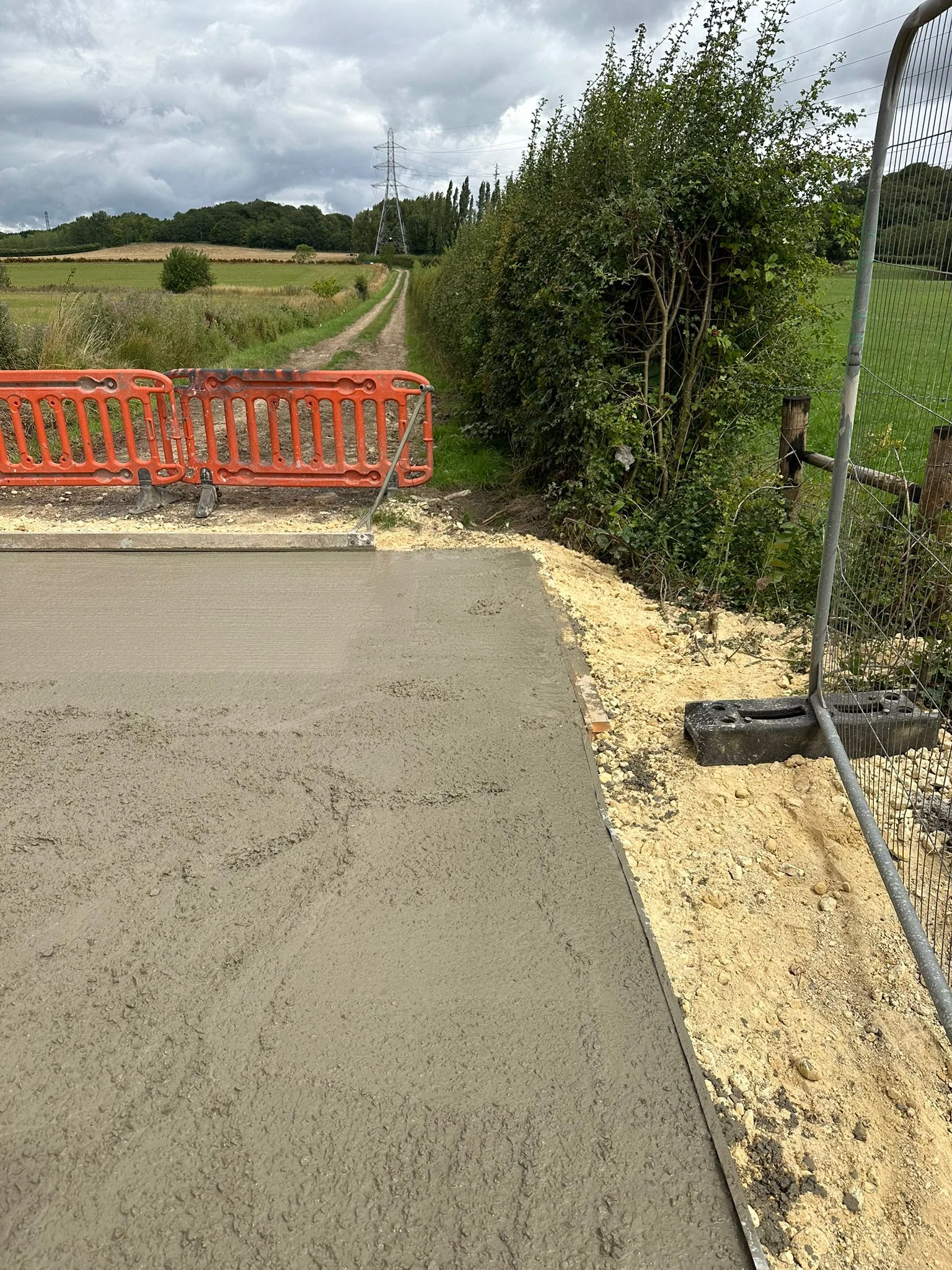
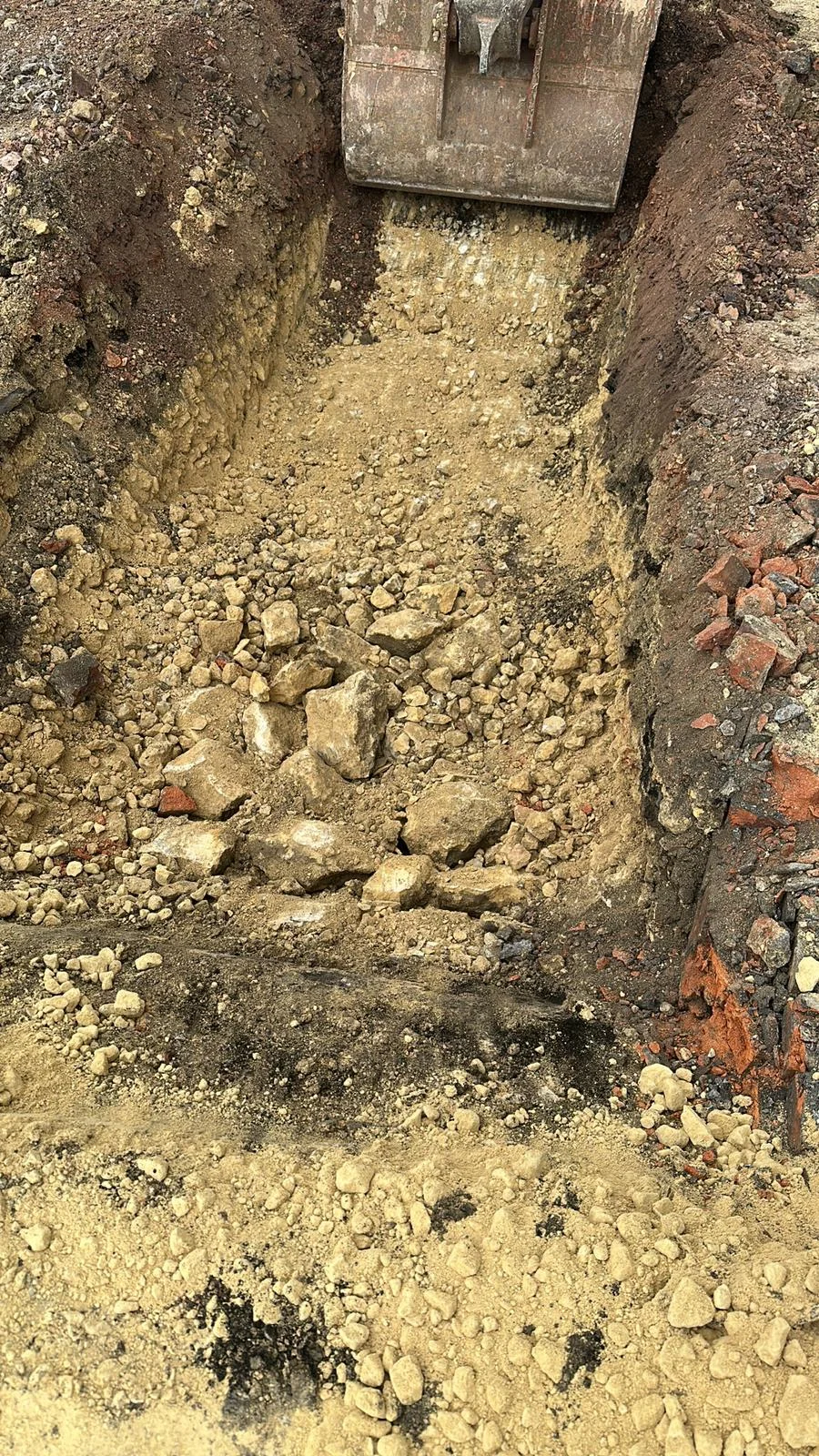
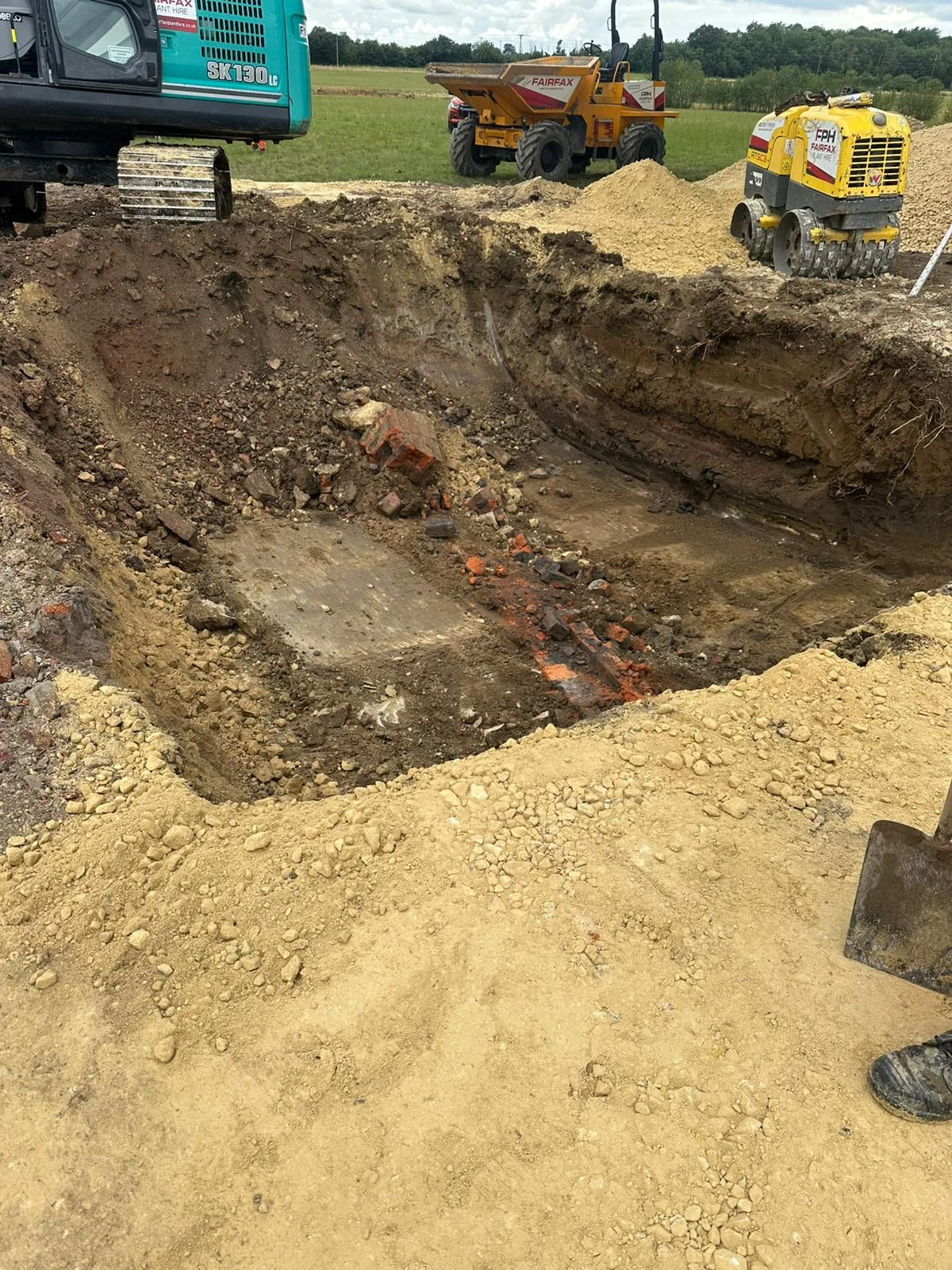
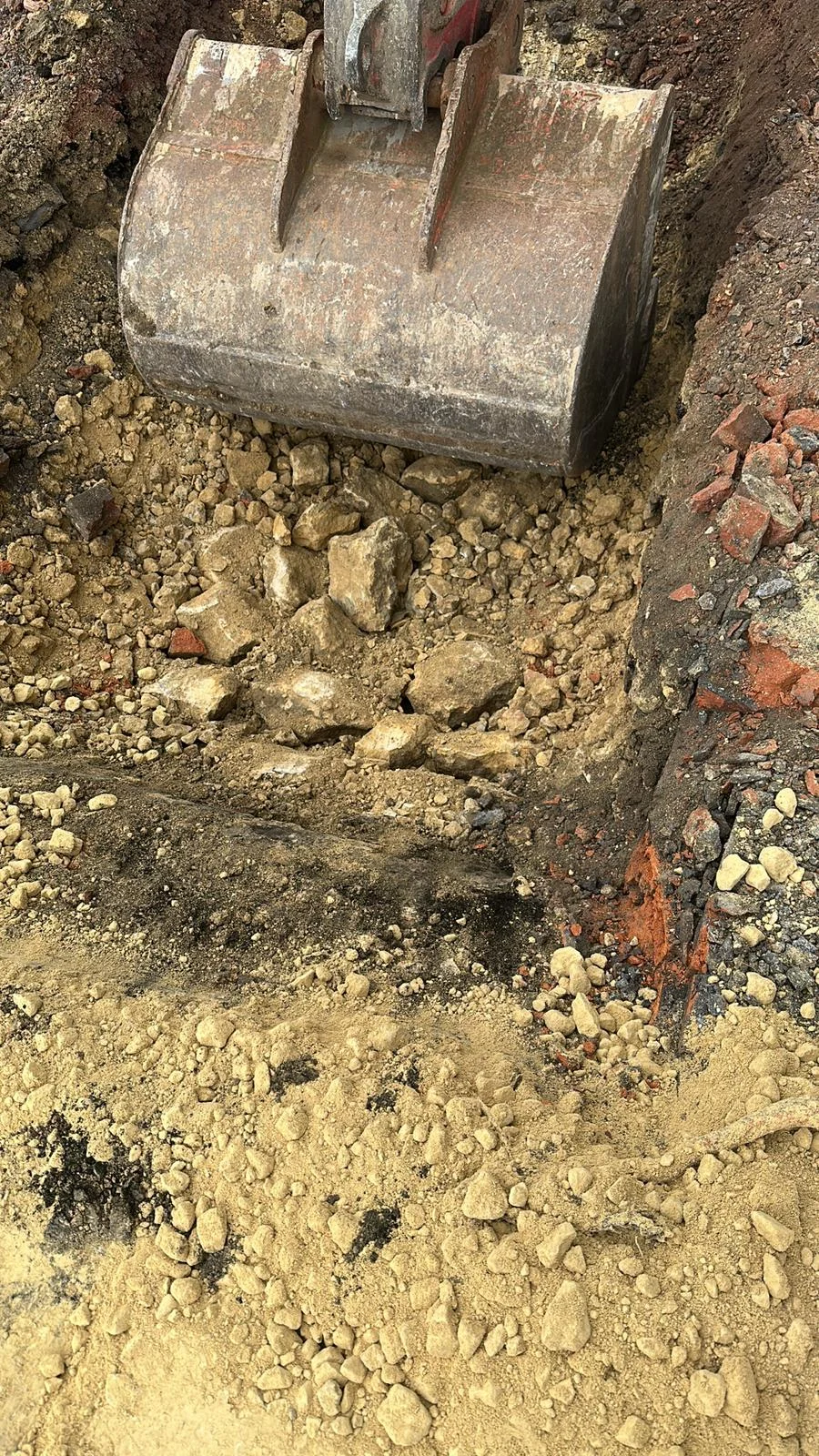
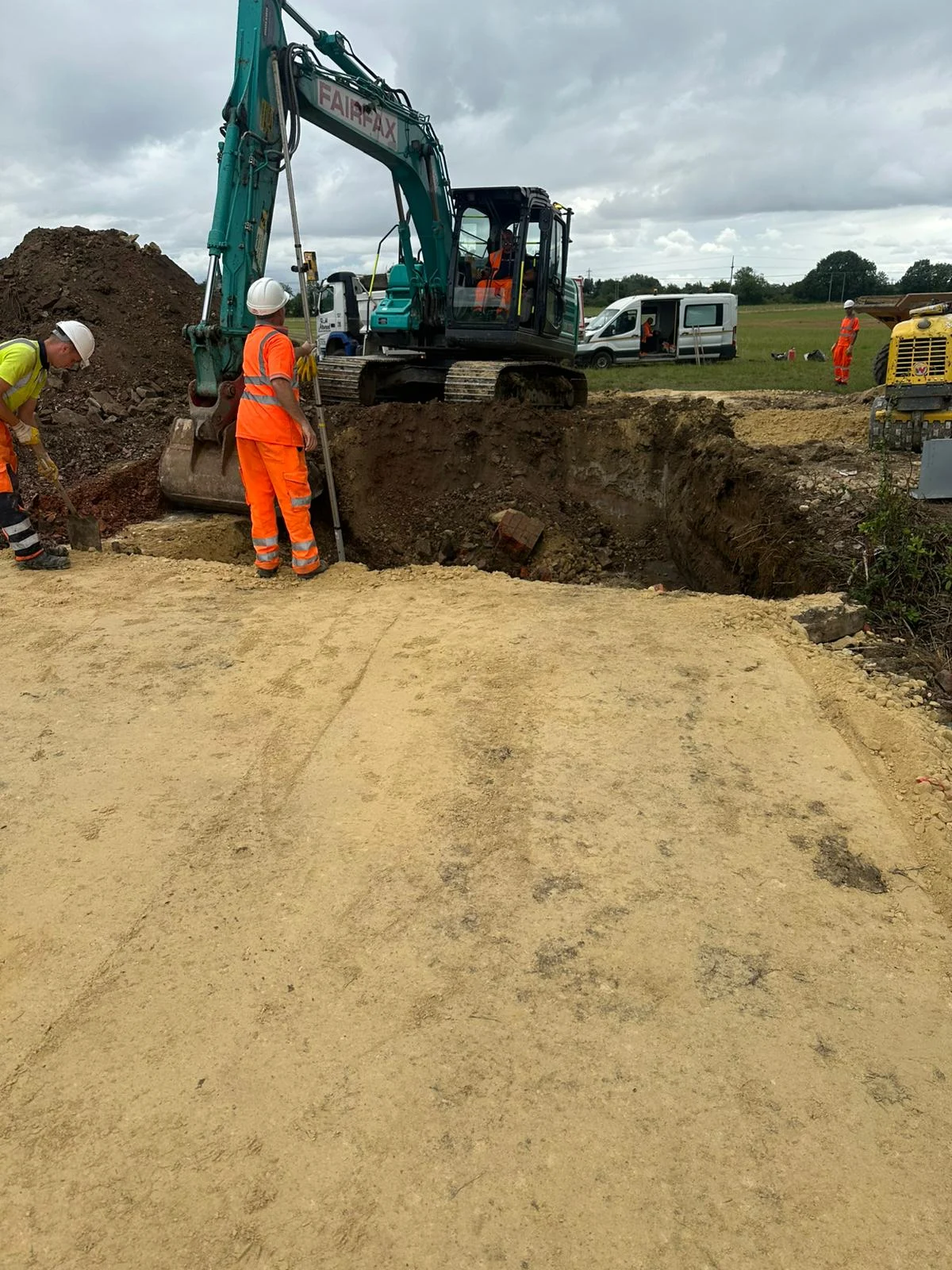
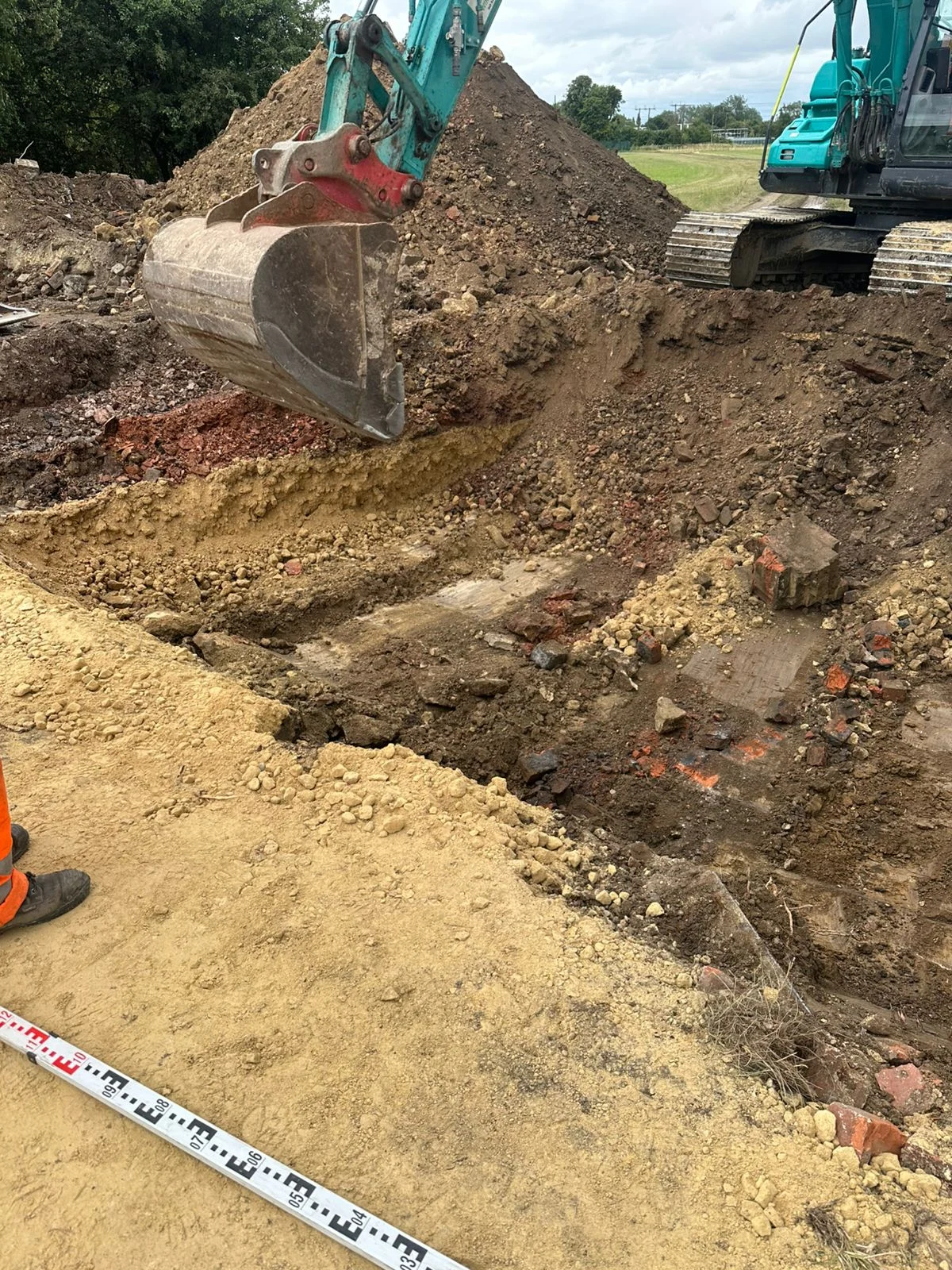
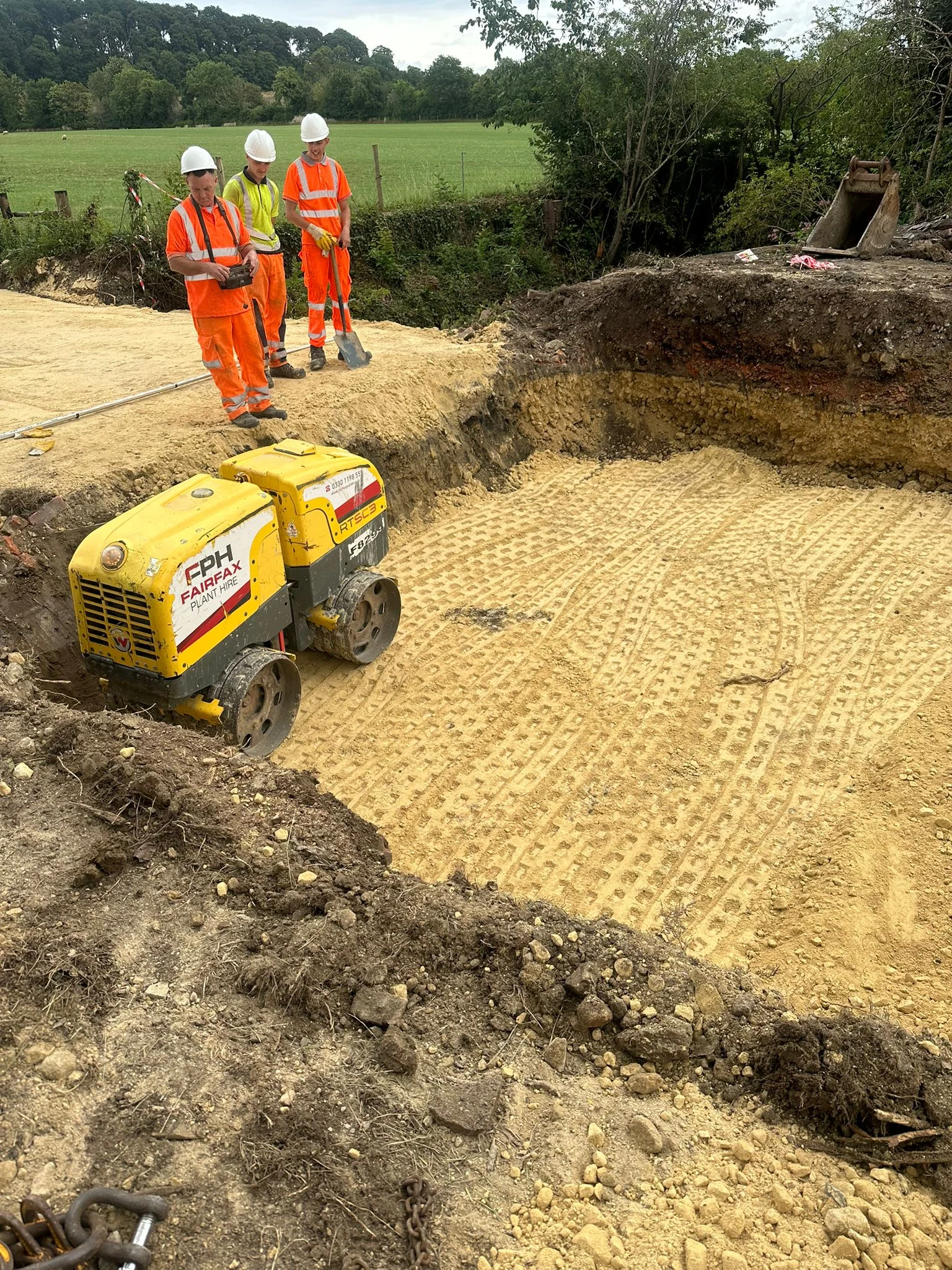
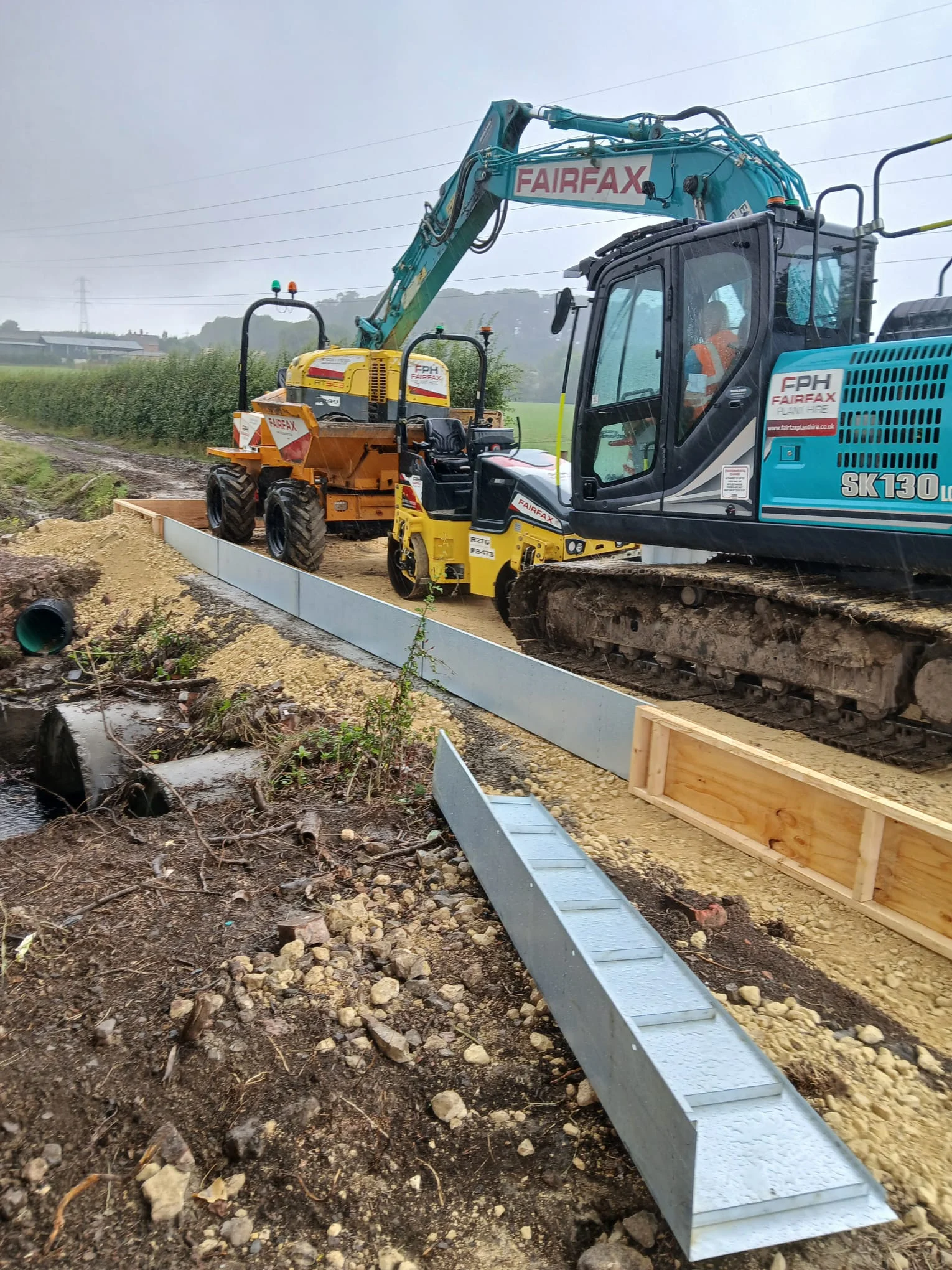
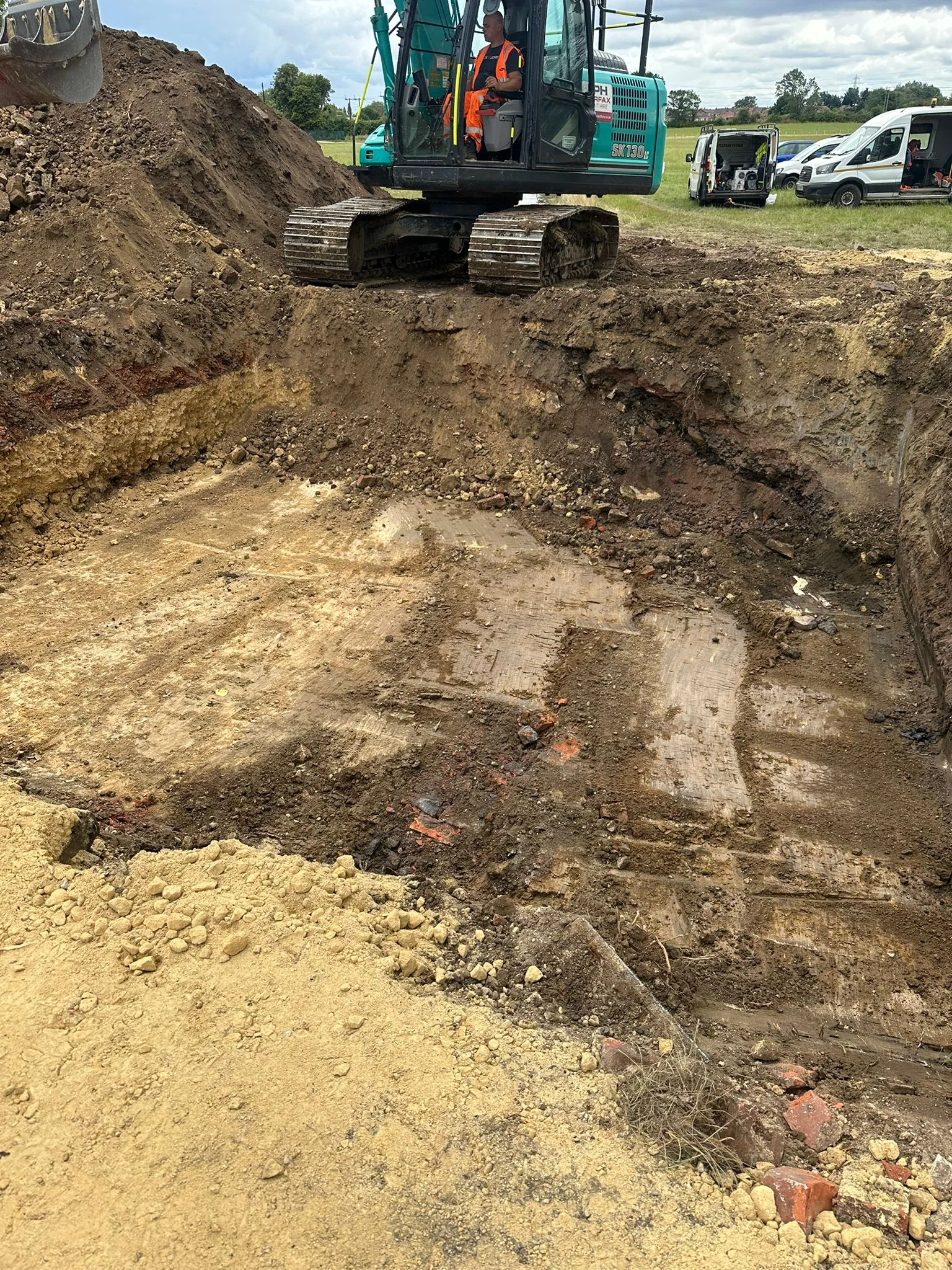
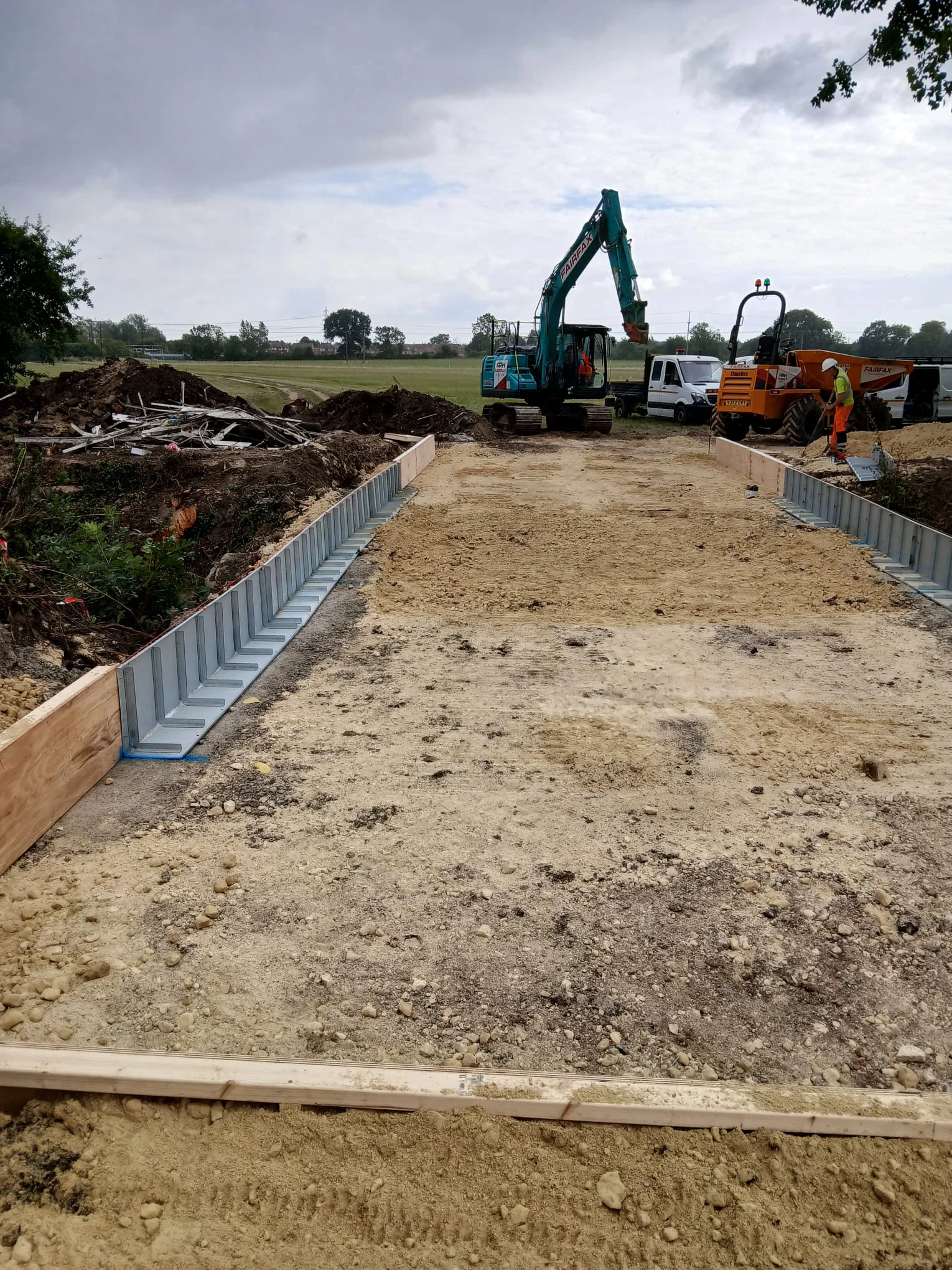
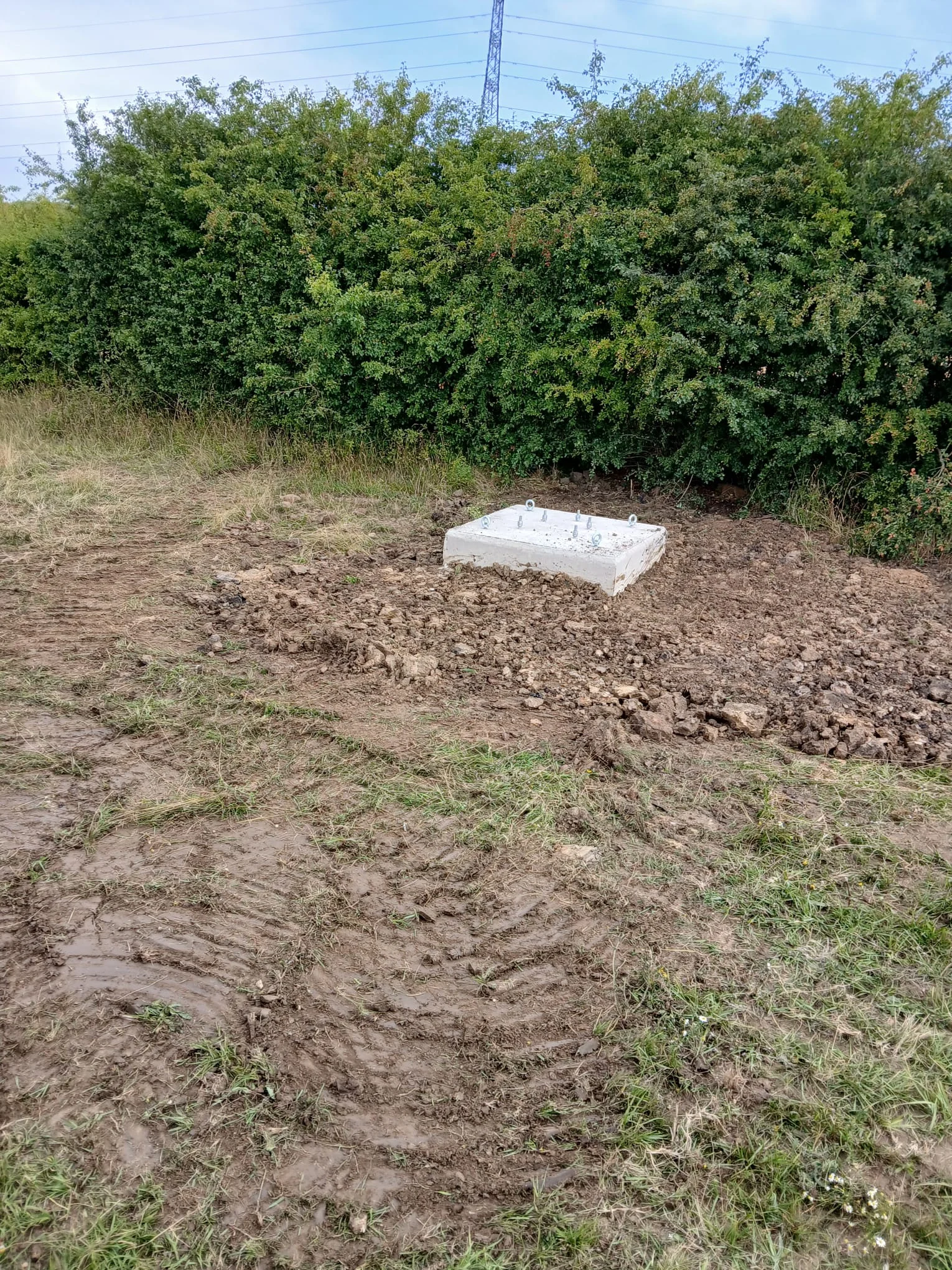
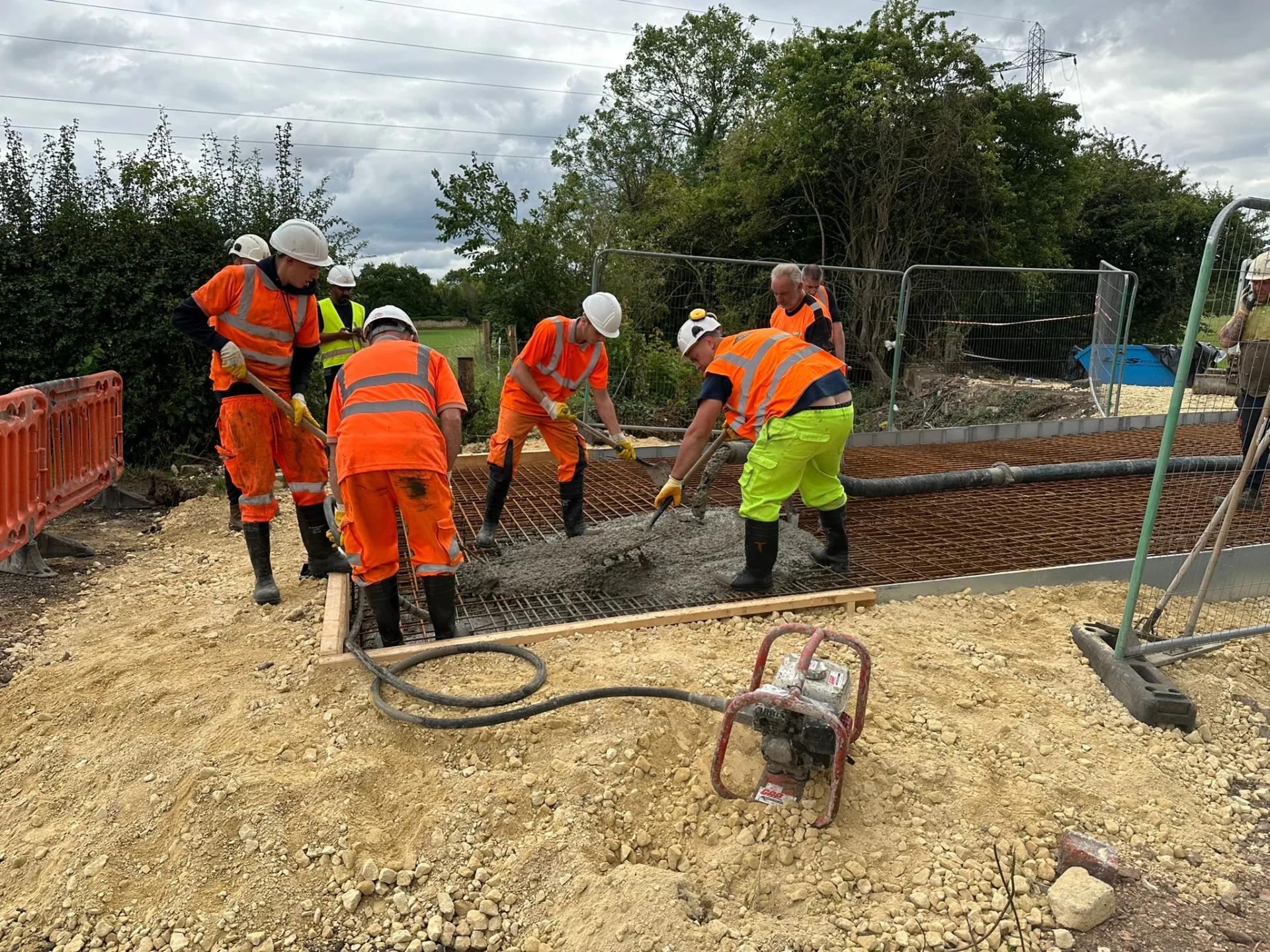
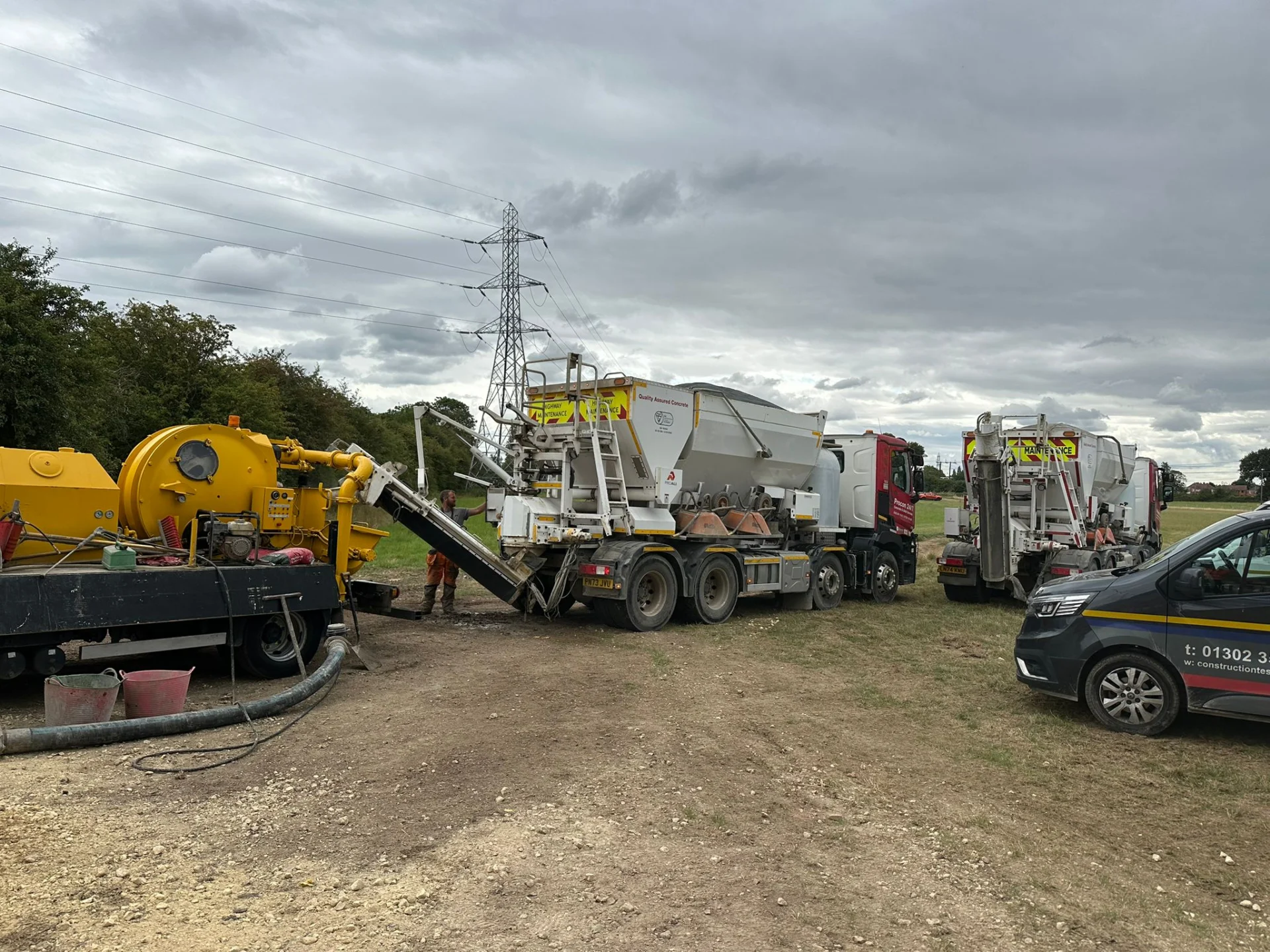
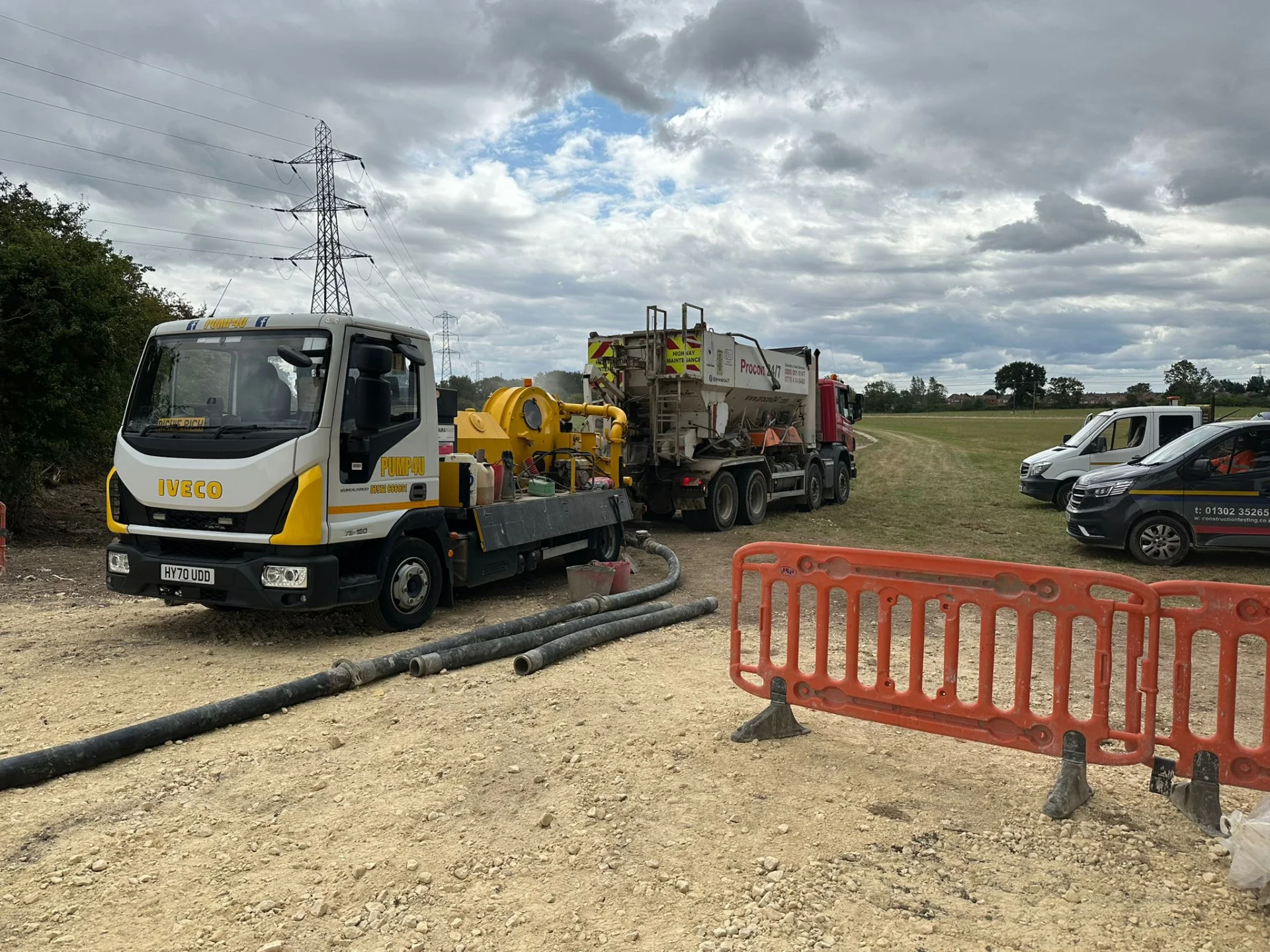
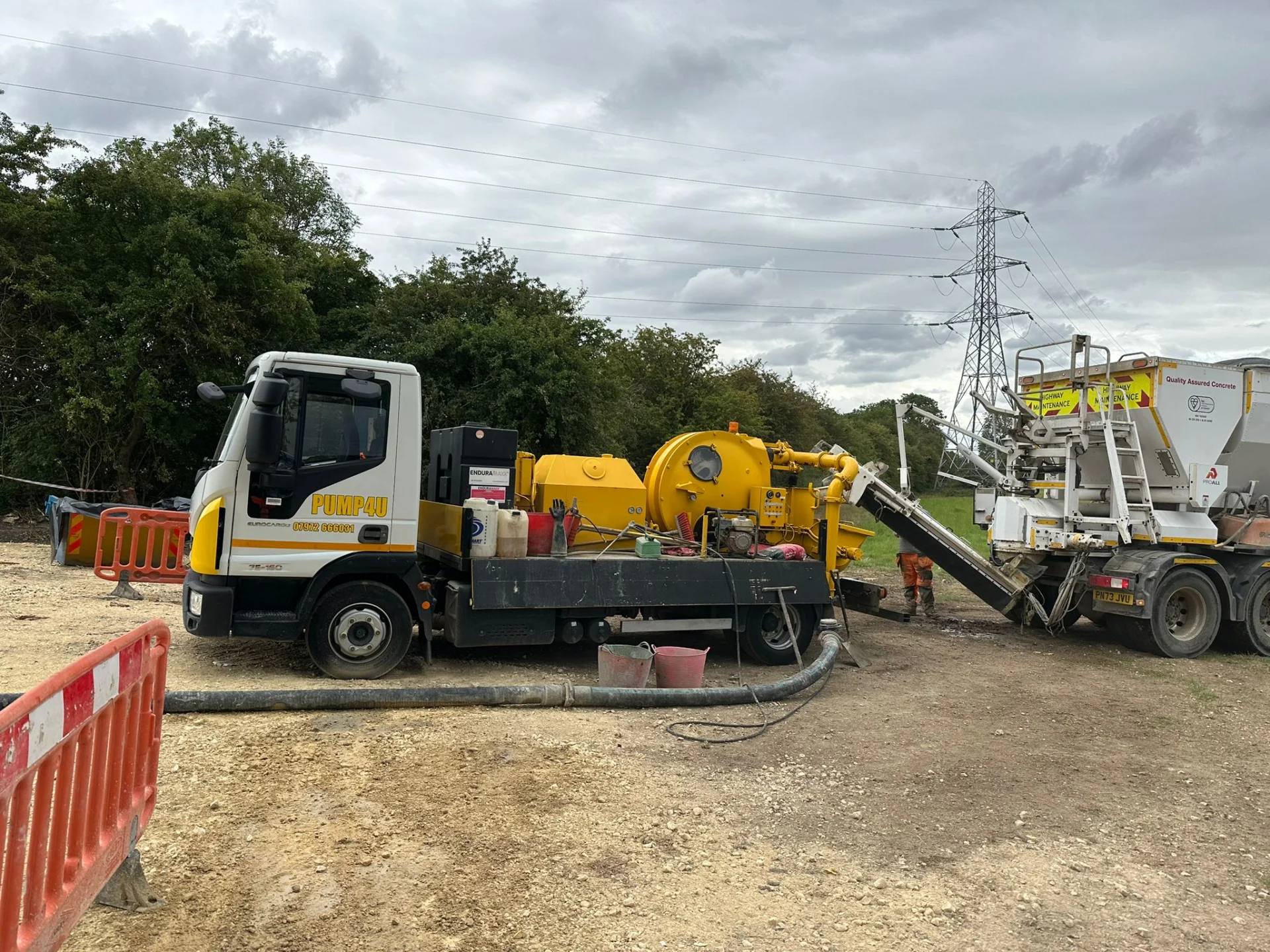
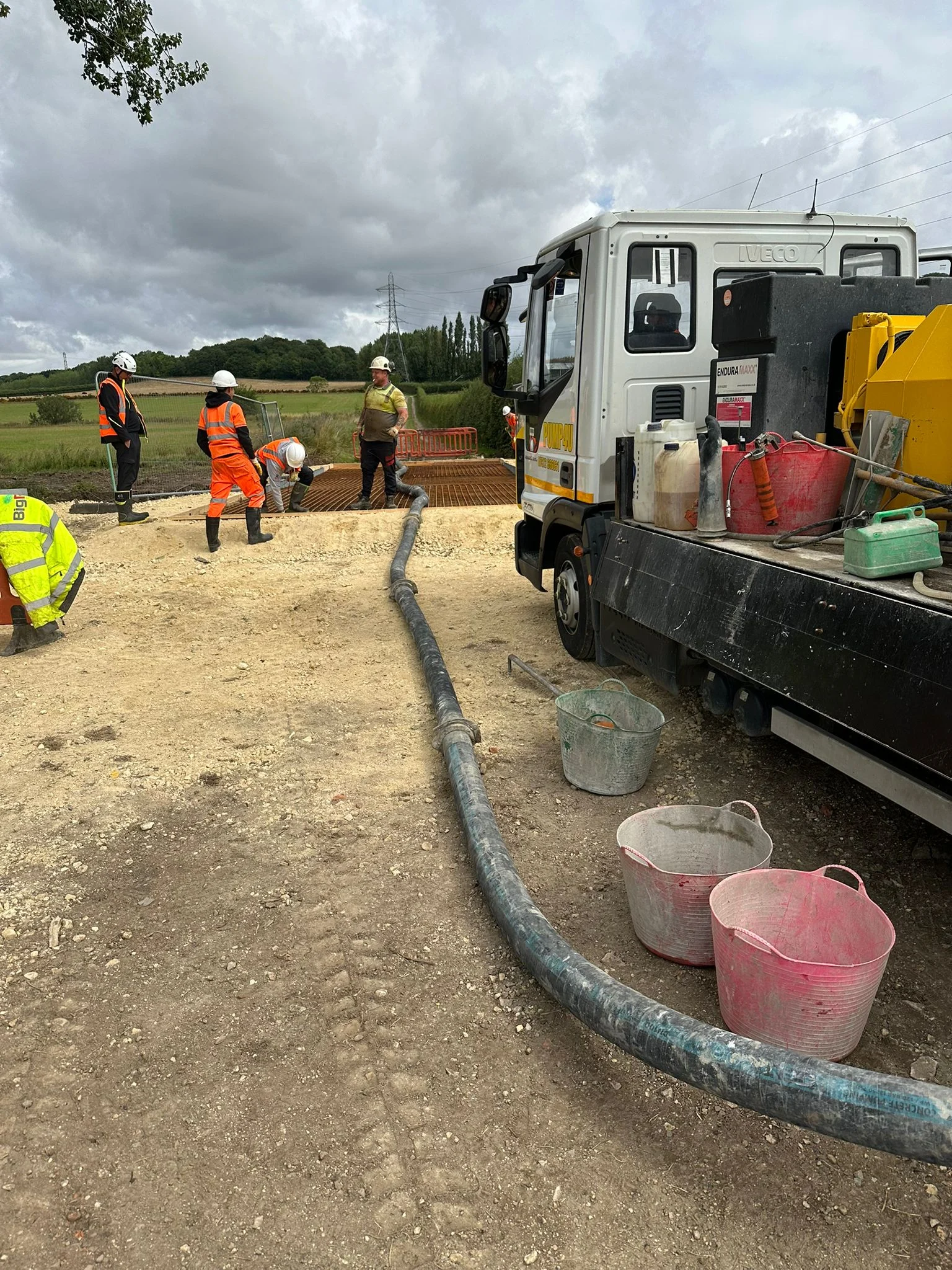
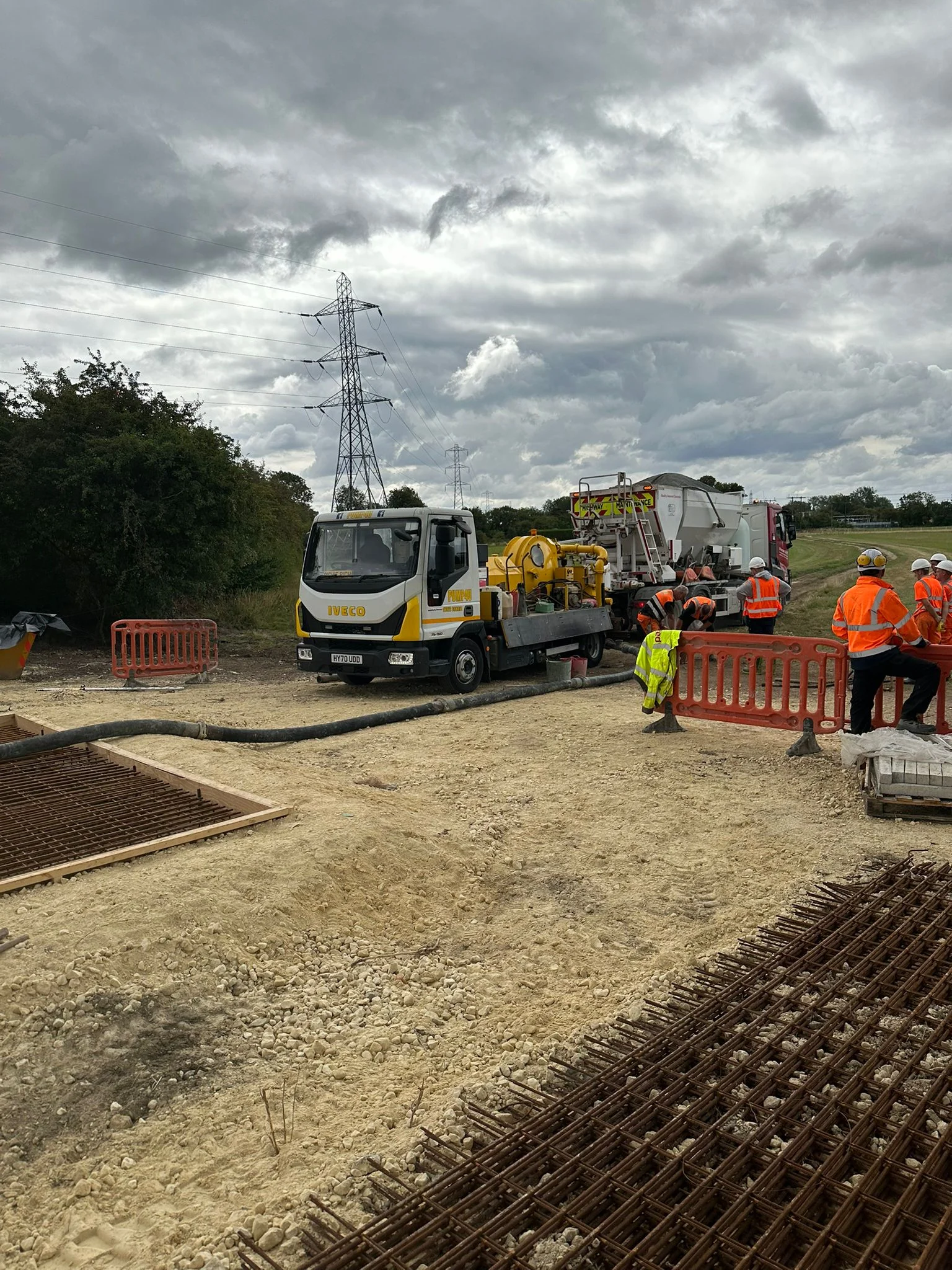
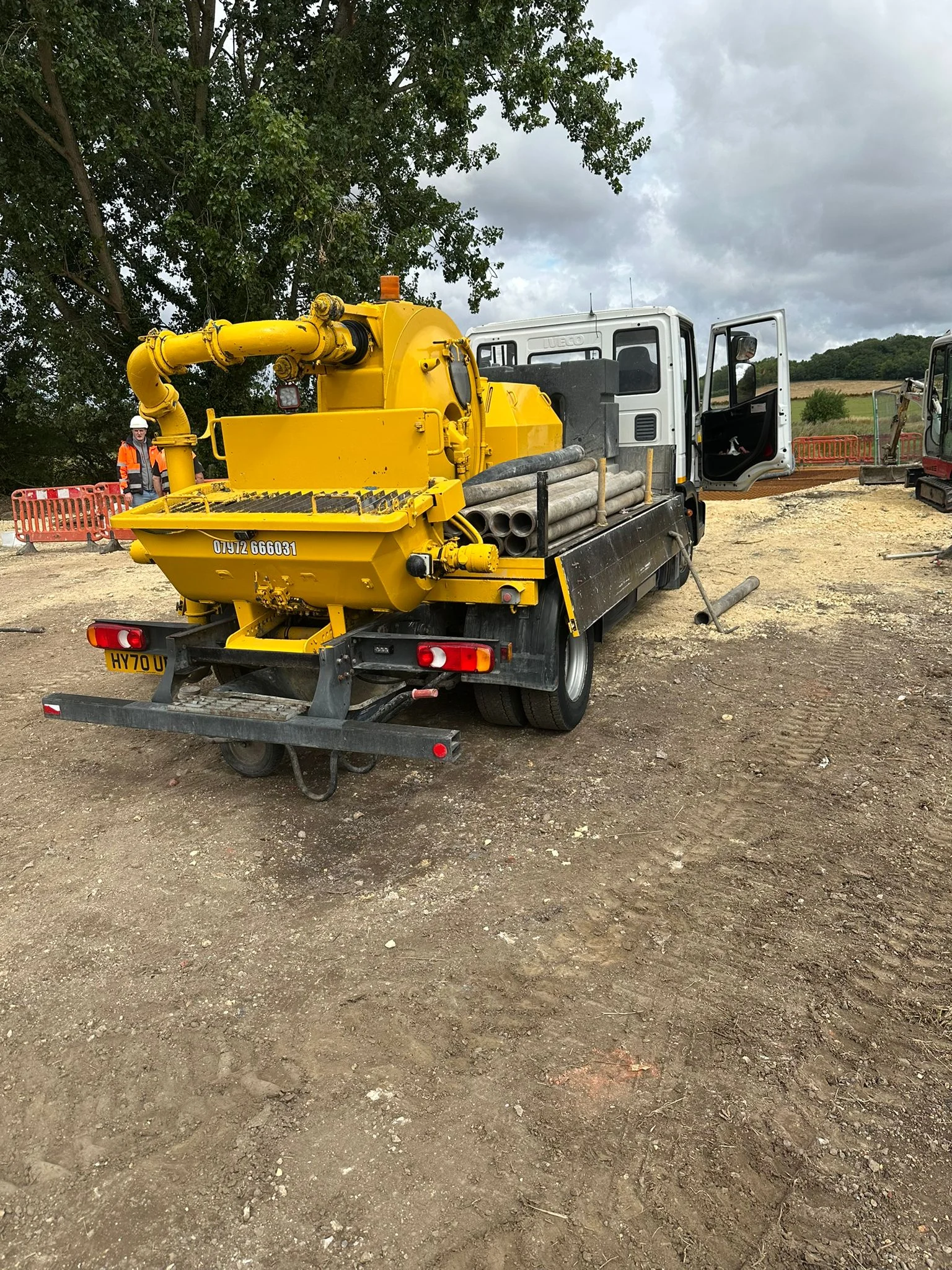
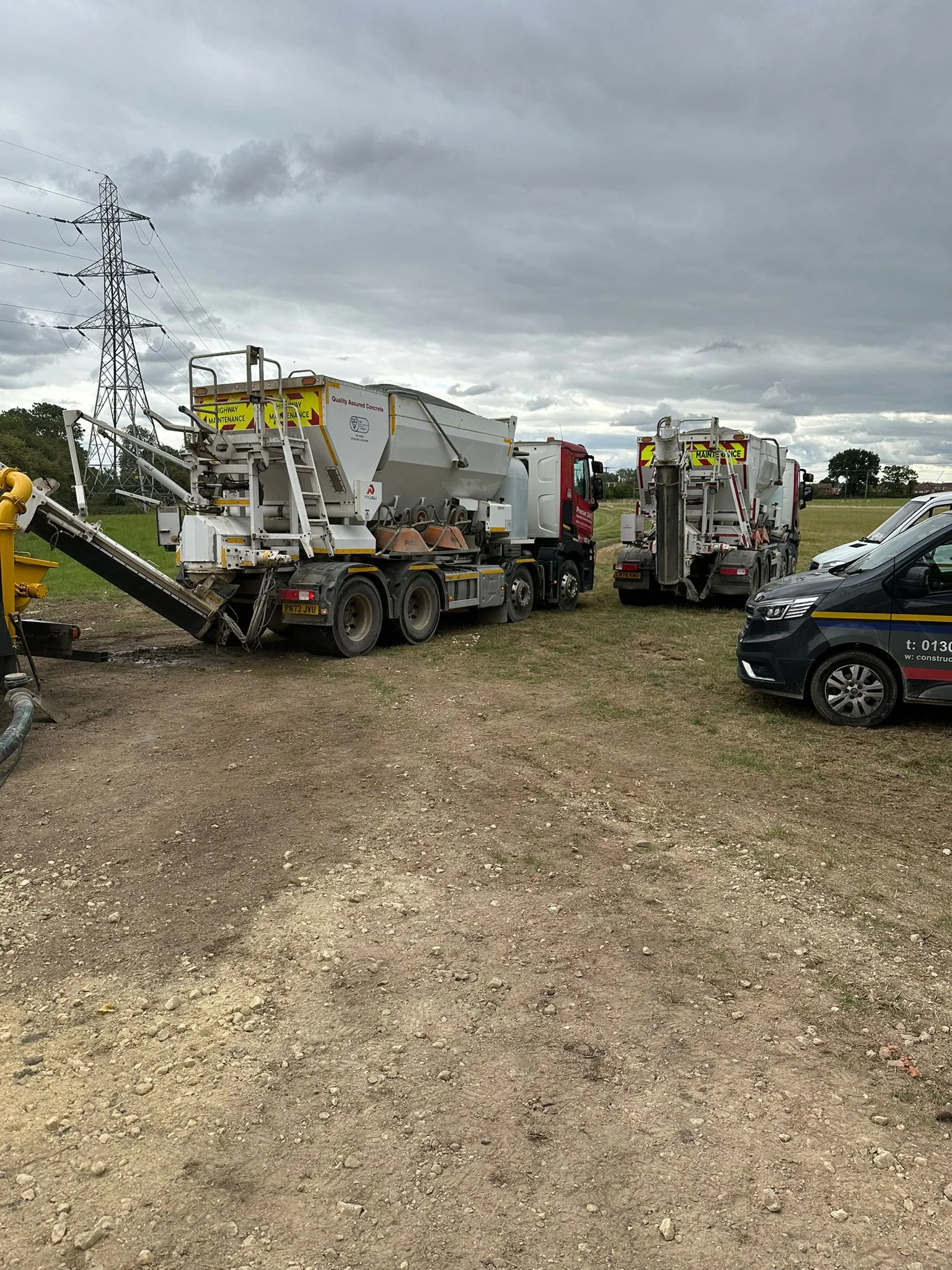
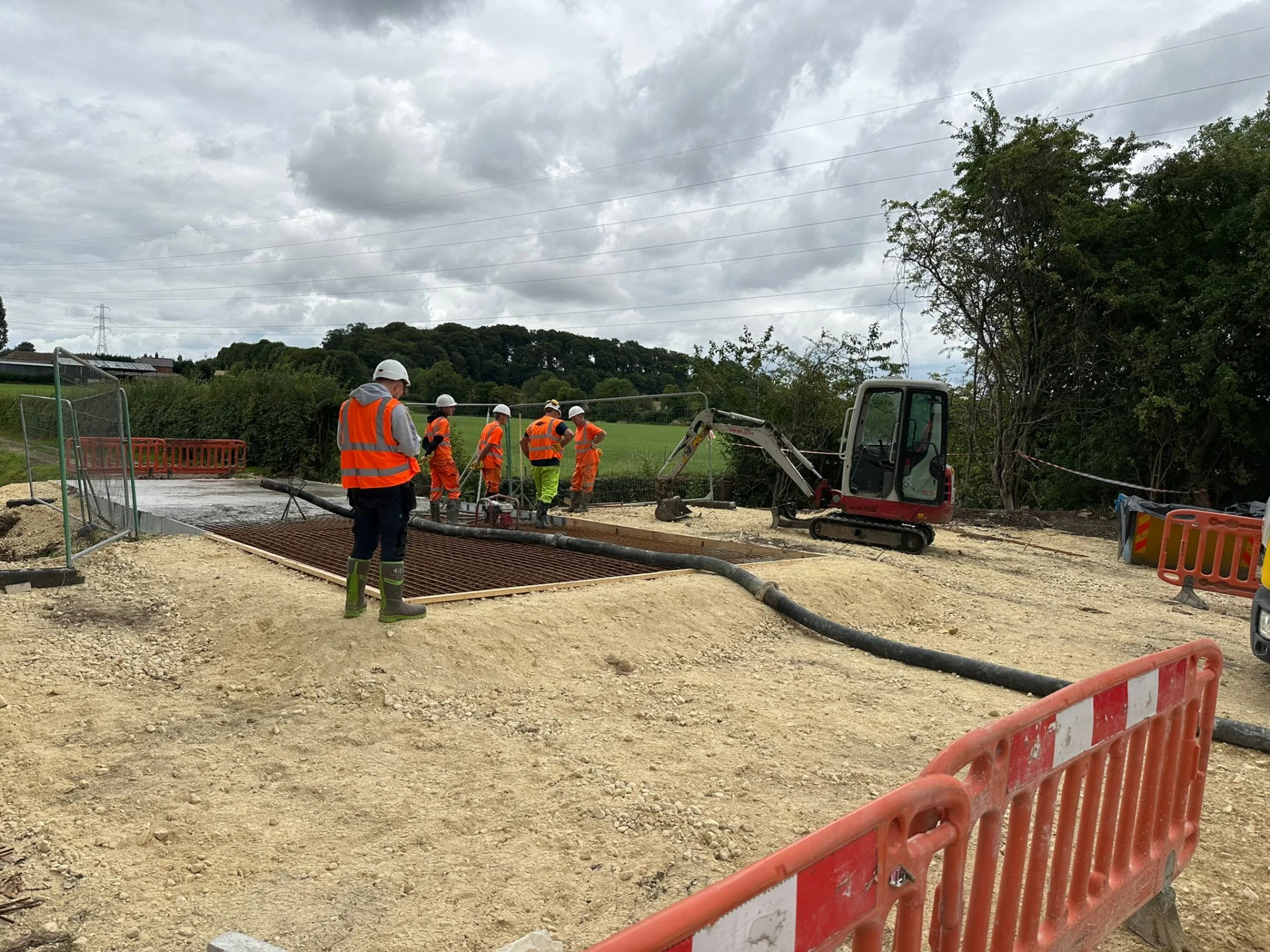
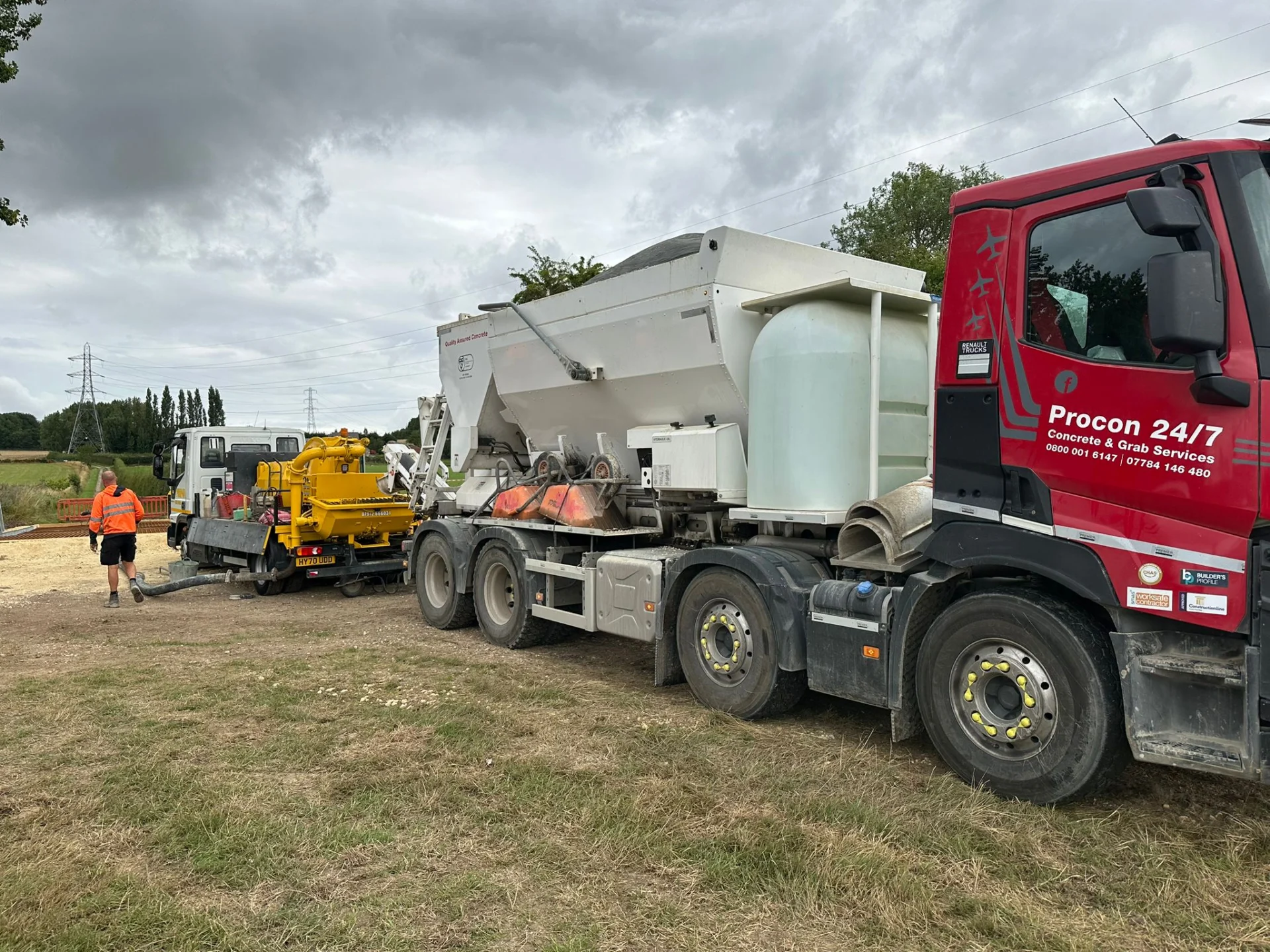
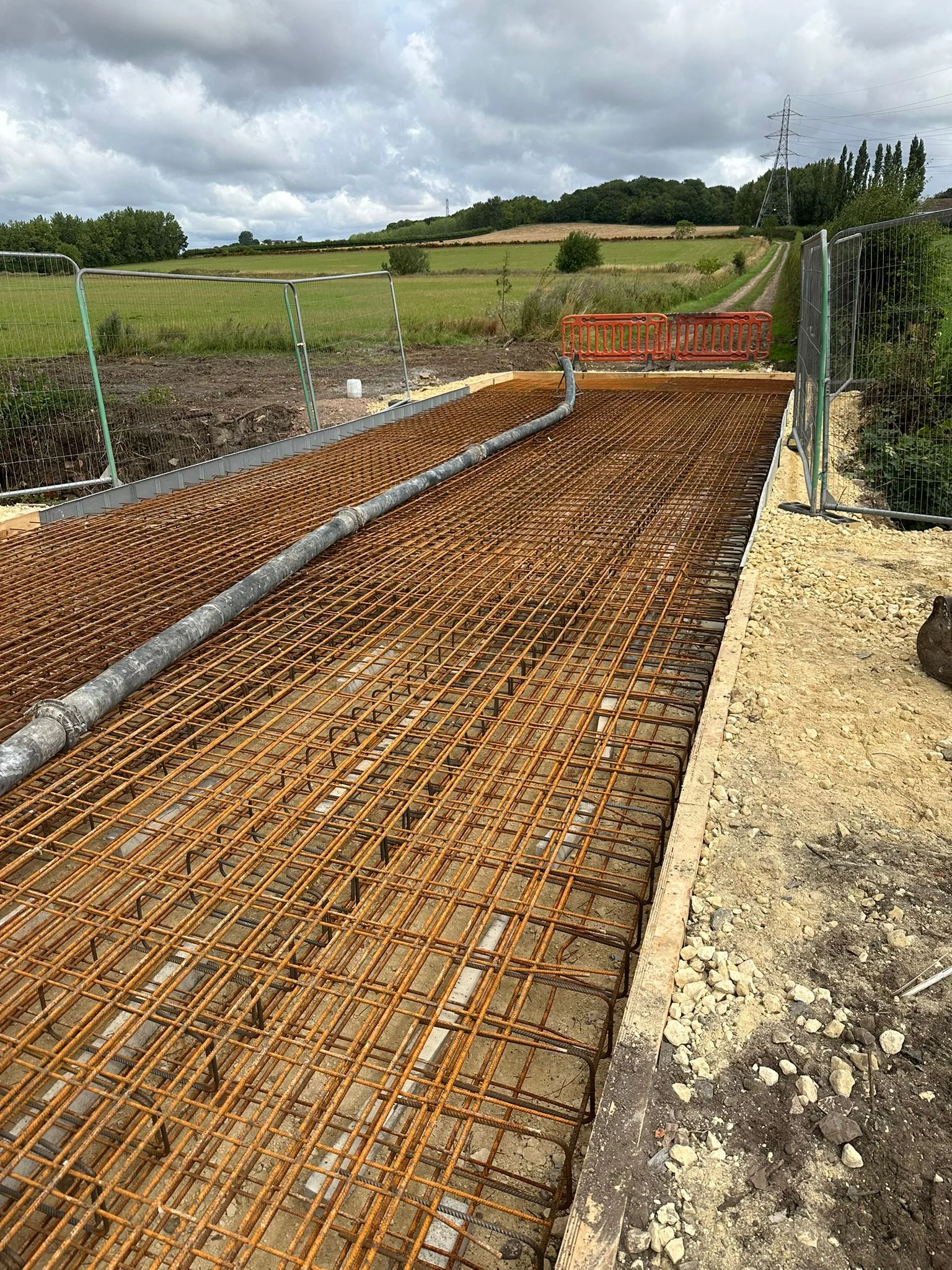
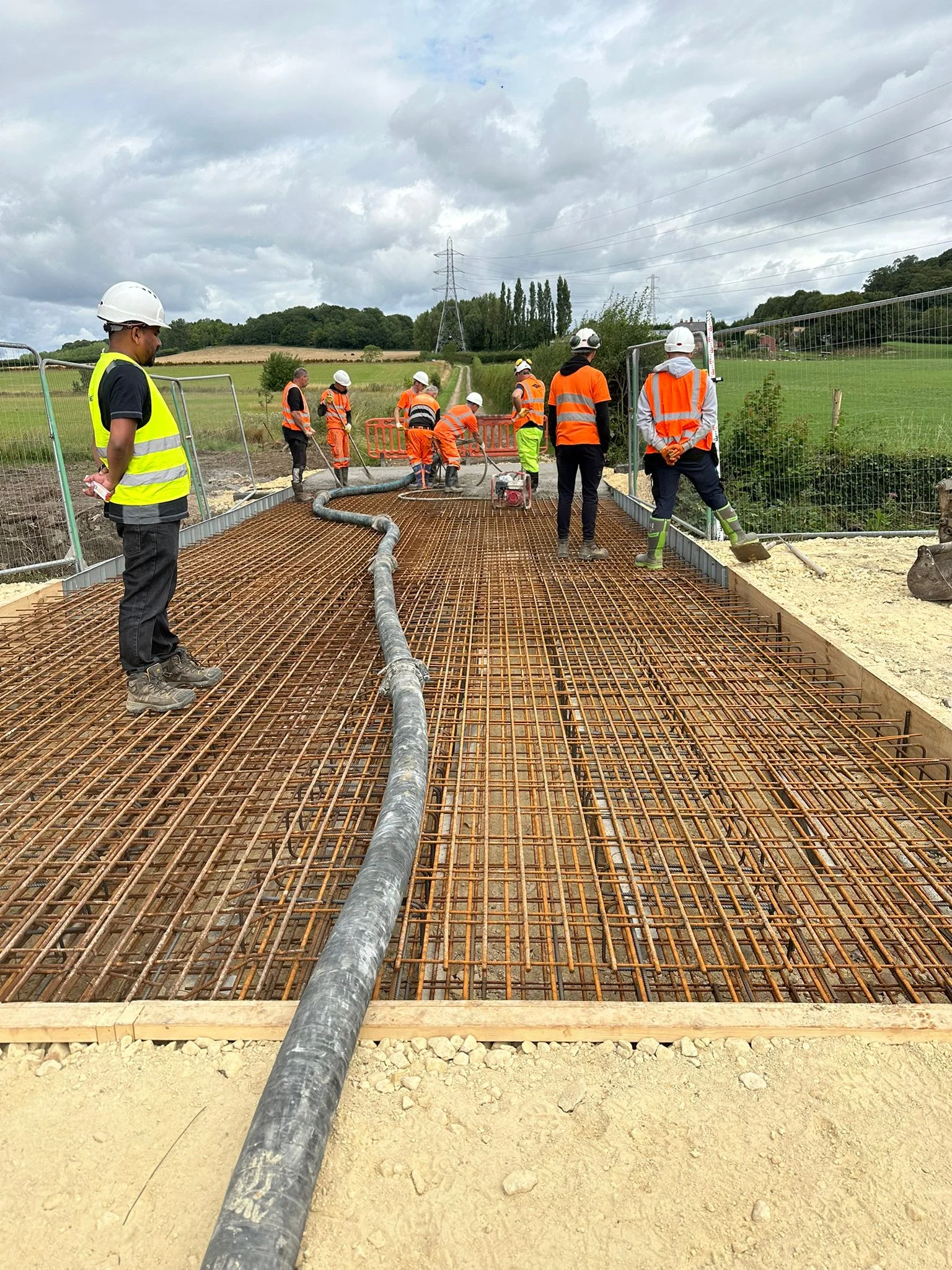
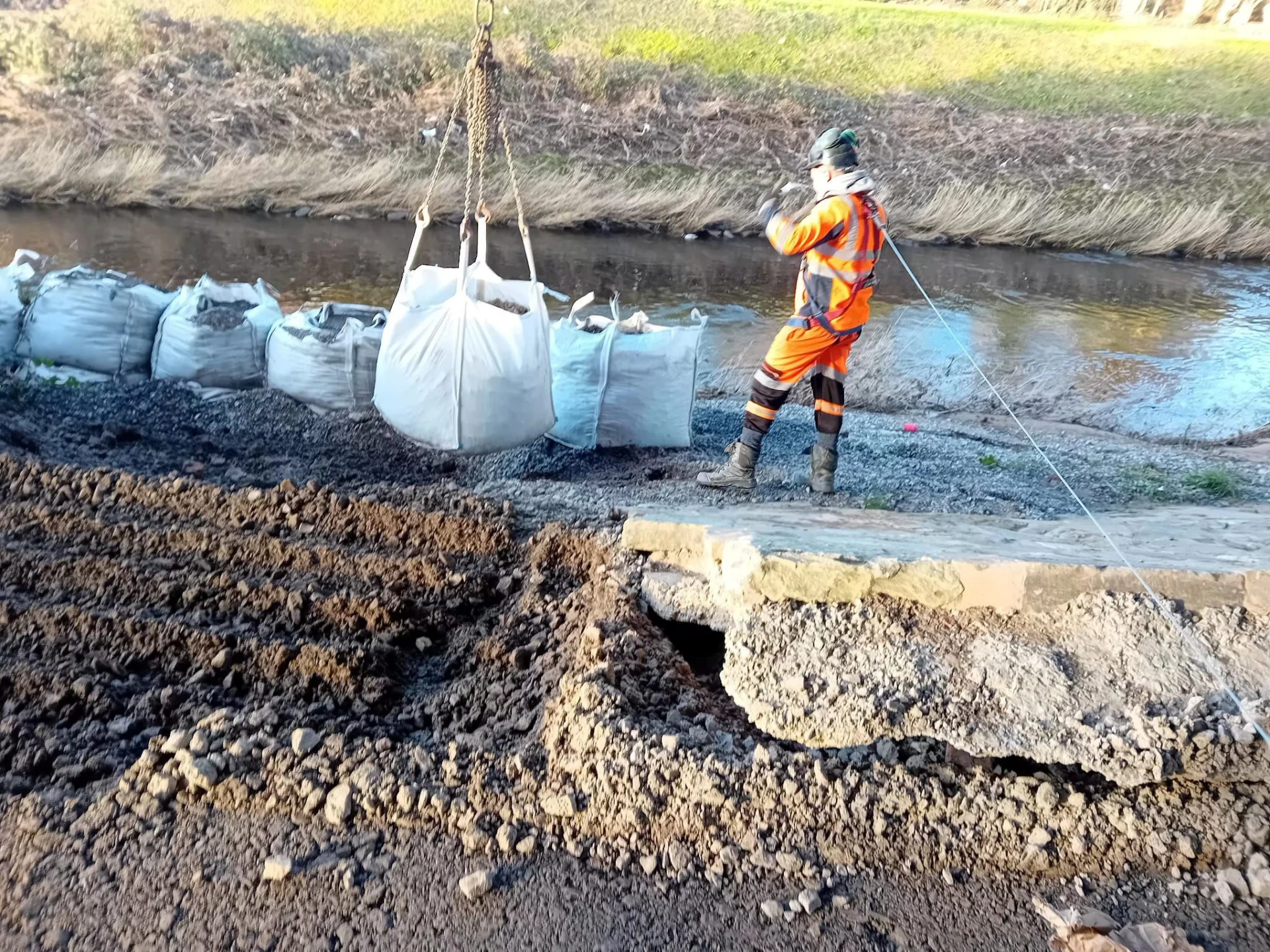
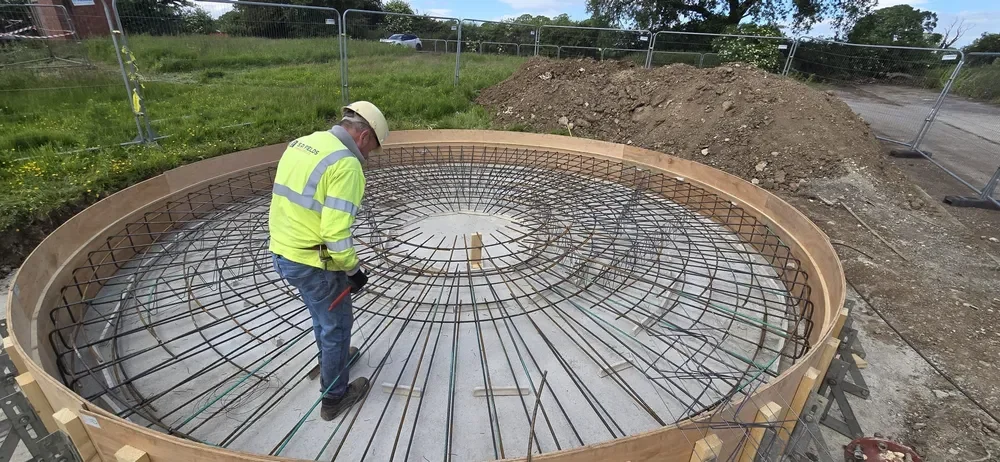
Darts Engineers came on board to carry the design risk and professional indemnity. The slab used reinforcement mesh top and bottom, with a slip layer beneath to isolate it from the culvert. Foundations were dug a metre down either side of the watercourse and filled to form the bridge bearings. The exposed edge facing the beck had no room to prop traditional formwork off the water side, so PE-form — a surface-mounted sacrificial system — was used along those edges. Reinforced concrete was cast in place and an Armco barrier installed as edge protection.
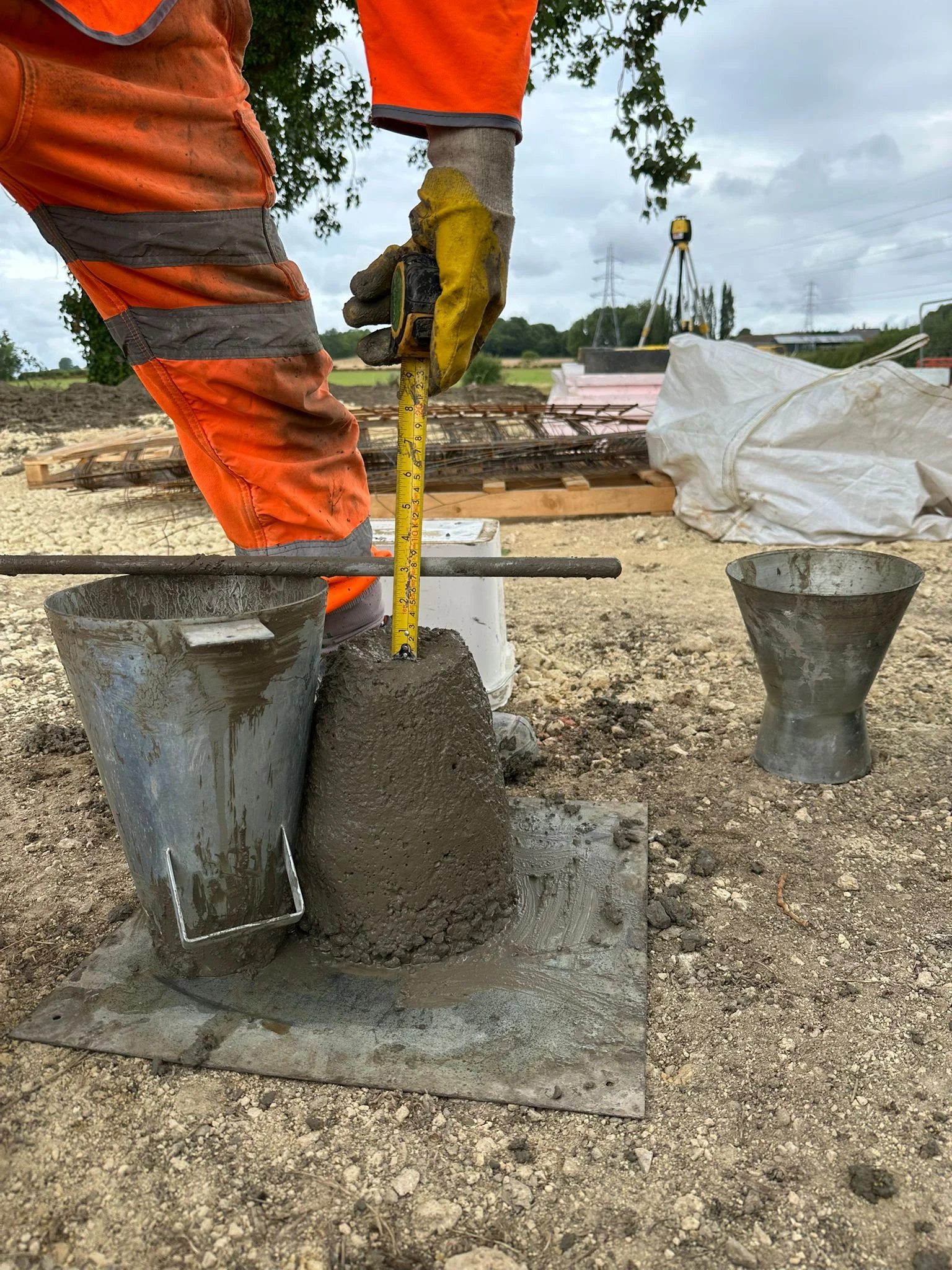
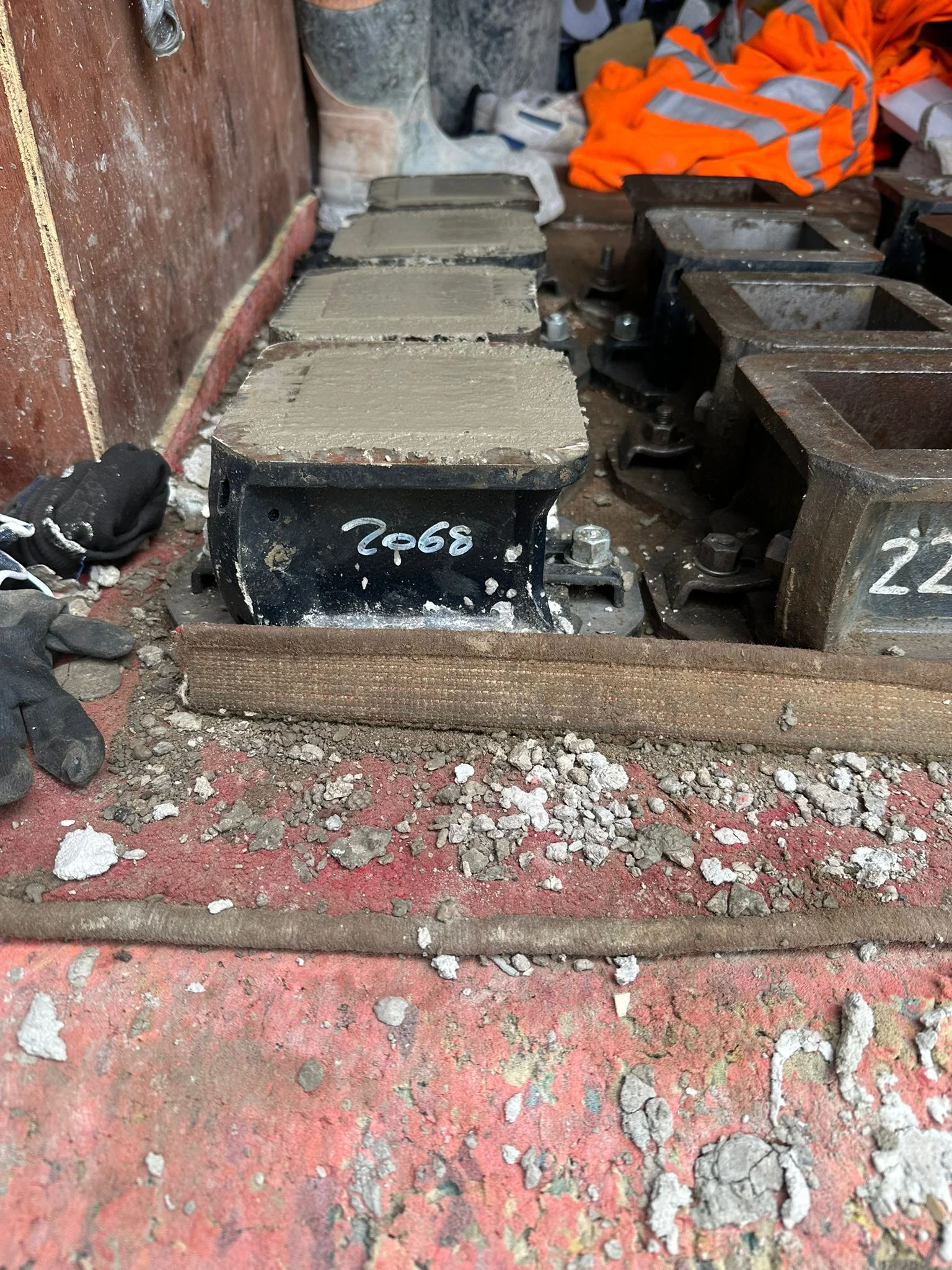
Quality control ran throughout. ITPs covered steel checks, mesh positioning, formwork, and the pour itself, with hold points at each stage that required sign-off before work could continue.
The construction side went well. The protracted part of the project was getting the design approved.
The works were funded through an energy company who had appointed AOM as technical advisor. AOM had originally priced to carry the design themselves. When that scope went to Darts instead, they were difficult to deal with throughout — slow to approve, quick to push back, and generating queries that required weeks of recalculations and as-built documentation to resolve.
The shear links dispute was the worst of it. The design used mesh reinforcement top and bottom, held apart by shear links — steel pieces acting essentially as spacers. AOM refused to accept the proposed method of cutting and splicing the mesh to fit them, saying it compromised the steel. Two alternatives were put forward. One was approved, but the lead time on getting the bars cut and bent would have blown the contract start date — which would have delayed the crane, delayed the solar farm build, and put Goldbeck in breach of their planning consent. The knock-on was significant.
The way out was a structural calculation demonstrating that the shear links weren’t carrying any shear load in the first place. The slab was 450mm thick — heavy enough to handle the shear loading on its own. The links were just holding the mesh layers apart. Once that was proven on paper, it was accepted. It took far longer than it should have, held up payment, and created real cash flow pressure on Civcon while it dragged on.
The bridge was completed, passed all checks, and is in use. The crane got in, the generators were lifted, and the solar farm is now operational.