Section 104 agreements: sewer adoption on a development
How a Section 104 agreement supports adoption of newly built sewers, what developers and contractors should confirm, and how sewer approval differs from highway adoption.
At a glance
| Route or asset | What it covers | Decision-maker | Security and maintenance |
|---|---|---|---|
| Section 104 | Proposed sewer for adoption | Sewerage undertaker and developer | Set by the agreement and undertaker’s process |
| Section 38 | New road for possible highway adoption | Highway authority and developer | Set by the separate highway agreement |
| SuDS feature | Surface-water feature, where separately managed | Relevant owner or adopting body | Confirm the asset-specific maintenance arrangement |
A Section 104 agreement sets terms between a developer and a sewerage undertaker for a proposed sewer. The undertaker may adopt it after construction and once the agreed conditions are met. This is not a highway agreement. Nor does it approve every drainage feature on a site. First, identify which pipes are proposed for adoption. Then name who will maintain the other assets and confirm the undertaker’s design, inspection and handover rules.
Section 104 of the Water Industry Act 1991 is the statutory basis. The undertaker’s current adoption process and agreement set out the project-specific requirements. The Act makes the agreement possible. Even so, you still need to coordinate with planning, highways, landowners and the lead local flood authority.
Identify the drainage routes and future owners
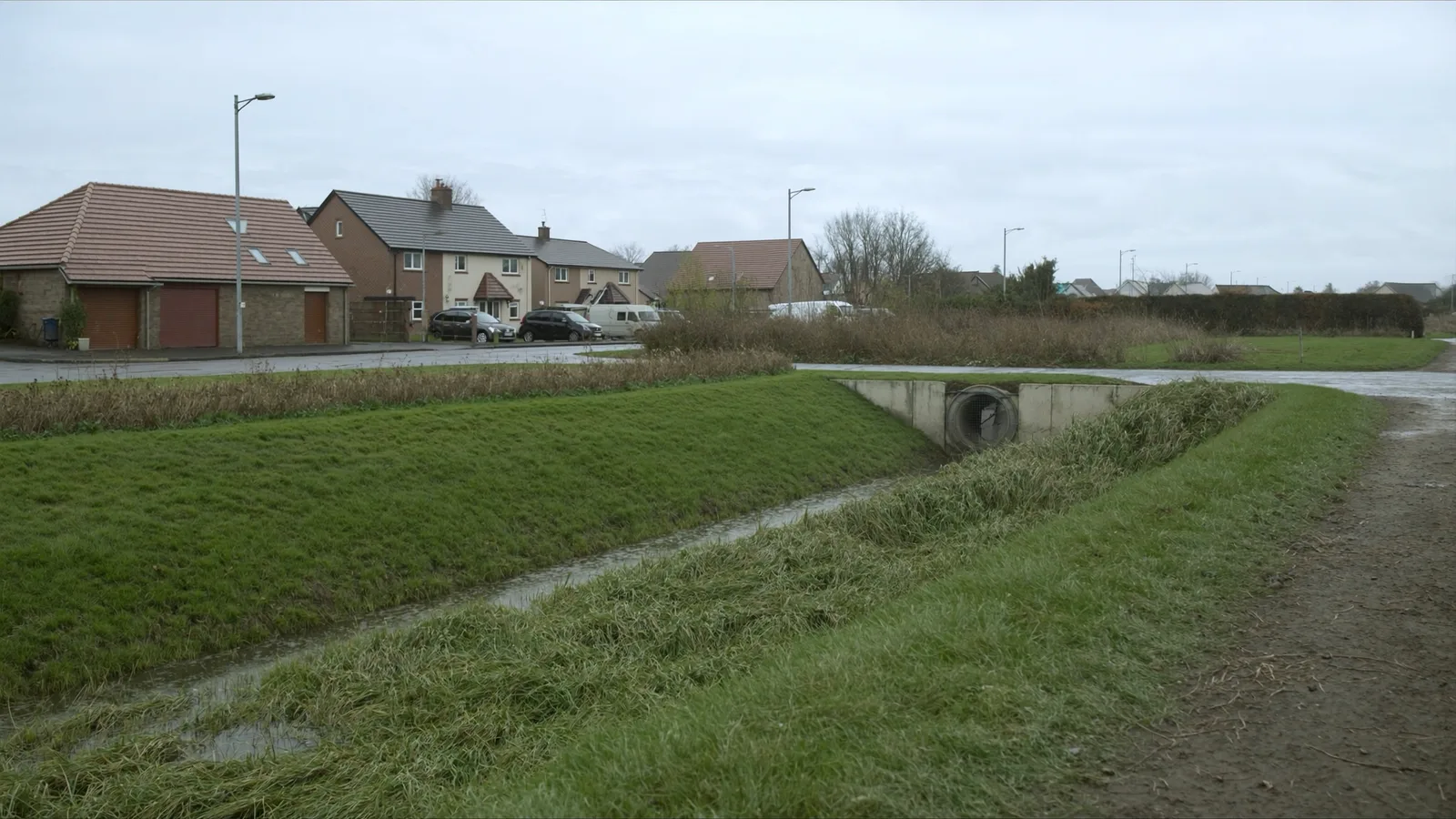
Begin with a drainage plan. It should split foul water, surface water, highway drainage and any SuDS features. Then, for each asset, name the outfall, who controls it and who will own it long term. For example, a pipe serving the site may be put forward for adoption. However, a swale, pond, flow control or private connection may stay under a separate maintenance arrangement.
Do not treat every feature shown on a drainage drawing as part of a Section 104 submission. Confirm with the sewerage undertaker which assets are eligible and what standards or technical guidance apply. A separate approval may be required for a connection to an existing public sewer. Work affecting the public highway may also require a highway authority agreement or permit. These approvals deal with different assets and responsibilities.
Civcon’s guide to SuDS drainage adoption covers the distinct issue of long-term responsibility for sustainable drainage features. Where new estate roads are also intended for adoption, coordinate the sewer proposal with the Section 38 process. The highway authority and sewerage undertaker are separate decision-makers even when the same pipe corridor crosses a development.
What the agreement and technical review address
The agreement identifies the proposed sewer and the basis on which the undertaker may adopt it. The design review checks whether the system suits its purpose and meets the undertaker’s rules. So the submission may need drawings, calculations, specifications, land details and connection details. Because requirements vary, confirm the exact list with the undertaker.
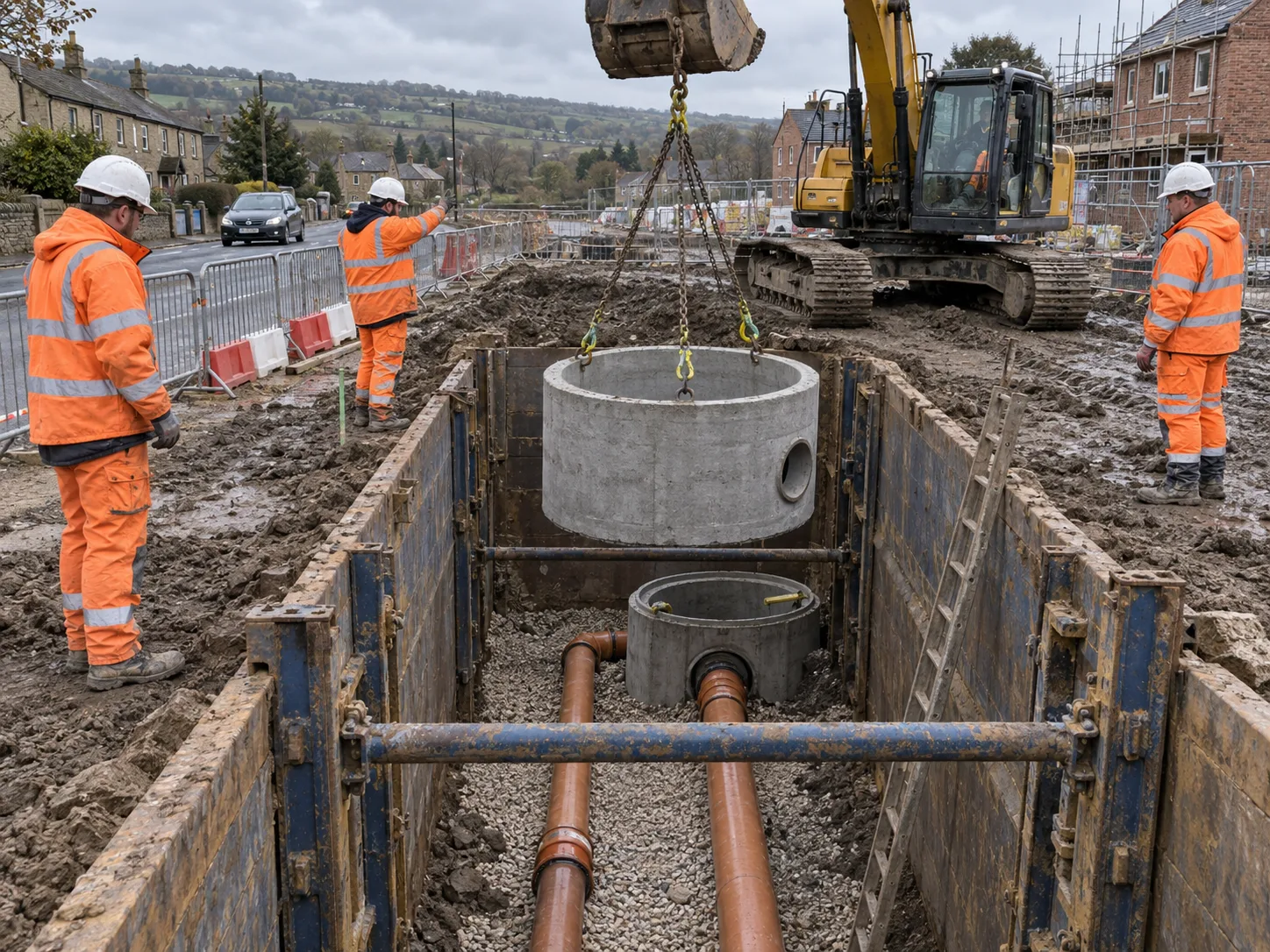
Design coordination covers pipe routes, gradients, cover, maintenance access, manholes, easements and other buried services. In addition, surface water proposals must show how runoff is managed and where it discharges. If the system relies on attenuation or flow control, then every party should know the design and who is responsible for those assets.
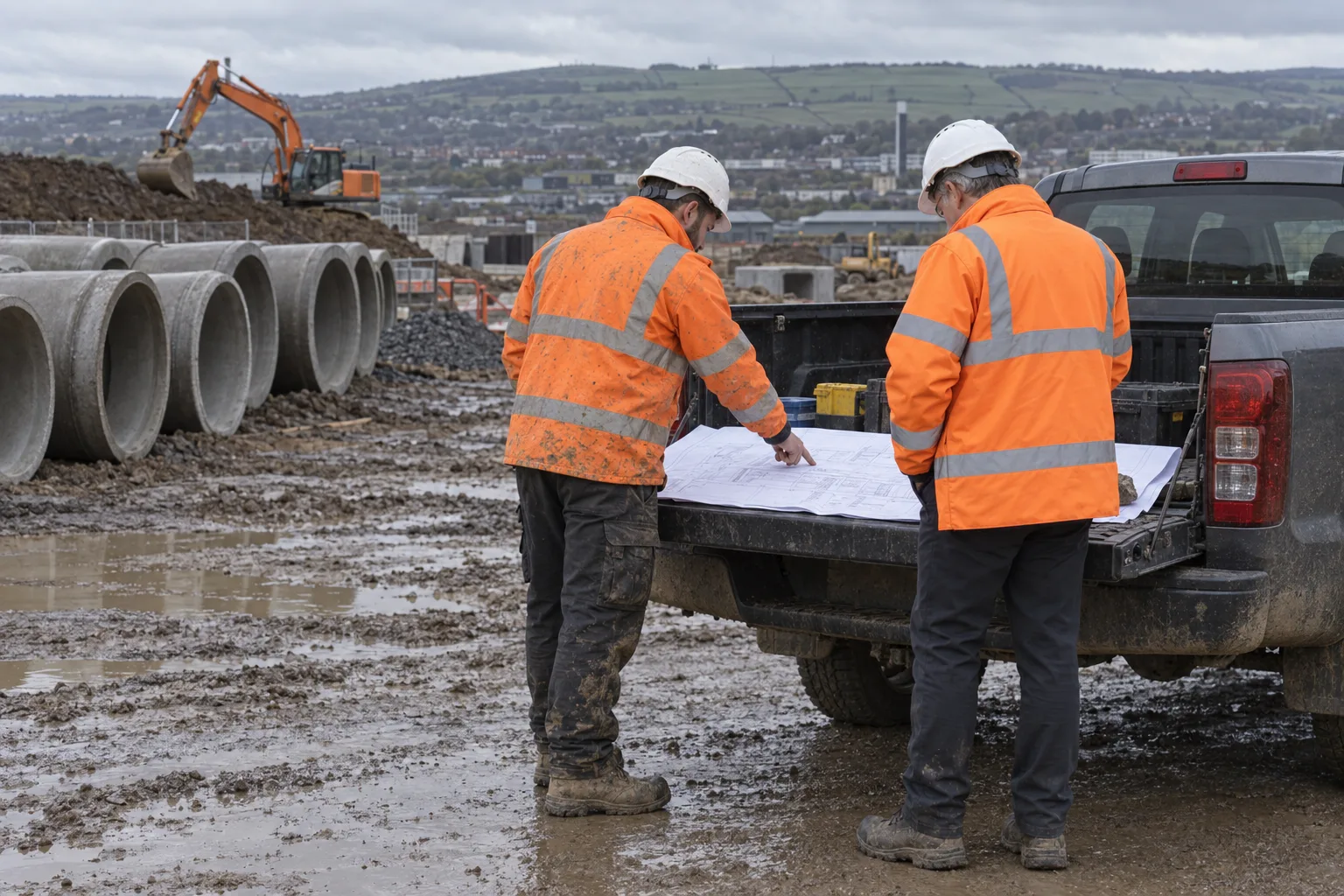
Agree the construction and inspection process before work begins. Establish how inspections are booked, which stages must remain visible, what test results are needed and how non-conformances are recorded and closed. The contractor should work to the accepted design and the agreement, not a superseded drawing or an informal mark-up.
Building the works and keeping evidence
The developer stays responsible for delivering the works to the agreement. In other words, an undertaker inspection does not replace the contractor’s own quality checks. So plan hold points for connections, bedding, surround, backfill and testing. The exact points vary by project, so confirm them rather than using a generic checklist.
Keep a controlled set of approved drawings on site. As work progresses, record the installed route and levels. Also capture the test and inspection records needed for handover. If an obstruction or ground condition forces a change, stop first. Then check whether the undertaker must approve it. Otherwise, an unrecorded field change can make later sign-off difficult.
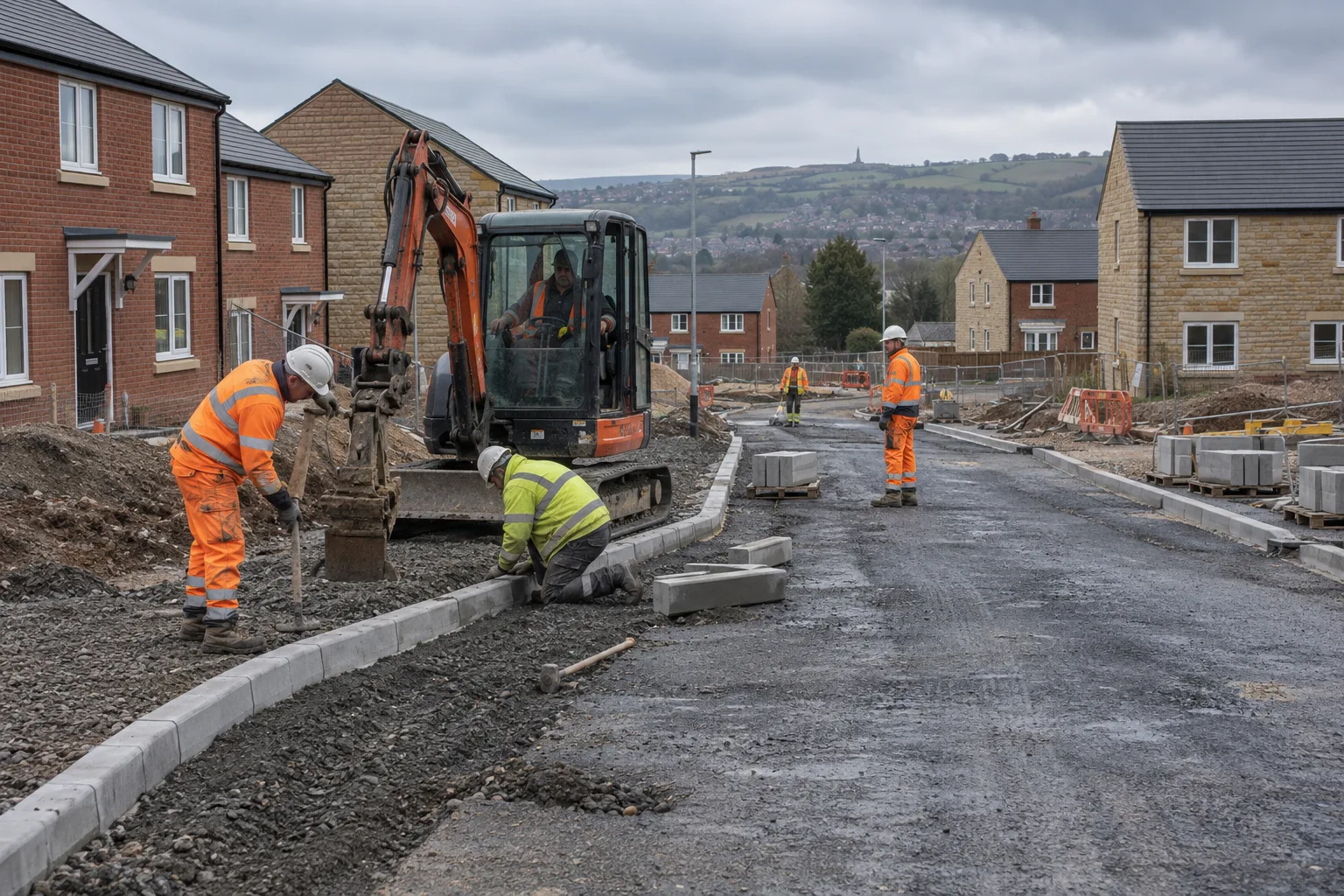
Coordinate excavations with utilities and temporary works. In deep or tight excavations, a competent person must plan the safe method and any temporary support. Also, keep drainage tied to the wider programme. Access, traffic management, connection windows and reinstatement all affect the sequence.
Testing, defects and adoption
The agreement and undertaker process determine what inspection, testing and completion evidence is required. Keep the close-out requirements visible from the start rather than waiting until surfacing or landscaping is complete. If a test identifies a defect, record its location, the corrective action and the evidence that the work now meets the agreed requirement.
Physical completion does not itself mean the sewer has been adopted. The undertaker must be satisfied that the relevant contractual and technical conditions have been met. Confirm the stages that apply, including any maintenance or defects obligations and the formal evidence needed to complete handover. Do not promise a handover date based only on the construction programme.
The agreement should also make clear the financial security, inspection charges and release conditions that apply. These terms vary by undertaker and project. Use the current agreement and written confirmation from the undertaker; do not assume a bond amount, fee basis or release timetable based on another scheme.
Frequent causes of avoidable delay
Late decisions on outfalls can force redesign after the layout and levels have been coordinated. Confirm the intended point of discharge and obtain the required permissions before the drainage design is treated as fixed.
Unclear asset boundaries create handover problems. Mark which pipes, chambers and SuDS features are proposed for adoption, which remain private and who is responsible for ongoing maintenance.
Poor drawing control can lead to construction against an outdated design. Keep an approved revision register and brief site teams when accepted details change.
Missing evidence can hold up completion even where the installation appears sound. Build an evidence schedule from the undertaker’s requirements, assign owners, and collect records while work is accessible.
Finally, sewer adoption and highway adoption are often mistakenly treated as one approval. Coordinate both where needed, but maintain separate submissions and close-out trackers for the undertaker and highway authority.
Selecting a delivery contractor
When comparing drainage contractors, ask how they manage approved drawings, inspections, testing, as-built records and interface with the sewerage undertaker. Establish who owns temporary works design, utility coordination, traffic management and reinstatement. Ask how exceptions are escalated and recorded, and how the construction sequence protects access for inspections.
Civcon’s drainage service includes drainage installation, main sewer installation, deep drainage and highways infrastructure drainage. Share the current design, undertaker comments, outfall status and proposed adoption boundary when discussing a package. That gives the project team a factual basis to identify unresolved interfaces without assuming that every drainage component is adoptable.
How we approach it
First, mark the proposed public sewer and separate it from private pipes and SuDS features. Then confirm the outfall, land rights and connection route with the relevant parties. Speak with the sewerage undertaker about design submissions, inspection stages, security and handover evidence. Bring coordinated drawings, levels, calculations and known utility information to that discussion. Once the accepted design and agreement route are clear, brief the contractor on hold points, testing and records. Keep a separate close-out list for highway adoption and SuDS where those approvals also apply.
Use the table to separate decision-makers. It does not imply that every drainage asset qualifies for adoption.
Sources and next step
Primary legislation: Water Industry Act 1991, Section 104. The sewerage undertaker’s current adoption guidance and the executed agreement control project-specific detail.
Before procurement, confirm the proposed public sewer limits, drainage ownership, outfall permissions, design acceptance route and evidence required for adoption. Coordinate these with highway and SuDS responsibilities, then carry the same agreed scope into the construction and handover plan.
Further primary reference: Water Industry Act 1991, Section 102, which covers sewer adoption by an undertaker. Check the current agreement and undertaker guidance for the route that applies.